Le Chat Noir Painting by Steinlen
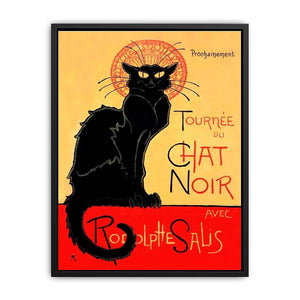
Le Chat Noir by Steinlen stands as one of the most enduring and culturally resonant images of fin-de-siècle Paris, a work in which graphic clarity, social awareness, and symbolic wit converge with extraordinary precision. More than a depiction of a black cat, the painting embodies a moment when art, literature, music, and politics intersected in the cafés and cabarets of Montmartre. Steinlen’s image has transcended its original context to become a visual emblem of modern urban culture, artistic independence, and the quiet defiance of convention.
The historical background of Le Chat Noir is inseparable from the legendary Parisian cabaret of the same name, founded in the 1880s and celebrated as a gathering place for writers, artists, musicians, and political satirists. This was a period marked by rapid urban transformation, social tension, and the rise of mass culture. Posters and illustrated prints became powerful tools of communication, shaping public consciousness in streets and cafés alike. Steinlen, deeply attuned to the rhythms of Parisian life, recognised the poster as an art form capable of both aesthetic refinement and cultural commentary.
Within Steinlen’s artistic life, Le Chat Noir represents the synthesis of his commitments as an artist and observer of society. Known for his empathy toward the working class and his acute sensitivity to the character of the city, Steinlen brought dignity and presence to subjects often overlooked. His cats, recurring throughout his oeuvre, were never merely decorative. They functioned as symbols of independence, watchfulness, and marginality—qualities that resonated strongly within Montmartre’s bohemian milieu. In Le Chat Noir, the cat becomes both mascot and metaphor.
The work occupies a significant place within the development of modern graphic art. While rooted in the tradition of poster design, it transcends commercial function through compositional intelligence and symbolic economy. Steinlen’s approach aligns with the broader currents of Art Nouveau and Symbolism, yet it remains distinct in its restraint. Rather than elaborate ornamentation, the image relies on bold silhouette, controlled line, and stark contrast. This economy of means grants the work immediate visual authority and lasting memorability.
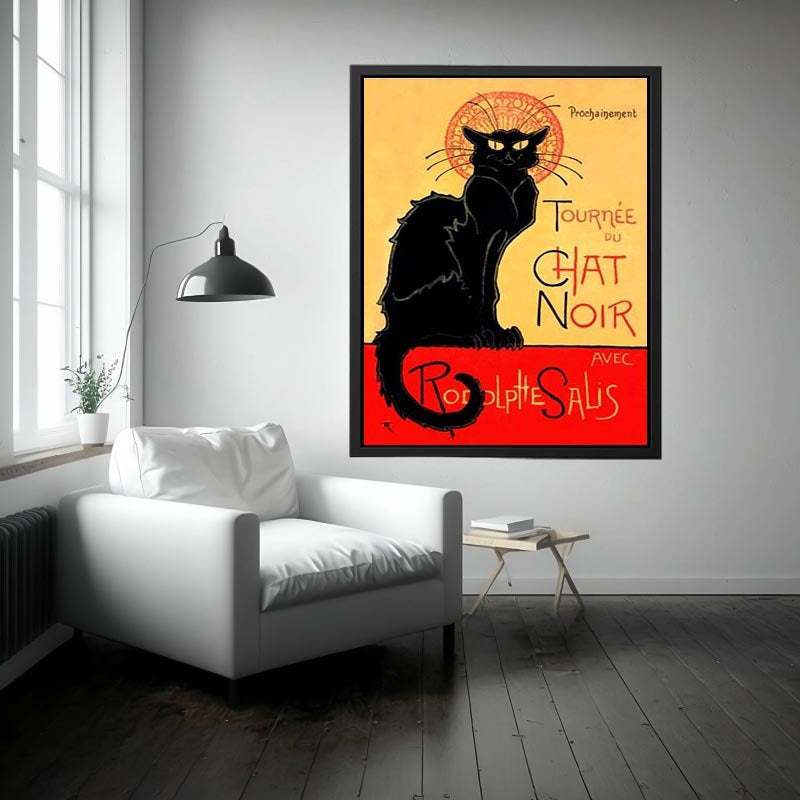
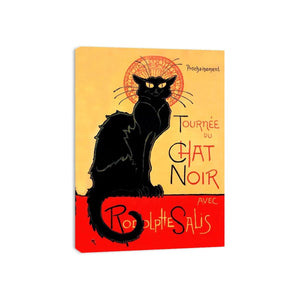
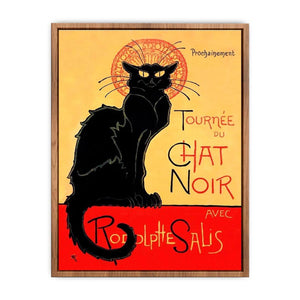
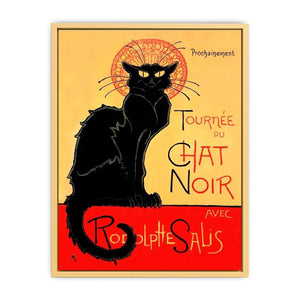
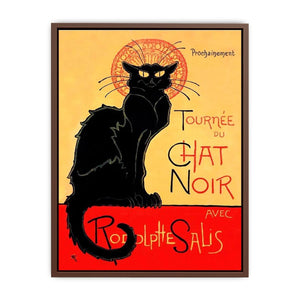
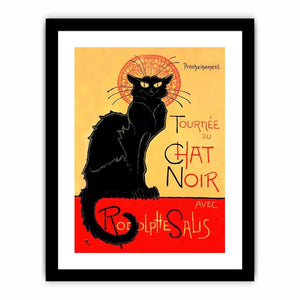
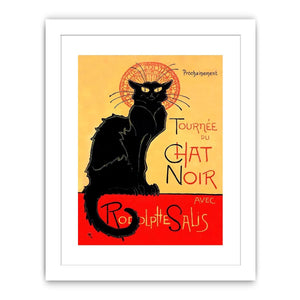
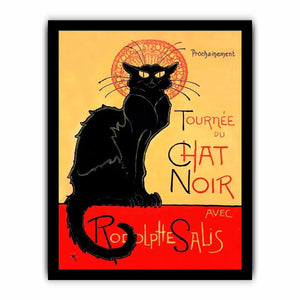
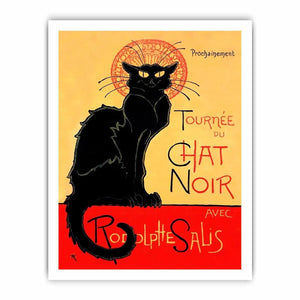
Compositionally, Le Chat Noir is defined by clarity and command. The cat’s upright posture and frontal orientation establish dominance within the picture plane. The figure is simplified yet unmistakable, its form distilled to essential contours. This reduction heightens symbolic power, allowing the image to function across contexts without losing meaning. The surrounding space is deliberately restrained, ensuring that attention remains fixed on the central figure. Steinlen demonstrates that composition need not be complex to be profound.
Perspective is minimal and intentional. There is no attempt to situate the cat within a detailed environment. Instead, the figure exists in a conceptual space, untethered from specific location. This abstraction elevates the image beyond anecdote, transforming it into an icon. The viewer does not observe a scene; they encounter a presence. This directness is central to the painting’s psychological impact.
Colour and contrast are employed with striking discipline. The deep black of the cat’s form dominates the composition, set against lighter elements that sharpen its outline. This contrast is not merely aesthetic; it reinforces the symbolic opposition between visibility and shadow, conformity and independence. The restrained palette ensures that the image communicates instantly, even at a distance, a crucial consideration in its original public context. Light here is conceptual rather than naturalistic, used to define rather than to model.
Texture and surface treatment remain controlled, subordinated to clarity of form. Steinlen’s handling avoids unnecessary detail, allowing line and shape to carry meaning. This restraint reflects a modern understanding of visual communication, where impact arises from precision rather than excess. The material qualities of the painting support its graphic authority, ensuring that technique serves idea.
Symbolically, Le Chat Noir operates on multiple levels. The black cat, historically associated with superstition and marginality, is reclaimed here as a figure of confidence and autonomy. Upright and unflinching, it mirrors the spirit of Montmartre’s artistic community—independent, observant, and resistant to convention. The image celebrates the outsider not as victim, but as self-possessed presence. In this sense, the painting functions as both emblem and manifesto.
Emotionally, the work conveys assurance rather than whimsy. Despite the subject’s inherent charm, Steinlen avoids sentimentality. The cat’s gaze is direct, its posture composed. There is humour, but it is dry and intelligent, aligned with satire rather than playfulness. This emotional restraint contributes to the painting’s enduring appeal, allowing it to resonate across generations without diminishing its seriousness.
Culturally, Le Chat Noir has achieved rare status as a visual shorthand for Parisian modernity. It encapsulates the ethos of a city alive with artistic experimentation and social critique. Beyond its immediate historical moment, the painting has influenced graphic design, illustration, and popular culture worldwide. Its legacy lies not only in its recognisability, but in its demonstration that art rooted in everyday life can attain universal significance.
The relevance of Le Chat Noir today remains striking. In contemporary societies that continue to negotiate individuality, subculture, and creative freedom, Steinlen’s image speaks with undiminished clarity. It affirms the value of independence and the power of visual simplicity. The painting’s ability to communicate complex identity through minimal means aligns closely with modern visual sensibilities.
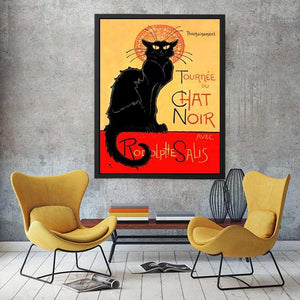
Within contemporary interiors across the United States, United Kingdom, Canada, Australia, and Europe, Le Chat Noir integrates with confident versatility. In living rooms, it introduces cultural sophistication and graphic presence without overwhelming space. In studies and offices, it reinforces creativity and intellectual independence. Galleries and luxury residences benefit from its iconic status and immediate recognisability, as the painting commands attention while sustaining depth.
Across décor styles, the artwork adapts seamlessly. In minimalist interiors, its bold silhouette and limited palette align naturally with restraint. Traditional spaces gain contrast and vitality through its modern graphic language. Eclectic environments find cohesion in its symbolic clarity and cultural resonance. The painting enhances space through presence rather than ornament.
Ultimately, Le Chat Noir by Steinlen stands as one of the most successful fusions of art, culture, and identity in modern history. Through compositional economy, symbolic intelligence, and emotional restraint, Steinlen transformed a simple subject into an enduring icon. The painting endures because it understands something fundamental: that true presence requires neither excess nor explanation, only clarity, confidence, and vision.
Buy museum qulaity 400- 450 canvas prints, framed prints, and 100% oil paintings of Le Chat Noir by Steinlen at Alpha Art Gallery, where world-famous masterpieces are recreated with museum-quality detail, refined craftsmanship, and premium materials.
FAQS
What does Le Chat Noir represent?
The painting symbolises independence, artistic freedom, and the bohemian spirit of Montmartre.
Is Le Chat Noir connected to a real place?
Yes. It is associated with the famous Parisian cabaret that served as a cultural hub for artists and writers.
Why did Steinlen frequently depict cats?
Cats represented autonomy, alertness, and marginality—qualities aligned with Steinlen’s social and artistic values.
What artistic movement does this work relate to?
It aligns with Art Nouveau and Symbolism, particularly within the context of modern graphic art.
Why is the painting considered iconic?
Its simplified form, strong symbolism, and cultural resonance have made it instantly recognisable across generations.
Does Le Chat Noir suit contemporary interiors?
Yes. Its bold silhouette and restrained palette integrate well into modern, traditional, and eclectic spaces.
Is this artwork culturally significant beyond France?
Yes. It has influenced international graphic design and remains a global symbol of artistic independence.
Where is the best place to display this artwork?
It is especially effective in living rooms, studies, offices, galleries, and refined interiors that value cultural identity and visual clarity.