






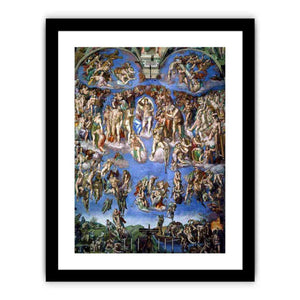


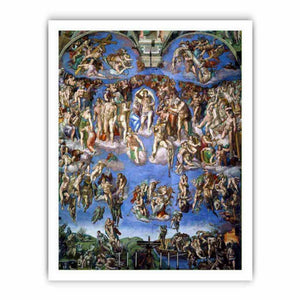
Last Judgment (1) 1537-41
Go kalles this summer with this vintage navy and white striped v-neck t-shirt from the Nike. Perfect for pairing with denim and white kicks for a stylish kalles vibe.

Last Judgment (1) 1537-41
Last Judgment (1) 1537–41 Painting by Michelangelo Buonarroti
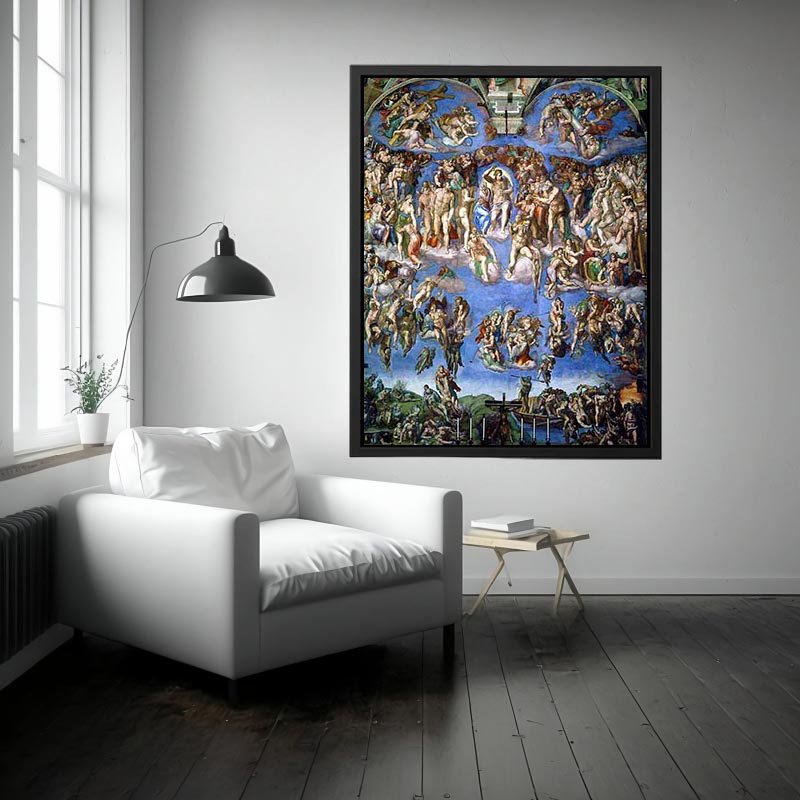
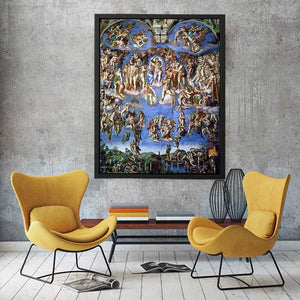
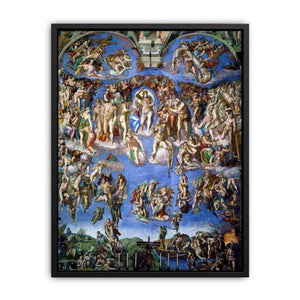
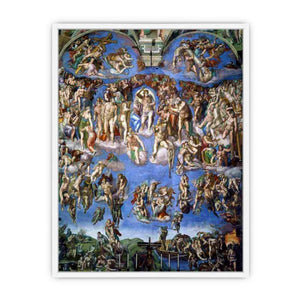
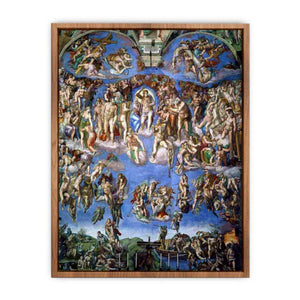
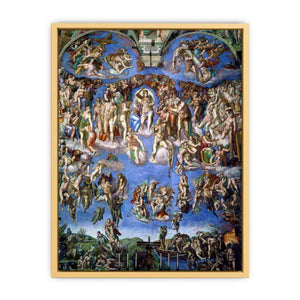
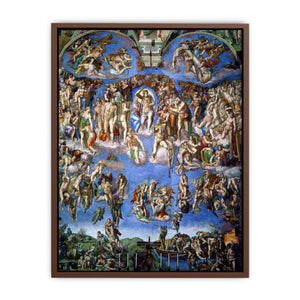
Last Judgment (1) 1537–41 Painting by Michelangelo Buonarroti stands as one of the most overwhelming, intellectually complex, and emotionally uncompromising images ever produced in Western art. Executed on the altar wall of the Sistine Chapel between 1537 and 1541, the work represents not merely a biblical vision of the end of time, but a total reimagining of divine justice, human fate, and cosmic order. Vast in scale and radical in conception, the painting confronts the viewer with humanity stripped of hierarchy, ornament, and illusion, exposed before an all-encompassing judgment that is both terrifying and absolute.
The artist responsible for this monumental vision, Michelangelo Buonarroti, was no longer the confident humanist of the High Renaissance when he undertook this work. The world around him had changed irrevocably. Rome had been sacked, religious certainty had fractured, and Michelangelo himself had grown older, more introspective, and more severe. The Last Judgment reflects this transformation. It is not a harmonious celebration of divine order, but a storm of bodies, motion, and moral reckoning, shaped by spiritual anxiety and philosophical urgency.
The subject is drawn from Christian eschatology: the Second Coming of Christ and the final judgment of souls. Yet Michelangelo rejects traditional compositional divisions between heaven, earth, and hell. Instead, he constructs a single, unified vortex of human bodies in constant motion. At the center stands Christ, not as a gentle savior, but as an imposing, muscular judge whose raised arm initiates irreversible judgment. Around him, saints, martyrs, angels, the blessed, and the damned are swept into a cosmic upheaval that leaves no space untouched.
Compositionally, the painting abandons architectural clarity in favor of dynamic circulation. The figures spiral outward from Christ in concentric movements, creating a sense of relentless motion rather than orderly procession. There is no stable ground, no horizontal rest. Bodies rise, fall, twist, and strain against invisible forces. This compositional instability is deliberate. Michelangelo transforms the wall into a field of moral tension, where nothing remains fixed and every soul is in flux.
Perspective is immersive and confrontational. Unlike earlier fresco cycles that guide the eye through narrative sequences, The Last Judgment overwhelms perception all at once. The viewer is not invited to read the scene gradually; they are engulfed by it. Michelangelo denies distance and comfort, forcing direct confrontation with scale and intensity. The painting does not allow detachment. It insists on presence.
Light is used not to describe time of day or natural space, but to model bodies with sculptural clarity. Figures emerge from a luminous blue ground, their forms defined by tension rather than environment. Light here functions as revelation, exposing flesh without offering refuge. There is no shadow in which to hide. Every body is fully visible, fully accountable. Illumination becomes moral rather than atmospheric.
The color palette is restrained yet forceful. Flesh tones dominate the composition, asserting the physical reality of judgment. The surrounding blues and muted earth tones serve to unify the mass of bodies without distraction. Color does not beautify; it clarifies. The overwhelming presence of the human form reinforces Michelangelo’s conviction that judgment is not abstract, but bodily and existential.
Anatomy is the painting’s primary language. Michelangelo’s figures are monumental, muscular, and intensely physical, regardless of gender or spiritual status. Saints and sinners alike possess the same corporeal weight. There is no idealization of the saved, no diminishment of the damned. The body itself becomes the site of meaning. Muscles strain with fear, hope, resistance, and despair. The flesh carries the burden of destiny.
Symbolically, The Last Judgment is dense and uncompromising. Traditional attributes identify certain saints—Saint Bartholomew holds his flayed skin, widely believed to bear Michelangelo’s own likeness, suggesting profound self-scrutiny. Angels sound trumpets, resurrecting the dead, while others bear the instruments of the Passion. Below, the damned are dragged downward by demons, their descent chaotic and violent. Yet Michelangelo avoids theatrical hellfire. Damnation here is not spectacle, but inevitability.
Psychologically, the painting is relentless. Faces register terror, resignation, pleading, and defiance, but rarely peace. Even the saved ascend with effort, pulled upward rather than lifted effortlessly. There is no easy salvation, no decorative grace. Michelangelo presents judgment as an existential reckoning in which human agency and divine will collide. The painting offers no reassurance. It confronts.
Within Michelangelo’s career, The Last Judgment marks a decisive break from the optimism of works such as The Creation of Adam. Where earlier compositions celebrated potential and harmony, this fresco acknowledges fragmentation and fear. It is the work of an artist wrestling with mortality, faith, and responsibility on a cosmic scale. It stands as a bridge between Renaissance humanism and the spiritual intensity that would define later European art.
Culturally, the painting has provoked controversy since its unveiling. Its nude figures, emotional violence, and theological boldness challenged ecclesiastical norms and later prompted censorship. Yet its endurance lies precisely in this refusal to conform. The Last Judgment does not illustrate doctrine comfortably. It interrogates belief itself, forcing viewers to confront the weight of moral consequence.
In contemporary interiors across the United States, the United Kingdom, Canada, Australia, and Europe, Last Judgment (1) functions as a statement of unparalleled gravity. In studies, libraries, and galleries, it commands intellectual respect and philosophical reflection. In luxury residences and curated spaces, it anchors the environment with historical and moral intensity. Its monumental composition and timeless themes allow it to integrate powerfully into traditional, modern, minimalist, and eclectic interiors where cultural authority and depth are paramount.
The painting remains meaningful today because it addresses questions that remain unresolved: responsibility, consequence, and the fate of the self. In an era often defined by uncertainty and ethical complexity, Michelangelo’s vision feels starkly relevant. The Last Judgment does not comfort. It compels.
Last Judgment (1) 1537–41 Painting by Michelangelo Buonarroti endures as one of the most formidable achievements in the history of art. Through anatomical mastery, compositional force, and unflinching moral vision, Michelangelo transformed a biblical subject into a timeless confrontation with human destiny. The painting does not explain judgment. It enacts it.
Buy museum qulaity 400- 450 canvas prints, framed prints, and 100% oil paintings of Last Judgment (1) by Michelangelo Buonarroti at Alpha Art Gallery, where world-famous masterpieces are recreated with museum-quality detail, refined craftsmanship, and premium materials.
FAQS
What does Last Judgment (1) depict?
It depicts the Second Coming of Christ and the final judgment of humanity, showing the saved and the damned in a single cosmic upheaval.
Why is Christ shown as powerful rather than gentle?
Michelangelo presents Christ as an absolute judge, emphasizing authority and irreversible judgment.
Why are all the figures nude?
Nudity removes social status and symbolism, presenting humanity equally and without disguise before judgment.
What is the significance of Saint Bartholomew’s flayed skin?
It symbolizes martyrdom and is widely believed to include Michelangelo’s own self-portrait, suggesting personal reckoning.
Why does the painting feel so chaotic?
The dynamic composition reflects spiritual upheaval and the instability of human fate at the end of time.
How does this work differ from Michelangelo’s earlier Sistine paintings?
It is darker, more severe, and less optimistic, reflecting the artist’s later worldview.
Why is this painting still relevant today?
Its exploration of responsibility, consequence, and moral reckoning remains universal.
Where does this artwork work best in interiors?
It is best suited for galleries, studies, libraries, and spaces seeking profound cultural and philosophical impact.
| 1. Select Type |
Canvas Print, Unframed Paper Print, Hand-Painted Oil Painting, Framed Paper Print |
|---|---|
| 2. Select Finish Option |
Rolled Canvas, Rolled- No Frame, Streched Canvas, Black Floating Frame, White Floating Frame, Brown Floating Frame, Black Frame with Matt, White Frame with Matt, Black Frame No Matt, White Frame No Matt, Streched, Natural Floating Frame, Champagne Floating Frame, Gold Floating Frame |
| 3. Select Size |
60cm X 90cm [24" x 36"], 76cm X 114cm [30" x 45"], 90cm X 120cm [36" x 48"], 100cm X 150cm [40" x 60"], 16.54 x 11.69"(A3), 23.39 x 16.54"(A2), 33.11 x 23.39"(A1), 46.81 x 31.11"(A0), 54" X 36", 50cm X 60cm [16" x 24"], 121cm X 182cm [48" x 72"], 135cm X 200cm [54" x 79"], 165cm x 205cm [65" x 81"], 183cm x 228cm [72" x 90"], 22cm X 30cm [9" x 12"], 30cm x 45Cm [12" x 18"], 45cm x60cm [16" x 24'], 75cm X 100cm [30" x 40"], 121cm x 193cm [48" x 76"], 45cm x 60cm [16" x 24'], 20cm x 25Cm [8" x 10"], 35cm x 50Cm [14" x 20"], 45cm x 60 cm [18" x 24"], 35cm x 53Cm [14" x 21"], 66cm X 101cm[26" x 40"], 76cm x 116cm [30"x 46"], 50cm X 60cm 16" x 24"] |