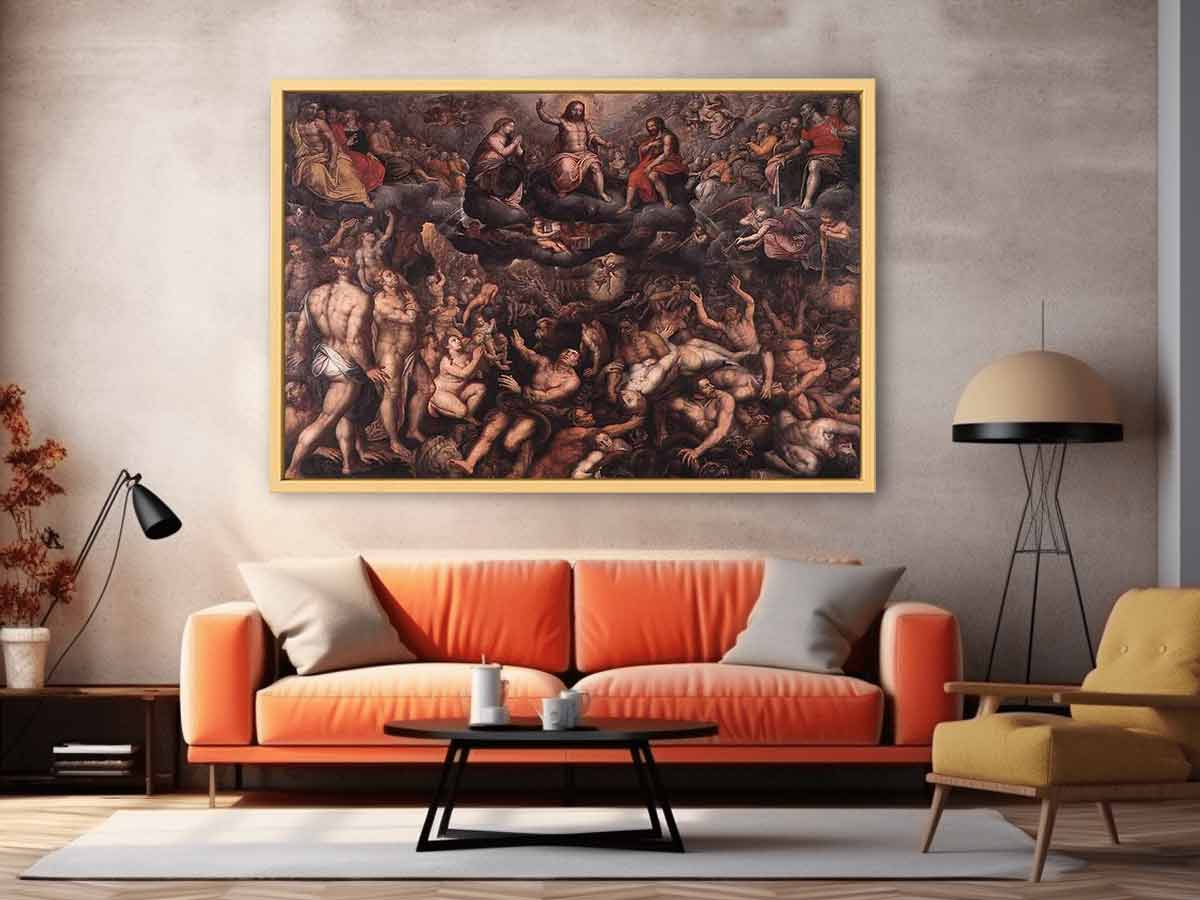
The Last Judgment — Renaissance Religious Masterpiece
The Last Judgment is one of the most powerful images in Western religious art. The monumental fresco on the altar wall of the Sistine Chapel in Vatican City was created by Michelangelo between 1536 and 1541 and presents Christ at the center of the final judgment, surrounded by saints, angels, resurrected souls and the condemned.
The supplied product record attributes the work to Raphael, but the famous Sistine Chapel Last Judgment is securely attributed by the Vatican Museums to Michelangelo. Raphael and Michelangelo were both central figures of the High Renaissance and both worked in papal Rome, but Raphael died in 1520 while Michelangelo completed the fresco in 1541. This distinction should be preserved in accurate product cataloguing.
Christ at the Center
Christ occupies the visual and theological center. His gesture initiates powerful movement through the surrounding figures and establishes the moment before the final verdict. The Virgin Mary appears beside Christ while saints gather around the divine figure.
The Resurrection of the Dead
The dead rise toward judgment while angels sound trumpets associated with the Apocalypse. Bodies emerge and regain physical form, creating one of the extraordinary anatomical passages of Renaissance art.
The Saved and the Damned
The composition creates a directional contrast. The saved rise toward heaven while the condemned are dragged downward by angels and devils. Upward movement becomes a visual metaphor for salvation while downward movement communicates punishment.
Classical Anatomy
Michelangelo’s extensive use of nude figures reflects Renaissance fascination with anatomy and classical sculpture. The human body becomes an expressive instrument capable of communicating fear, hope, struggle and spiritual transformation.
The Sistine Chapel
The Last Judgment occupies the altar wall of the Sistine Chapel, one of the world’s most important Renaissance interiors. The chapel ceiling contains Michelangelo’s Genesis scenes, creating a visual relationship between Creation and final judgment.
The Controversy Over Nudity
The extensive nude figures caused controversy after the fresco was unveiled. Later, some figures were covered with painted drapery, particularly following the Council of Trent. This history illustrates changing attitudes toward religious art and the human body.
The Last Judgment as Wall Art
A reproduction can create a dramatic focal point in a large room, private gallery, library or classical interior. Full compositions work at substantial scale, while selected details provide a more intimate experience of individual figures.
Bring The Last Judgment Into Your Collection
The Last Judgment remains an extraordinary representation of Christian theology transformed through Renaissance anatomy, movement and monumental composition. For historical accuracy, the famous Sistine Chapel fresco should be identified as a work by Michelangelo rather than Raphael. Whether displayed as a fine art print, canvas, framed reproduction or hand-painted interpretation, it can bring the dramatic visual language of Vatican Renaissance art into a contemporary collection.