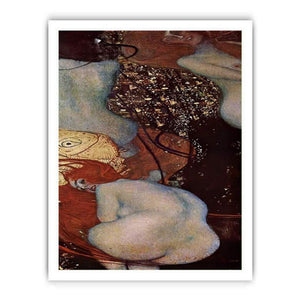
Goldfish Painting by Gustav Klimt
Goldfish Painting by Gustav Klimt is one of the most playful, defiant, and psychologically layered works of his Symbolist period, a painting in which provocation, ornament, and self-aware irony converge with remarkable clarity. Created in 1901–1902, the work occupies a distinctive position within Klimt’s oeuvre, standing at the crossroads of sensuality and satire, myth and modernity. Unlike his solemn allegories or monumental female icons, Goldfish radiates mischievous confidence. It is a painting that smiles back at the viewer—knowingly, unapologetically, and with unmistakable intent.
The artist behind this audacious vision, Gustav Klimt, was at a moment of heightened controversy when Goldfish was conceived. Klimt had recently faced fierce criticism from conservative Viennese audiences for his university ceiling paintings, which were condemned as immoral and decadent. Rather than retreat, Klimt responded with irony and assertion. Goldfish emerged as a deliberate gesture of independence—a work that embraces sensuality not as scandal, but as autonomy.
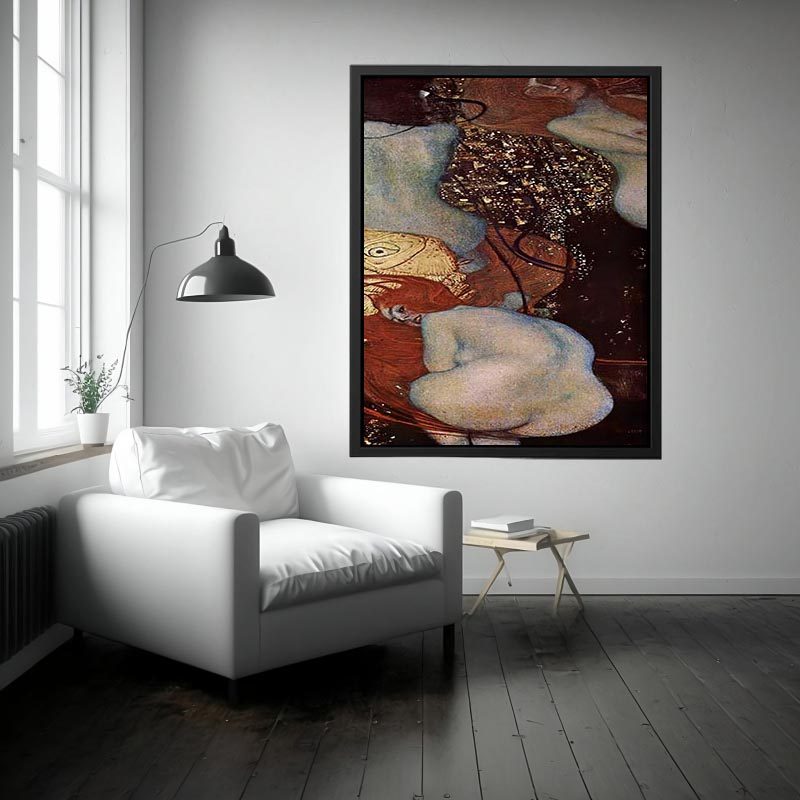
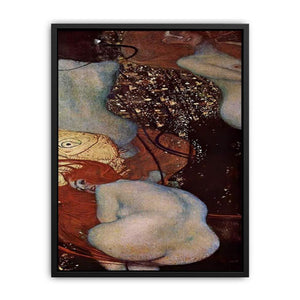
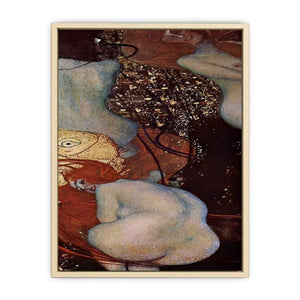
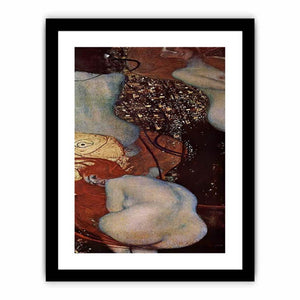
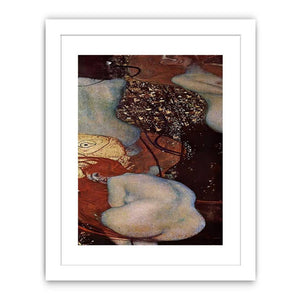
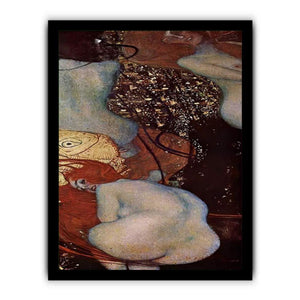
The painting depicts a group of female nudes immersed in a shimmering aquatic environment, their bodies floating amid ornamental patterns and glimmering color. One figure, positioned prominently in the foreground, turns her back to the viewer, glancing over her shoulder with a look that is at once playful and confrontational. Her gesture—often interpreted as deliberately cheeky—has been widely read as Klimt’s response to his critics. The title itself carries ambiguity. While “goldfish” suggests decorative beauty and surface charm, it also hints at irony, even mockery. Klimt leaves interpretation open, inviting the viewer into a subtle game of meaning.
Compositionally, the painting is dynamic yet controlled. The figures form a loose vertical rhythm that guides the eye upward through the canvas, from the assertive foreground figure to the dreamlike cluster above. Klimt avoids classical symmetry, opting instead for fluid arrangement and visual surprise. The composition feels spontaneous, yet it is meticulously balanced. Each figure occupies a precise role within the whole, contributing to a sense of buoyancy and movement.
Perspective enhances intimacy and immediacy. The foreground figure appears startlingly close, her body cutting sharply against the decorative field behind her. This proximity collapses traditional distance between artwork and viewer. Klimt refuses passive observation. The viewer is addressed directly, implicated in the exchange of gaze and gesture. The painting’s humor arises from this interaction—it knows it is being seen, and it enjoys that knowledge.
Light in Goldfish is diffuse and atmospheric rather than directional. There is no single source. Instead, illumination seems to emanate from the surface itself, as if color and pattern generate their own glow. Flesh tones shimmer softly against a background of blues, greens, and golds, dissolving the boundary between body and environment. Light becomes ornamental rather than descriptive, reinforcing the painting’s dreamlike suspension.
The color palette is vibrant and sensuous. Turquoise waters, warm flesh, flashes of gold, and saturated blues intermingle with hypnotic ease. Klimt’s use of color is not naturalistic; it is expressive and symbolic. Color here suggests pleasure, fluidity, and freedom. The aquatic setting allows bodies to float without gravity, enhancing the sense of liberation that permeates the work.
Klimt’s technique in Goldfish exemplifies his mature Symbolist language. Naturalistic flesh is rendered with soft precision, while surrounding elements dissolve into abstract, decorative motifs. Scales, ripples, and organic shapes echo the ornamental rhythms seen in his gold-ground works, yet here they are lighter, more playful. Pattern does not dominate the figures; it dances around them. The result is a balance between embodiment and ornament that feels deliberately effortless.
Symbolically, Goldfish resists fixed interpretation. It can be read as a celebration of feminine autonomy, a satire of moral outrage, or a self-referential joke aimed at artistic convention. The foreground figure’s turned back and playful glance suggest defiance without aggression. Klimt replaces confrontation with wit. Sensuality becomes a form of self-possession rather than transgression.
Psychologically, the painting is buoyant and confident. Unlike the intense, sometimes unsettling presence of works such as Judith I, Goldfish feels light, even humorous. Yet this lightness is not superficial. It is an assertion of freedom—the freedom to delight, to provoke, and to exist without justification. Klimt acknowledges the gaze of the viewer and refuses to submit to it. Instead, the painting meets scrutiny with charm.
Within Klimt’s broader body of work, Goldfish occupies a unique tonal register. It demonstrates that his engagement with sexuality and ornament was not solely dramatic or mythic, but could also be ironic and joyful. The painting expands understanding of Klimt as an artist capable of humor and self-awareness, qualities sometimes overshadowed by the grandeur of his most famous works.
Culturally, Goldfish reflects the tensions of fin-de-siècle Vienna, a city negotiating modern identity amid rigid social norms. Klimt’s painting aligns with emerging ideas of artistic freedom and personal expression. It challenges moral rigidity not through confrontation, but through delight. This strategy has ensured its lasting appeal. The painting does not argue; it seduces.
In contemporary interiors across the United States, the United Kingdom, Canada, Australia, and Europe, Goldfish introduces vibrancy, confidence, and conversational energy. In living rooms, it acts as a focal point rich with color and personality. In studies and offices, it conveys independence and creative spirit. In galleries and luxury residences, it anchors space with modern elegance and playful sophistication, harmonizing beautifully with modern, eclectic, and minimalist décor while offering a spirited counterpoint to traditional settings.
The painting remains meaningful today because it affirms joy as a form of resistance. In a world still inclined to regulate expression and pleasure, Goldfish reminds viewers that art can be witty, sensual, and unapologetic without losing depth. Klimt’s vision asserts that beauty need not explain itself.
Goldfish Painting by Gustav Klimt endures as a celebration of artistic freedom and self-aware sensuality. Through fluid composition, luminous color, and ironic intelligence, Klimt transformed provocation into pleasure. The painting does not seek approval. It floats.
Buy museum qulaity 400- 450 canvas prints, framed prints, and 100% oil paintings of Goldfish by Gustav Klimt at Alpha Art Gallery, where world-famous masterpieces are recreated with museum-quality detail, refined craftsmanship, and premium materials.
FAQs
What does Goldfish depict?
It depicts female figures floating in an aquatic, ornamental environment, emphasizing sensuality and playfulness.
Why is the painting considered provocative?
Its confident nudity and humorous defiance challenged conservative moral standards of Klimt’s time.
Is Goldfish meant to be symbolic or ironic?
It is both, blending sensual symbolism with playful, self-aware irony.
What is the significance of the foreground figure’s gesture?
Her turned back and glance suggest defiance, autonomy, and wit rather than submission.
How does this painting differ from Klimt’s gold-ground works?
It is lighter in tone, more playful, and less monumental, though still richly ornamental.
Why does Goldfish remain relevant today?
Its celebration of freedom, pleasure, and individuality resonates strongly in modern culture.
What artistic movement does this painting belong to?
It aligns with Symbolism and the Vienna Secession.
Where does this artwork work best in interiors?
It is ideal for living rooms, studies, galleries, and spaces seeking color, confidence, and modern flair.