Ascent of the Blessed Painting by Hieronymus Bosch
Ascent of the Blessed Painting by Hieronymus Bosch stands among the most visionary and conceptually daring representations of the afterlife ever conceived in Western art. Created at the turn of the sixteenth century, this work reflects a world in which spiritual belief, moral anxiety, and metaphysical speculation were inseparable from daily life. Bosch does not merely illustrate Christian doctrine; he constructs a visual philosophy of salvation, one that explores the soul’s passage from earthly existence into divine eternity with extraordinary psychological and symbolic depth.
Hieronymus Bosch worked in the late medieval Netherlands, a period marked by intense concern with death, judgment, and the fate of the soul. Plagues, religious reform movements, and widespread uncertainty shaped a culture deeply preoccupied with the afterlife. Within this context, Ascent of the Blessed emerges as a profound meditation on hope, transformation, and transcendence. Rather than presenting paradise as a static realm of reward, Bosch focuses on the moment of transition itself, emphasizing ascent as a spiritual and existential process.
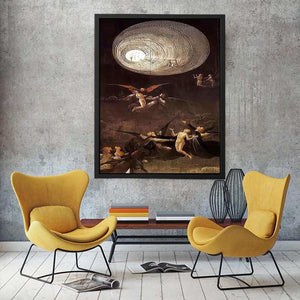
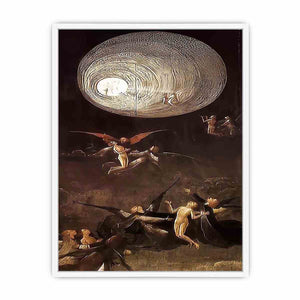
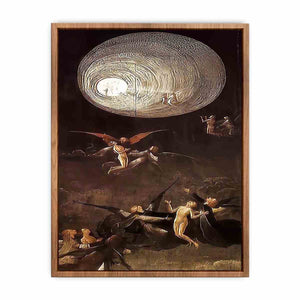
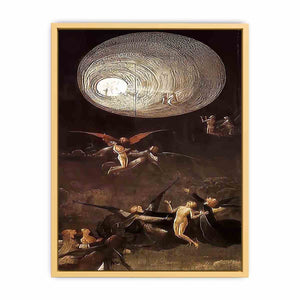
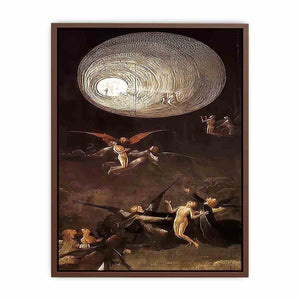
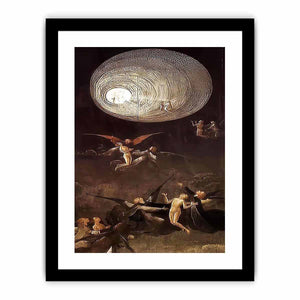
The composition is structured around a powerful vertical axis that immediately directs the viewer’s gaze upward. At the lower register, human souls emerge from darkness, guided gently by angels toward a luminous opening above. These figures are depicted without worldly attributes, their nudity symbolizing the shedding of earthly identity and material attachment. Bosch’s decision to strip the blessed of individuality underscores the universality of salvation, presenting the soul as equal before divine judgment regardless of earthly status.
As the eye travels upward through the composition, darkness gradually dissolves into light. This transition is one of the painting’s most striking features. Bosch employs light not as a natural phenomenon but as a metaphysical force, increasing in intensity as the souls approach the divine realm. The radiant tunnel at the top of the painting functions as both spatial destination and symbolic threshold, suggesting entry into a higher state of being rather than a fully revealed paradise. The divine presence remains unseen, reinforcing the mystery at the heart of spiritual fulfilment.
Bosch’s handling of space is deliberately ambiguous. The environment in which the ascent takes place does not correspond to any recognizable earthly landscape. Instead, it exists in an indeterminate realm between the material and the immaterial. This spatial uncertainty enhances the painting’s psychological resonance, placing the viewer in a liminal state similar to that of the ascending souls. The lack of architectural markers or celestial ornamentation distinguishes Bosch’s vision from more conventional depictions of heaven, emphasizing experience over spectacle.
The angels play a crucial yet understated role in the composition. They do not command attention through dramatic gesture or elaborate form. Instead, they guide the souls with calm assurance, embodying divine order without coercion. Their presence reinforces the idea that salvation, in Bosch’s vision, unfolds through harmony rather than force. The ascent is inevitable, serene, and purposeful, reflecting a conception of divine justice rooted in balance rather than punishment.
Colour contributes subtly but decisively to the painting’s atmosphere. Bosch relies on a restrained palette dominated by cool blues, greys, and pale whites. These tones create a sense of immateriality, dissolving the boundaries between bodies and space. Earthly colours are notably absent, reinforcing the theme of departure from the physical world. The gradual shift toward brightness at the upper reaches of the composition mirrors the soul’s movement toward spiritual clarity and illumination.
Symbolism permeates the painting without ever becoming didactic. The tunnel of light has been interpreted as a passage into divine presence, a metaphor for spiritual rebirth, or a visual representation of ultimate truth. Bosch deliberately resists precise definition, allowing the image to function on multiple levels simultaneously. This openness to interpretation is central to the painting’s enduring power. It does not instruct the viewer what to believe, but invites contemplation of what it means to transcend human limitation.
Within Bosch’s broader body of work, Ascent of the Blessed reveals a dimension of his artistic vision often overshadowed by his more nightmarish depictions of sin and damnation. While Bosch is renowned for his infernal imagery, this painting demonstrates his equal capacity for serenity, balance, and hope. It forms a conceptual counterweight to his visions of hell, completing a moral universe in which salvation is portrayed with the same imaginative intensity as punishment.
The painting also occupies an important position in the evolution of European art. Bosch’s abstract treatment of space, light, and symbolism anticipates later artistic explorations of the subconscious and the unseen. Centuries before modern psychology or abstract art, Bosch grappled visually with questions of consciousness, transition, and the unknown. Ascent of the Blessed thus resonates not only as a religious image, but as an early inquiry into the inner life of the human spirit.
In contemporary cultural contexts, the painting’s relevance remains undiminished. Its themes of ascent, transformation, and release speak powerfully to modern audiences navigating periods of transition, uncertainty, and self-reflection. Even outside a strictly religious framework, the image functions as a metaphor for personal growth, moral reckoning, and the pursuit of meaning beyond material existence.
Within modern interiors across the United States, the United Kingdom, Canada, Australia, and Europe, Ascent of the Blessed offers a rare combination of visual subtlety and conceptual depth. In living rooms, it serves as a contemplative centrepiece that invites sustained engagement rather than passive viewing. In studies and private offices, it complements environments dedicated to reflection, philosophy, and intellectual pursuit. In galleries and curated spaces, it asserts cultural authority through its historical significance and symbolic richness.
The painting integrates naturally into both traditional and contemporary interiors. In minimalist settings, its restrained palette and ethereal composition provide visual calm while introducing profound narrative content. In classical or eclectic spaces, it harmonizes with other artworks by contributing a sense of metaphysical inquiry and historical continuity. Its vertical orientation makes it particularly effective in spaces with height, where the visual movement of ascent can be fully experienced.
The long-term artistic importance of Ascent of the Blessed lies in its refusal to simplify the concept of salvation. Bosch does not present heaven as a reward easily attained or clearly defined. Instead, he offers a vision of becoming, a process shaped by movement, light, and surrender. This emphasis on journey rather than destination ensures the painting’s relevance across centuries and belief systems.
As time passes, the painting continues to speak to fundamental human concerns: what it means to leave one state of existence and enter another, how transformation occurs, and whether fulfilment lies beyond the visible world. Ascent of the Blessed endures because it honours uncertainty while affirming hope, presenting transcendence not as spectacle, but as a quiet and profound ascent into light.
Buy museum qulaity 400- 450 canvas prints, framed prints, and 100% oil paintings of Ascent of the Blessed by Hieronymus Bosch at Alpha Art Gallery, where world-famous masterpieces are recreated with museum-quality detail, refined craftsmanship, and premium materials.
FAQS
What is the central meaning of Ascent of the Blessed by Hieronymus Bosch?
The painting represents the soul’s transition from earthly existence toward divine illumination, emphasizing spiritual transformation and transcendence.
How does this painting differ from traditional images of heaven?
Rather than depicting paradise as a static realm, Bosch focuses on the process of ascent, highlighting movement, light, and metaphysical change.
Why is this work important within Bosch’s artistic legacy?
It reveals Bosch’s capacity to depict hope and salvation with the same imaginative power as his darker visions, completing his moral and symbolic universe.
Is the symbolism in the painting open to interpretation?
Yes, Bosch intentionally leaves his imagery suggestive, allowing viewers to engage with the painting on personal, philosophical, or spiritual levels.
Where does this artwork work best in interior spaces?
It is particularly suited to studies, living rooms, galleries, and contemplative environments where its vertical composition and depth can be appreciated.
Does Ascent of the Blessed have lasting cultural value?
Its exploration of transformation, mortality, and hope ensures enduring relevance across historical periods and cultural contexts.
Why does the painting remain compelling for modern audiences?
Its symbolic ambiguity and psychological depth resonate with contemporary reflections on meaning, transition, and the unknown beyond material life.