




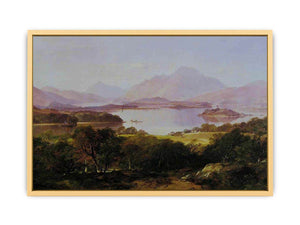

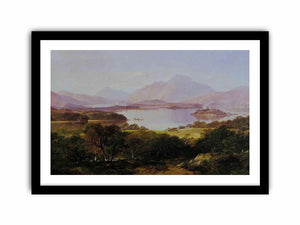
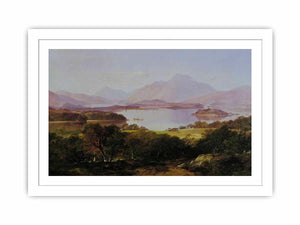
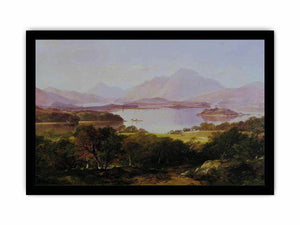
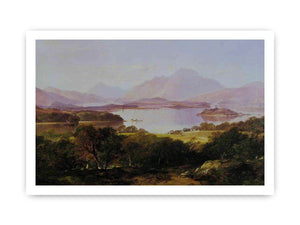
A View of Loch Lomond
Go kalles this summer with this vintage navy and white striped v-neck t-shirt from the Nike. Perfect for pairing with denim and white kicks for a stylish kalles vibe.

A View of Loch Lomond
A View of Loch Lomond Painting by Horatio McCulloch
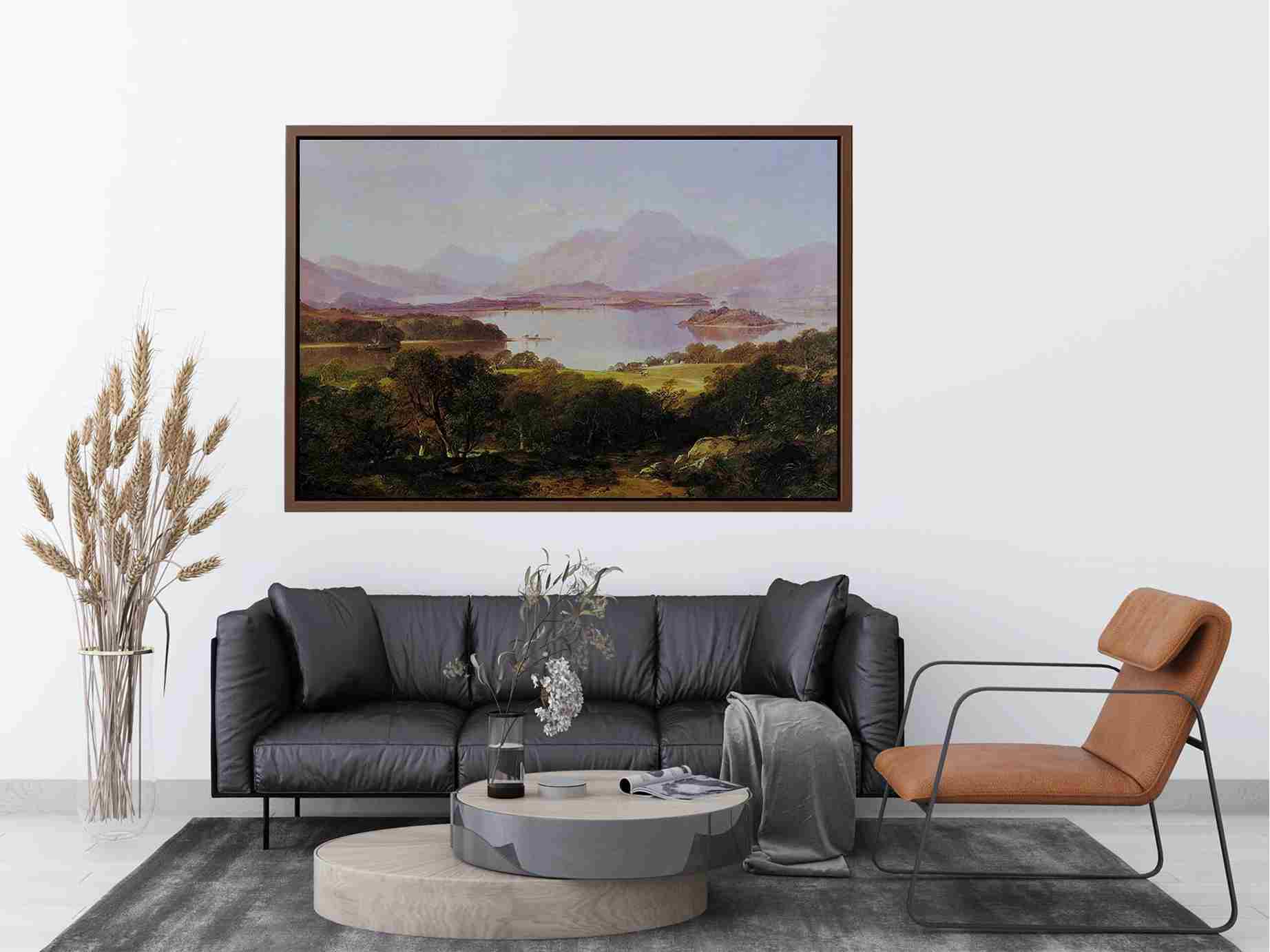
A View of Loch Lomond Painting by Horatio McCulloch is a commanding meditation on landscape as national identity, where atmosphere, scale, and geological presence coalesce into a vision of Scotland shaped by memory and endurance. Painted during the height of McCulloch’s career, the work exemplifies his conviction that landscape could function as a bearer of cultural meaning without recourse to anecdote or sentimentality. Loch Lomond is not presented as a picturesque diversion, but as a vast, living terrain whose character emerges through distance, weather, and light.
Horatio McCulloch devoted his artistic life to the Scottish Highlands, returning repeatedly to its lochs, mountains, and glens with an approach that fused Romantic sensibility and disciplined observation. A View of Loch Lomond belongs to this sustained engagement. Rather than depicting a fleeting effect, McCulloch constructs a vision of permanence—one in which land and sky are bound together by slow-moving atmosphere and monumental form.
The subject presents Loch Lomond stretching outward beneath an expansive sky, its waters calm yet weighty, reflecting light without theatrical display. The surrounding hills rise with measured authority, their forms softened by distance and mist. McCulloch does not crowd the scene with detail. He allows space to speak, granting the loch and its enclosing terrain the dignity of scale. Human presence, if suggested at all, is marginal—absorbed into the immensity of place.
Compositionally, the painting is organized through broad horizontals balanced by receding landforms. The loch functions as a visual anchor, drawing the eye across the canvas and into depth. Hills and distant mountains frame the water without enclosing it, creating a sense of openness rather than confinement. This balance between containment and expansion reinforces the painting’s contemplative power. The viewer is invited not to traverse the landscape, but to dwell within it.
Perspective is expansive yet controlled. McCulloch avoids dramatic plunges or vertiginous viewpoints, choosing instead a measured vantage that emphasizes continuity and distance. Depth unfolds gradually through tonal gradation and atmospheric recession. Foreground elements lead gently into middle distance, while far hills dissolve into softened silhouettes. Space is not dramatic; it is cumulative, built through patience and restraint.
Color is restrained and harmonized, dominated by cool blues, silvery greys, muted greens, and earthy browns. McCulloch’s palette avoids brilliance, favoring tonal subtlety that conveys moisture-laden air and shifting weather. Color here does not decorate; it clarifies. Each hue participates in a larger atmospheric unity, allowing land, water, and sky to coexist without visual conflict.
Light in A View of Loch Lomond is diffused and enveloping. There is no single source, no dramatic beam breaking through clouds. Instead, illumination permeates the scene, softening contours and binding forms together. This treatment of light aligns the painting with Romantic landscape traditions while maintaining McCulloch’s distinctive restraint. Light does not exalt; it steadies.
McCulloch’s technique is disciplined and deliberate. Brushwork is controlled, surfaces refined without becoming inert. Textures are suggested through variation of tone rather than emphatic gesture. Water remains smooth and reflective, hills retain weight without heaviness, and sky transitions seamlessly from light to shade. This technical clarity reinforces the painting’s sense of inevitability and calm authority.
Emotionally, the painting conveys solemn tranquility rather than exuberance. There is awe, but it is tempered by familiarity. McCulloch presents Loch Lomond not as a sublime threat, but as a presence shaped by time and endurance. The mood invites contemplation, encouraging the viewer to slow perception and attend to the quiet dialogue between land and sky.
Psychologically, the work reflects a nineteenth-century understanding of landscape as moral and cultural ground. McCulloch’s Loch Lomond is not neutral terrain; it carries historical and emotional weight. Yet the painting resists explicit narrative. Instead, it communicates through scale and atmosphere, allowing the land itself to suggest continuity beyond individual experience.
Symbolically, the loch functions as a site of reflection in multiple senses—reflecting sky and light, and reflecting a national imagination invested in place. McCulloch does not impose allegory, but the painting resonates with ideas of permanence, identity, and belonging. The land is not owned or conquered; it is witnessed.
Within McCulloch’s artistic evolution, A View of Loch Lomond represents the maturity of his Highland vision. Earlier works explored dramatic contrasts and rugged detail; here, restraint dominates. The painting demonstrates confidence in understatement, trusting atmosphere and proportion to carry meaning. It exemplifies McCulloch’s belief that the Scottish landscape could sustain prolonged attention without embellishment.
Culturally, the work occupies an important position in nineteenth-century British landscape painting. McCulloch helped shape a visual language through which Scotland was imagined—less as romantic spectacle and more as enduring presence. A View of Loch Lomond contributes to this legacy by presenting the Highlands as a space of reflection and continuity rather than dramatic excess.
In contemporary interiors across the United States, the United Kingdom, Canada, Australia, and Europe, A View of Loch Lomond offers distinguished presence. In living rooms, it introduces calm grandeur and spatial depth. In studies and offices, it supports reflection and intellectual composure. In galleries and luxury residences, it signals appreciation for landscape painting grounded in atmosphere and cultural resonance.
The painting integrates naturally into traditional interiors, where its classical restraint and tonal harmony align with established aesthetics. It also complements modern and minimalist spaces, where its broad structure and subdued palette provide visual balance. In eclectic environments, it acts as an anchoring work, unifying diverse elements through shared serenity.
The long-term artistic importance of A View of Loch Lomond lies in its demonstration that landscape can communicate identity without overt symbolism. McCulloch shows that atmosphere, scale, and patience can carry cultural meaning as powerfully as narrative. The painting endures because it invites sustained looking, rewarding attention with depth and calm authority.
Today, A View of Loch Lomond remains deeply resonant. In a world often dominated by speed and spectacle, its measured stillness feels restorative. Through expansive composition, restrained color, and enveloping light, Horatio McCulloch created a landscape that preserves not just a view, but a way of seeing—enduring, reflective, and quietly monumental.
Buy museum qulaity 400- 450 canvas prints, framed prints, and 100% oil paintings of A View of Loch Lomond by Horatio McCulloch at Alpha Art Gallery, where world-famous masterpieces are recreated with museum-quality detail, refined craftsmanship, and premium materials.
FAQS
What does A View of Loch Lomond by Horatio McCulloch depict?
It depicts Loch Lomond and its surrounding hills, emphasizing atmosphere, scale, and calm endurance.
Why is Loch Lomond significant in Scottish landscape painting?
It has long symbolized national identity and natural continuity within Scottish art and culture.
What mood does the painting convey?
It conveys solemn tranquility, reflection, and a sense of permanence.
Is this painting dramatic or restrained in style?
It is restrained, relying on atmosphere and proportion rather than dramatic contrast.
Where does this artwork work best in interior spaces?
It suits living rooms, studies, offices, galleries, and refined residential interiors.
Is A View of Loch Lomond suitable for modern décor?
Yes, its subdued palette and expansive composition integrate well into modern and minimalist spaces.
Does the painting have lasting artistic significance?
It is valued as a mature example of Scottish landscape painting that unites cultural identity with atmospheric depth.
| 1. Select Type |
Canvas Print, Unframed Paper Print, Hand-Painted Oil Painting, Framed Paper Print |
|---|---|
| 2. Select Finish Option |
Rolled Canvas, Rolled- No Frame, Streched Canvas, Black Floating Frame, White Floating Frame, Brown Floating Frame, Black Frame with Matt, White Frame with Matt, Black Frame No Matt, White Frame No Matt, Streched, Natural Floating Frame, Champagne Floating Frame, Gold Floating Frame |
| 3. Select Size |
60cm X 90cm [24" x 36"], 76cm X 114cm [30" x 45"], 90cm X 120cm [36" x 48"], 100cm X 150cm [40" x 60"], 16.54 x 11.69"(A3), 23.39 x 16.54"(A2), 33.11 x 23.39"(A1), 46.81 x 31.11"(A0), 54" X 36", 50cm X 60cm [16" x 24"], 121cm X 182cm [48" x 72"], 135cm X 200cm [54" x 79"], 165cm x 205cm [65" x 81"], 183cm x 228cm [72" x 90"], 22cm X 30cm [9" x 12"], 30cm x 45Cm [12" x 18"], 45cm x60cm [16" x 24'], 75cm X 100cm [30" x 40"], 121cm x 193cm [48" x 76"], 45cm x 60cm [16" x 24'], 20cm x 25Cm [8" x 10"], 35cm x 50Cm [14" x 20"], 45cm x 60 cm [18" x 24"], 35cm x 53Cm [14" x 21"], 66cm X 101cm[26" x 40"], 76cm x 116cm [30"x 46"], 50cm X 60cm 16" x 24"] |