
John William Godward


A Quiet Pool on a Sunny Day


Blown Away


Shark fishing


Sponge Fishing


Homecoming


On Guard


The Trapper


The Reaper


Shepherdess Tending Sheep


Harrowing


Boys in a Dory


Fisherman's Family


Daughter of the Coast Guard


Warm Afternoon


The Pumpkin Patch


Crab Fishing


Fisher Girls on Shore, Tynemouth


To the Rescue


For to Be a Farmer's Boy


The Signal of Distress


The West Wind


Waiting for a Bite


A Light on the Sea


Canoe in Rapids


The Turtle Pound


The Boat Builders


The Eagle's Nest / Osprey's Nest


Boy in a Boatyard


Kissing the Moon


Homosassa River


Foul Hooked Black Bass by Winslow Homer


A Sloop at a Wharf


White Mountain Wagon

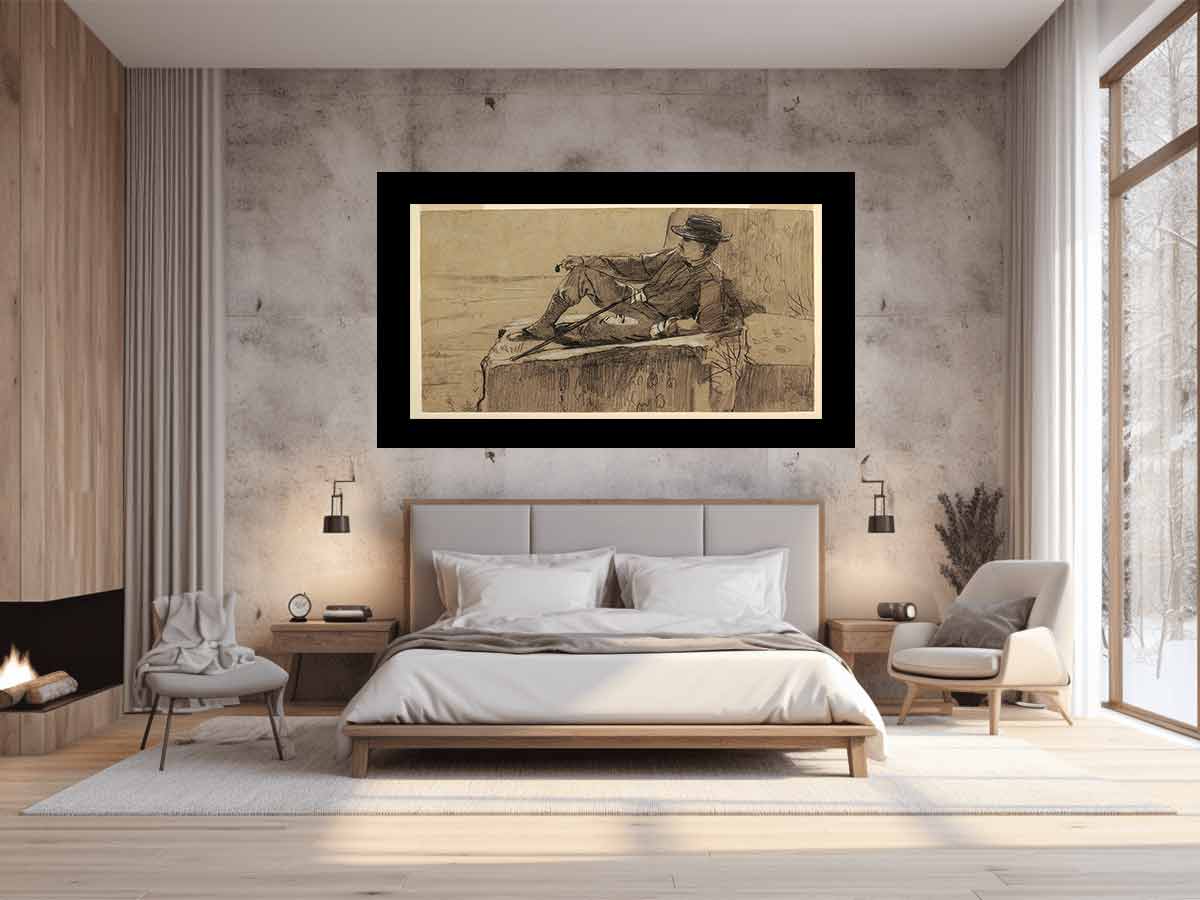
Mountain Climber Resting


Inside the Bar


Artists Sketching in the White Mountains


Cernay-la-Ville 1867


Coast of Maine


The Brush Harrow / Harrowing, Spring Time


Stowing Sail
John William Godward (9 Aug 1861- 13 Dec 1922)
John William Godward is a famous English painter whose career peaked in the Neo Classicist Era. Born on 9 August 1860, John William he was a student of Sir Lawrence Alma Tadema. He was a famous painter with a distinct painting style, but he fell out of favor in the modern era of fine arts. Our website of canvas art paintings is famous for hand painted canvas art
The early life of James
The painter with his five siblings lived in Wilton Grove, Wimbledon. His parents were Sarah Eboral and John Godward. He was named after his father and grandfather. His parents had an overbearing attitude which had a huge impact on his early childhood attitude. He became reclusive in his early life and later on became shy.
Godward’s career
His work was exhibited in the Royal Academy in 1887. In 1912, he moved to Italy from England and took one of his models as his partner, after which his family broke off all contacts with him. He was almost disinherited from the family as the members cut him from all existing photos. However, Godward returned to England in 1921 and died in his birth country in 1922.
His best-known painting is Dolce Far Niente was painted in 1904 and got purchased by Andrew Lloyd Webber in 1995. Godward had the habit of painting multiple versions of the same painting. This painting has an 1897 version and a 1906 version too.
The style of his painting
Godward was a neoclassicist painter with a Victorian-era style. His painting style influenced Frederic Leighton and an improvement on Leighton’s core painting style. Another major influence on his painting style was his mentor, Sir Lawrence, as mentioned earlier in the article, from whom the artist learned the art to depict architectural styles. The artist learned how to paint marble structures through his mentor’s style.
Many of the artist’s paintings include women of his time in elaborate dresses painted against different landscapes. Godward took inspiration from classical civilization and architecture, especially in Rome. Godward studied his subjects in detail and used research into his genre to gain more depth in his style. Since Godward took inspiration from people and architecture, Godward studied architecture and dress in detail to create great paintings.
He not only worked with human subjects but also specialized in animal skins. Many of his paintings in the 1910s include these details. Godward had a reputation for painting women with detailing in a classical landscape. He painted a very romanticized image of the world, which was famous. The style of painting Godward adapted came from the period he was born in.
His painting style was very beautiful and life-like, but the painter was the last of Neo Classicist painters, and his works remained in obscurity until the 1990s.
Death of John William Godward
John Williams Godward took his last breath on 13 December 1922 after he committed suicide. It was shocking that such a talented artist ended his life himself. However, it was tragic as it was artistic. His suicide note allegedly had words similar to, ‘the world is not big enough to hold both Picasso and me.’ He might have felt that he is far more talented than his contemporaries and did not get enough credit for his work.
The artist is buried in the Brompton Cemetery, London. While his family disowned him in 1910, it is also believed that the manner of his death brought even more shame to the family. Therefore, the family of Godward burnt all his existing documents after his death. Today, only one photograph of the painter survives.