
Eugene Delacroix

Hamlet and Horatio in the cemetery

Study for part of the 'Justice' frieze


Study for part of the 'Justice' frieze Painting

Monk at Prayer Painting

Lion and Tortoise Painting

St. Sebastian Painting

The Muse of Orpheus Painting


Faust, Goethe's Tragedy Painting

Lion Hunt 2 Painting

Arabs of Oran Painting

Battle of Poitiers Painting

Tiger and Snake Painting


The Descent from the Cross Painting

Lion of the Atlas Painting

Lion devouring an Arab horse Painting

The Edge of a Wood at Nohant Painting

Othello and Desdemona Painting

The Moroccan and his Horse Painting

Lion Hunt Painting

Death of Sardanapalus (study) Painting

Cheval sauvage terrasse par un Tigre Painting

Christ on the Sea of Galilee 2 Painting


Arab Fantasia Painting


Columbus and His Son at La Rábida Painting

Le Combat Painting

The Death of Ophelia1 Painting

The Death of Ophelia Painting

Basket of Flowers 1848 Painting

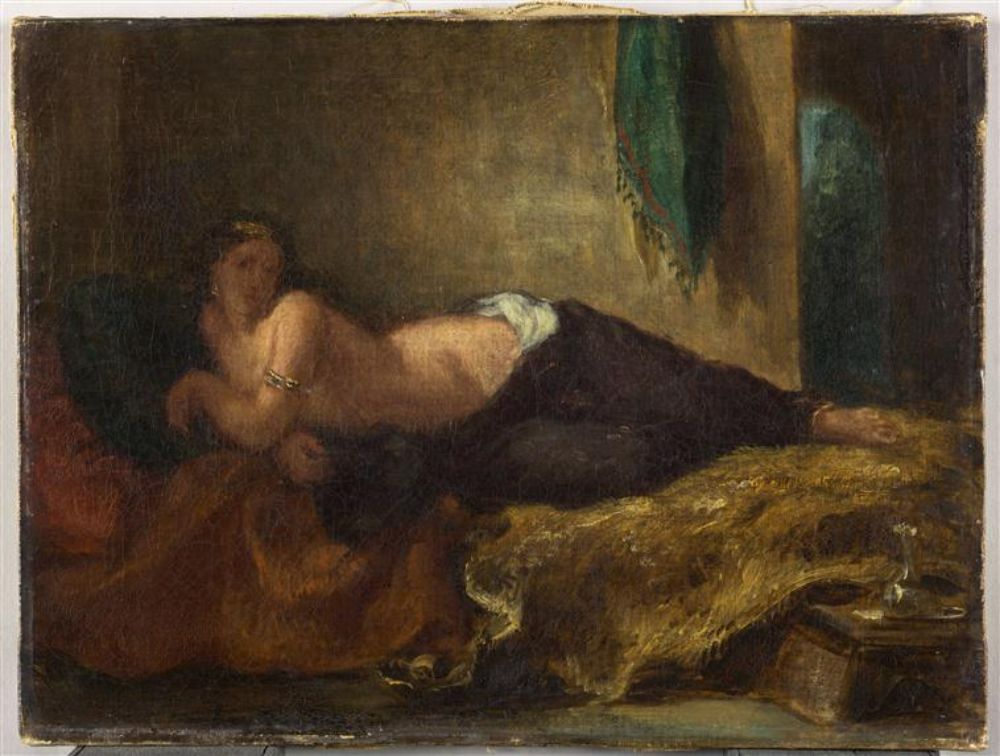
Odalisque1 Painting

Women of Algier (study) Painting

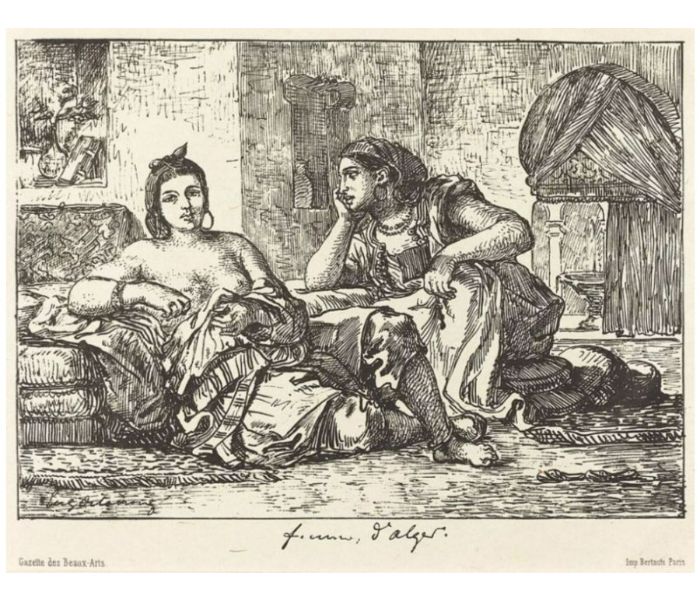
Femmes D'Alger Painting

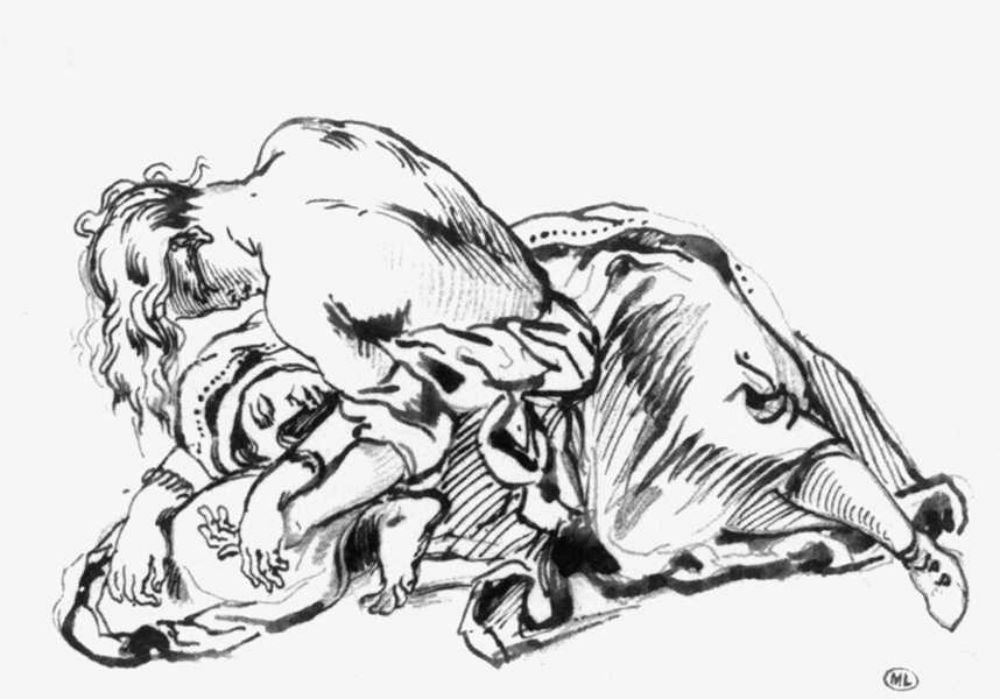
Yound Woman Leaning over a Woman Stretched out on the Ground 1840 Painting


War 1833-37 Painting

Ovid among the Scythians 1859 Painting
Eugene Delacroix
Eugene Delacroix was a French Painter and Muralist known as the Master of Colors. He also had an extreme impact on the Romantic Movement. Delacroix became the English Romantic landscapists' eye and pulled out their techniques to develop a unique and memorable approach to color.
Delacroix's paintings changed the artistic community forever, and his technique had an enduring impact on the Impressionist and Post-Impressionist movements. check our new range of Kinfe Paintings, artwork online at canvas art paintings
Early Life
Eugene Delacroix was born on 26 April 1798 in France. He began studying art at the age of 17 and was trained under academic painter Baron Pierre-Narcisse Guerin- the neo-classical artist. Then Delacroix was put in charge of architectural decorations for another statesman, Adolphe Theirs. His early days were influenced by fellow Romantic artists as well as Polish composer and pianist Frederic Chopin.
Delacroix's work illustrated the influence of Michelangelo's and Peter Paul Rubens, as seen in Dante and Virgil in Hell, which the artist exhibited to the Salon of 1822.
Early Career
Delacroix spent most of his years decorating the walls and ceilings of government buildings. These mural drawings made him feel closer to his idol, Michelangelo. The canvases of his late-career include The Battle of Taillebourg and The Taking of Constantinople by the Crusaders.
While traveling to London, Delacroix studied the work of the English painters he greatly admired. He felt this trip had brought him closer to impersonate Rubens's colorful style. Delacroix continued traveling to Spain, Algeria, and Morocco. Morocco changed him forever; he was spellbound by foreign culture and continued to paint Arab subjects for the rest of his career.
Delacroix was customizing Romanticism, assimilating the influences of great masters such as Michelangelo and Peter Paul Rubens. Then he developed his style, with empathy for showing pain and suffering in his work through brightly colored canvases.
Eugene Delacroix works
Delacroix's style evolved over the years, and he stayed true to his displays of emotion and intense colors. His expressions were unrepressed, and his canvases outburst with energy. He is still applauded for his vivid, technical innovations.
In his first masterpiece, Dante and Virgil in Hell, his full and pure colors only took form from a distance. This technique inspired the Impressionist movement. Delacroix continued to paint with great intensity and emotion. His work Massacre at Chios in the year 1824, which displays the killing of 20,000 Greeks by Turks on the island of Chios, is a perfect example of his maturation in style.
Delacroix's sovereignty leading the People served to celebrate the recent French Revolution. His canvas reflected a change in the artist's style; he painted with passion and animation, but the overall tone was quieter, and his use of colors became even more extravagant.
Delacroix commonly used a studio in Paris with English painter Richard Bonington and was greatly influenced by his watercolors. The music of Romantic composer Chopin has also inspired Delacroix. He developed a friendship with a talented Polish composer and even painted his portrait.
Lastly, Delacroix has painted the hysterical freedom and joy of the revolution. His painting survives as the revolution's most fascinating visual icon. An extremely fruitful artist, Delacroix is honored with creating over 1500 watercolors and pastel drawings, 7000 drawings of other types, 800 oils, and 100 lithographs.