


Pollard Willow By Van Gogh
Go kalles this summer with this vintage navy and white striped v-neck t-shirt from the Nike. Perfect for pairing with denim and white kicks for a stylish kalles vibe.

Pollard Willow By Van Gogh
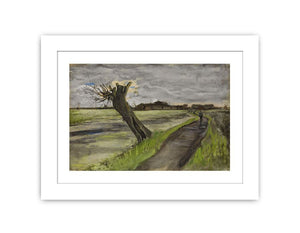
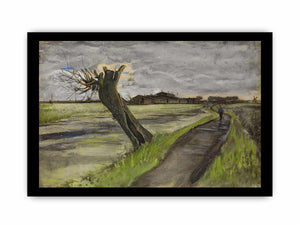
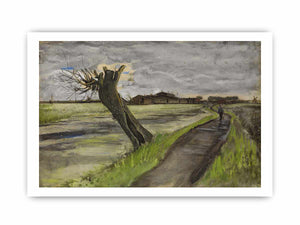
Pollard Willow is an atmospheric landscape work created by Vincent van Gogh in The Hague in July 1882, during an important early stage of his artistic development. Executed in pencil, brown ink, watercolour and chalk on paper, the work centres on a weathered pollard willow beside water, with the changing landscape of The Hague extending into the distance. The historical original is held by the Van Gogh Museum in Amsterdam. Alpha Art Gallery offers this evocative Van Gogh landscape as a canvas print, fine art print, framed print and 100% hand-painted oil painting reproduction.
About Pollard Willow by Vincent van Gogh
Pollard Willow reveals a side of Vincent van Gogh that can be very different from the intensely coloured paintings of Provence for which he later became famous. Created in The Hague in July 1882, the work belongs to Van Gogh's formative Dutch period, when drawing and watercolour were central to his efforts to master observation, perspective, landscape and the expressive possibilities of everyday subjects. The Van Gogh Museum records the work as pencil, brown ink, watercolour and chalk on paper, measuring approximately 38 × 55.8 cm. :contentReference[oaicite:1]{index=1}
The composition places a large, battered pollard willow prominently in the foreground. Rather than treating the tree as decorative scenery, Van Gogh gives it an almost portrait-like presence. Its irregular trunk, cut branches and rugged silhouette become the visual anchor of the scene, while the path, water, meadows, buildings and distant railway environment establish a broader view of the outskirts of The Hague.
This combination of close observation and expressive emphasis makes the work especially interesting within Van Gogh's development. The subject is ordinary and distinctly local, yet the tree possesses enough visual character to dominate the landscape. For admirers more familiar with Starry Night, sunflowers or the landscapes of Arles and Saint-Rémy, Pollard Willow offers an opportunity to explore the foundations of Van Gogh's art before the brilliant palette and more overtly rhythmic brushwork of his later career.
A Landscape from Van Gogh's Hague Period
Van Gogh was living in The Hague in 1882 and devoted considerable attention to drawing and watercolour. Pollard Willow was created during this period of intensive technical development. Contemporary evidence connects the work closely with Van Gogh's observation of the landscape around him; a surviving letter to his brother Theo from the end of July 1882 even contains a sketch of the pollard willow subject. :contentReference[oaicite:2]{index=2}
The landscape is therefore valuable not simply as an image of a tree but as evidence of Van Gogh learning how natural and human-made environments could coexist within a composition. The weathered willow and quiet water are set against distant signs of railway and industrial activity. Nature, roadways, meadows and the expanding city meet within the same view, giving the scene a character that is both rural and modern.
The Pollard Willow as the Focal Point
The most memorable feature of the artwork is its old pollarded tree. Pollarding is a traditional method of repeatedly cutting back the upper branches of a tree, producing the thick trunk and shortened, recurring branch growth characteristic of pollard willows. Van Gogh returned to such trees in other Dutch landscapes, suggesting that their rugged forms offered him rich possibilities for studying line, structure and character.
In this work, the tree rises prominently against the sky while the landscape spreads horizontally behind it. Its dark, broken contours contrast with softer passages of field, water and atmosphere. The horizontal format gives the surrounding environment room to unfold, but the willow prevents the viewer's attention from simply drifting across the landscape. It acts as a strong visual stop and establishes the foreground before the eye moves toward the distant buildings.
The tree can invite symbolic interpretations because of its aged and damaged appearance, but it is important not to present a single symbolic meaning as documented fact. Van Gogh clearly found the subject visually compelling, and his correspondence shows his enthusiasm for the work, but interpretations involving endurance, mortality or resilience should be understood as possible responses rather than fixed meanings assigned by the artist.
Watercolour, Drawing and Van Gogh's Developing Technique
Pollard Willow is especially valuable for understanding Van Gogh as a draughtsman and watercolourist. The original is not an oil painting. According to the Van Gogh Museum, it combines pencil, brown ink, watercolour and chalk on paper. :contentReference[oaicite:3]{index=3} This mixed approach allowed Van Gogh to unite drawn structure with areas of colour and tonal atmosphere.
Lines define the tree, roadway, distant structures and other elements of the scene, while watercolour introduces shifts in landscape and sky. The result sits between drawing and painting: descriptive enough to record the location, yet expressive enough for the willow and weather to establish a distinctive mood.
This early concentration on structure is particularly significant when viewed alongside Van Gogh's later paintings. Although his mature art would become associated with stronger colour contrasts and highly animated brushwork, his command of landscape composition developed through years of close observation and drawing. Pollard Willow provides a compelling example of that earlier process.
Is Pollard Willow a Post-Impressionist Artwork?
Vincent van Gogh is one of the central artists associated with Post-Impressionism, but Pollard Willow dates from 1882, before the mature French-period works that most clearly established his Post-Impressionist reputation. This particular work is better understood within his early Dutch development, with strong attention to observed landscape, drawing and the realities of everyday surroundings.
For collectors interested in Van Gogh beyond his best-known late paintings, this difference is part of the artwork's appeal. It shows how the artist's distinctive vision developed from careful studies of people, trees, streets and landscapes rather than appearing suddenly in the famous paintings of the late 1880s.
Where Is the Original Pollard Willow?
The historical Pollard Willow is in the collection of the Van Gogh Museum in Amsterdam, Netherlands. The museum identifies the work as having been made in The Hague in July 1882. :contentReference[oaicite:4]{index=4} The original museum artwork is not being sold by Alpha Art Gallery. The products offered here are reproductions created for customers who want to display Van Gogh's composition as wall art.
Why Pollard Willow Works So Well as Wall Art
The wide landscape orientation and prominent tree make Pollard Willow particularly suitable for spaces where a horizontally composed artwork can be viewed comfortably. Above a sofa, console, sideboard or desk, the composition has enough width to create presence without depending on the explosive colour associated with Van Gogh's later works.
Its subdued landscape character can work especially well in studies, libraries, living rooms and professional interiors where the goal is to introduce historically significant art without overwhelming the room. Larger reproductions emphasize the relationship between the foreground willow and the distant landscape, while smaller sizes bring greater attention to the intimate character of the drawing and watercolour technique.
Buyers building a wider art-history display can also explore Alpha Art Gallery's collection of celebrated artworks and historic masterpieces.
Choose Your Pollard Willow Reproduction
Alpha Art Gallery offers several ways to experience this Van Gogh landscape. The best format depends on whether you prefer the presence of canvas, the refinement of a traditional print, a finished framed presentation or the physical texture of an individually painted reproduction.
Museum-Quality Canvas Print
A Pollard Willow canvas print gives the horizontal landscape a substantial wall presence while retaining the immediacy associated with artwork displayed on canvas. Alpha Art Gallery uses 400–450 GSM museum-quality canvas and offers multiple sizes. Buyers who enjoy an unglazed, textured wall-art presentation may find canvas particularly effective for the work's rugged tree and atmospheric landscape. Explore more museum-quality canvas prints from the collection. :contentReference[oaicite:5]{index=5}
Fine Art Print
A fine art print suits buyers who want a refined printed presentation and wish to appreciate the drawing-like qualities of Van Gogh's original work. Because Pollard Willow itself was made on paper using pencil, ink, watercolour and chalk, a print presentation can feel especially appropriate for viewers interested in the character of works on paper.
Framed Print
A framed version provides a finished presentation that can integrate naturally into traditional or contemporary interiors. Framing can visually define the relatively muted landscape and give the horizontal composition additional architectural presence on the wall. Alpha Art Gallery offers multiple frame options where available; visitors interested in this presentation can also browse the wider framed print collection. :contentReference[oaicite:6]{index=6}
100% Hand-Painted Oil Painting Reproduction
For buyers who value physical brushwork and individually created artwork, Alpha Art Gallery also offers a 100% hand-painted oil painting reproduction. Professional artists individually paint these reproductions in oil on canvas, creating visible brushwork, painted texture and subtle variations inherent in handmade work. Because Van Gogh's historical Pollard Willow is a work on paper rather than an oil painting, this option should be understood as an oil interpretation of the composition, not a recreation of the original medium. Browse additional hand-painted oil painting reproductions. :contentReference[oaicite:7]{index=7}
Which Pollard Willow Format Should You Choose?
| Format | Visual Character | Well Suited For |
|---|---|---|
| Canvas Print | Textured, substantial wall presentation | Statement walls and buyers who prefer artwork on canvas |
| Fine Art Print | Refined printed presentation | Appreciating the drawing and watercolour character of the composition |
| Framed Print | Finished, defined presentation | Traditional or contemporary interiors requiring ready visual structure |
| Hand-Painted Oil Reproduction | Real brushwork and individually painted texture | Collectors who prefer the handmade character of oil on canvas |
For Pollard Willow specifically, a fine art or framed print has a natural connection to the work's original identity as a mixed-media work on paper. Canvas creates a stronger decorative wall presence, while the hand-painted oil option provides a distinctly different interpretation focused on texture and craftsmanship.
Choosing the Right Size
The historical work has a horizontal format of approximately 38 × 55.8 cm. :contentReference[oaicite:8]{index=8} When selecting a reproduction size, consider both the available wall width and how much viewing distance the room provides. A larger format allows the background architecture, fields and atmospheric passages to remain more visible from across a room, whereas a smaller reproduction encourages closer viewing of the tree and drawn details.
For placement above furniture, consider the overall visual relationship between the artwork and the object beneath it rather than selecting a size from a rigid formula. In an open living room or office, a larger canvas or framed print can give the landscape greater presence. In a study, hallway or reading space, a more moderate format can preserve the intimate quality associated with works on paper.
Why Buy This Van Gogh Reproduction from Alpha Art Gallery?
Alpha Art Gallery gives customers a choice between museum-quality canvas, fine art and framed prints as well as 100% hand-painted oil reproductions. Canvas options use 400–450 GSM canvas, hand-painted versions are individually created by professional artists, and multiple sizes and frame choices are available where applicable. Orders are securely packaged, and Alpha Art Gallery provides free worldwide shipping, supported by production facilities in the USA, Australia, United Kingdom and Canada. :contentReference[oaicite:9]{index=9}
This range is particularly useful for Pollard Willow because different formats reveal different aspects of the composition. Choose a fine art print for a presentation closer in spirit to a work on paper, canvas for stronger wall presence, framing for a finished display, or a hand-painted oil reproduction when individual brushwork is the priority.
Frequently Asked Questions About Pollard Willow
Who created Pollard Willow?
Pollard Willow was created by Vincent van Gogh, the Dutch artist who later became one of the most influential figures associated with Post-Impressionism. He made this particular work during his earlier Hague period, several years before the intensely coloured paintings from France that dominate his popular reputation.
When did Vincent van Gogh create Pollard Willow?
Van Gogh created Pollard Willow in The Hague in July 1882. The date places it relatively early in his artistic career, when drawing, watercolour and careful observation of his surroundings were especially important to his development. :contentReference[oaicite:10]{index=10}
Is Pollard Willow an oil painting?
No. The historical original is a work on paper made with pencil, brown ink, watercolour and chalk. Alpha Art Gallery's hand-painted oil reproduction is therefore an oil-on-canvas interpretation of the image rather than a reproduction in the original medium. :contentReference[oaicite:11]{index=11}
What does Pollard Willow depict?
The composition is dominated by an old pollarded willow beside water, with a path, fields and distant buildings forming the surrounding landscape. The tree occupies the foreground with unusual visual force, making it feel almost like an individual subject rather than simply one element of a broader landscape.
What does the willow tree symbolize?
There is no need to assign one definitive symbolism to the tree. Its weathered appearance can lead modern viewers to associate it with age, endurance or mortality, but such readings are interpretations rather than a securely documented message from Van Gogh. The work can equally be appreciated as an intense observation of an ordinary tree and its environment.
Where is the original Pollard Willow today?
The original Pollard Willow is held by the Van Gogh Museum in Amsterdam. Alpha Art Gallery does not sell that historical museum object; this page offers reproductions of Van Gogh's composition for decorative and collecting purposes. :contentReference[oaicite:12]{index=12}
Can I buy Pollard Willow as a canvas print?
Yes. Alpha Art Gallery offers the artwork as a museum-quality canvas print using 400–450 GSM canvas in multiple available sizes. Canvas is a strong choice when you want the horizontal landscape to function as prominent wall art while retaining a textured presentation. :contentReference[oaicite:13]{index=13}
Can I order a framed Pollard Willow print?
Yes. A framed print is available as one of Alpha Art Gallery's reproduction formats, with frame choices available where applicable. The frame can give this understated 1882 landscape a more defined and finished presence, making it suitable for living rooms, studies, offices and other curated interiors. :contentReference[oaicite:14]{index=14}
Can I buy a hand-painted Pollard Willow reproduction?
Yes. Alpha Art Gallery offers a 100% hand-painted oil painting reproduction created individually by a professional artist using oil on canvas. Because the historical original was made with watercolour, ink, pencil and chalk on paper, the hand-painted version translates the composition into the different visual and physical character of oil paint. :contentReference[oaicite:15]{index=15}
Which reproduction format is closest in character to the original?
A fine art print or carefully presented framed print can be particularly appropriate if you want to emphasize the original work's identity as a work on paper. Canvas gives it greater decorative presence, while a hand-painted oil version deliberately introduces real painted texture that the original watercolour-based work does not possess.
Is Pollard Willow suitable for a living room or office?
Yes. Its horizontal shape, landscape subject and comparatively restrained visual character can work particularly well in a living room, study, library or professional office. It is a useful choice for someone who wants recognizable Van Gogh authorship without relying on the intense colours associated with his later French paintings.
Does Alpha Art Gallery ship Pollard Willow worldwide?
Yes. Alpha Art Gallery provides free worldwide shipping on all orders and has production facilities in the USA, Australia, United Kingdom and Canada. Orders are securely packaged for delivery. :contentReference[oaicite:16]{index=16}
Bring an Early Van Gogh Landscape Into Your Space
Pollard Willow offers a compelling view of Vincent van Gogh before the celebrated paintings of Arles and Saint-Rémy. Its weathered tree, subdued landscape and combination of drawing and watercolour reveal an artist already searching for expressive power in ordinary surroundings. Select the reproduction format and size that best suits your space, from canvas and fine art prints to framed presentation or an individually hand-painted oil reproduction, and enjoy one of Van Gogh's distinctive early landscapes as wall art.
| 1. Select Type |
Museum Canvas, Fine Art Paper, Hand-Painted Oil Painting, Satin Photo Paper |
|---|---|
| 2. Select Finish Option |
Rolled Canvas, Rolled- No Frame, Black Frame with Matt, White Frame with Matt, Black Frame No Matt, White Frame No Matt, Streched Canvas, Black Floating Frame, White Floating Frame, Brown Floating Frame, Rolled No Framed, Streched, Natural Floating Frame, Champagne Floating Frame, Gold Floating Frame |
| 3. Select Size |
60cm X 90cm [24" x 36"], 76cm X 114cm [30" x 45"], 82cm X 120cm [32" x 48"], 100cm X 150cm [40" x 60"], 22cm X 30cm [9" x 12"], 16.54 x 11.69"(A3), 25cm x 76cm [10" x 30"], 41cm x 61cm [16" x 24"], 20cm x 25Cm [8" x 10"], 30cm x 45Cm [12" x 18"], 35cm x 50Cm [14" x 20"], 45cm x 60 cm [18" x 24"], 35cm x 53Cm [14" x 21"], 66cm X 101cm[26" x 40"], 76cm x 116cm [30"x 46"], 50cm X 60cm [16" x 24"], 121cm X 182cm [48" x 72"], 135cm X 200cm [54" x 79"], 165cm x 205cm [65" x 81"], 183cm x 228cm [72" x 90"], 45cm x60cm [16" x 24'], 75cm X 100cm [30" x 40"], 121cm x 193cm [48" x 76"], 45cm x 60cm [16" x 24'], 50cm X 60cm 16" x 24"] |