

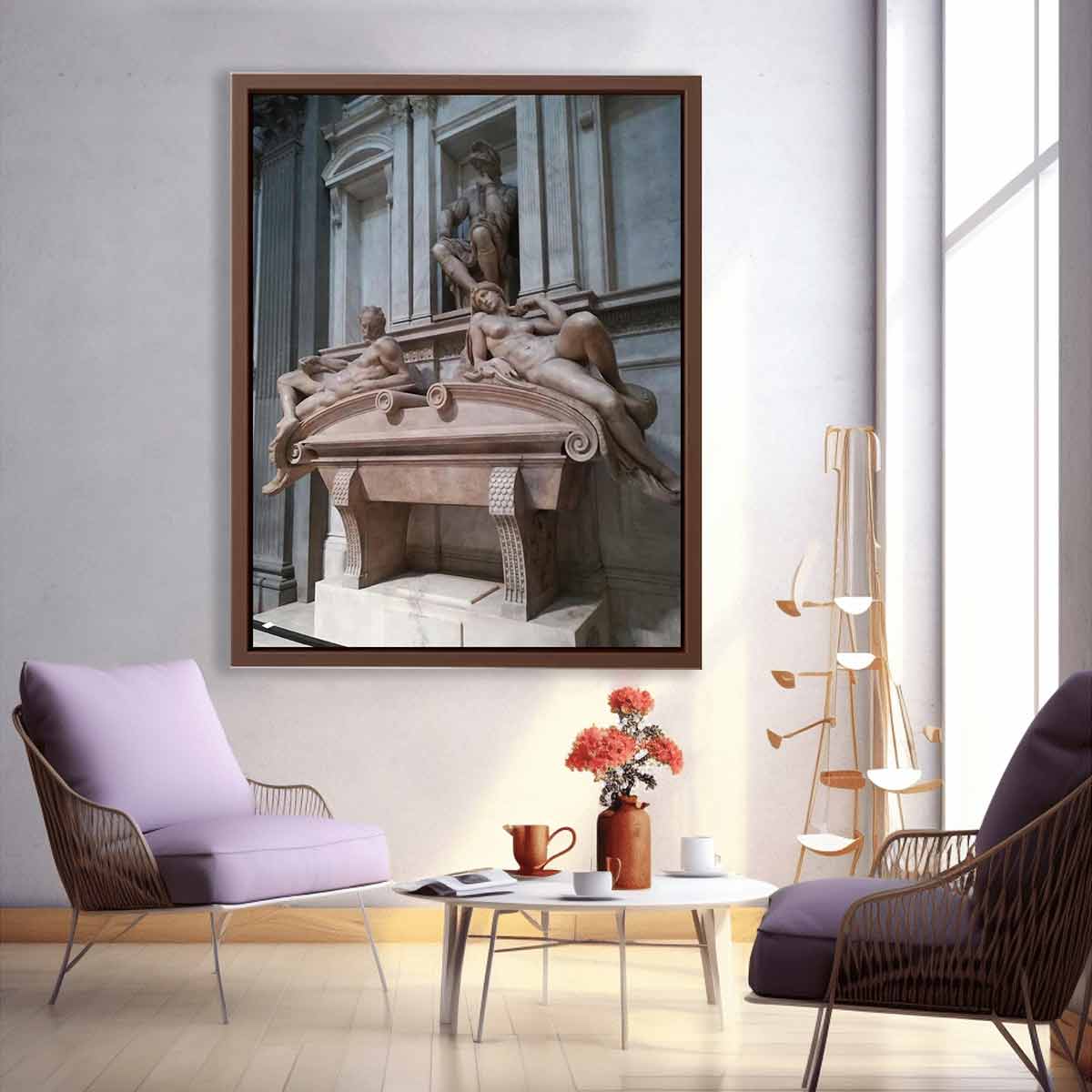


Museum-Quality Canvas Print
A premium textured reproduction that gives famous paintings the depth, scale and presence traditionally associated with canvas.
- Premium approximately 400–450 GSM polycotton artist canvas*
- Professional pigment printing for rich colour and fine detail
- Natural canvas texture adds visual depth
- Low-glare surface ideal for artwork display
- Excellent choice for classical and famous painting reproductions
- Available rolled, stretched or floating framed
Best for: art lovers who want a substantial, textured fine-art reproduction with strong gallery-style wall presence.
Why choose Museum Canvas? +
Famous paintings often contain subtle colour relationships, visible texture and compositional depth. A quality canvas reproduction provides a substantial surface that helps the image feel more like a piece of wall art than a conventional paper print. Stretched canvases use timber stretcher bars, while floating framed canvases place the stretched artwork inside an outer frame with an approximately 5 mm visual gap.