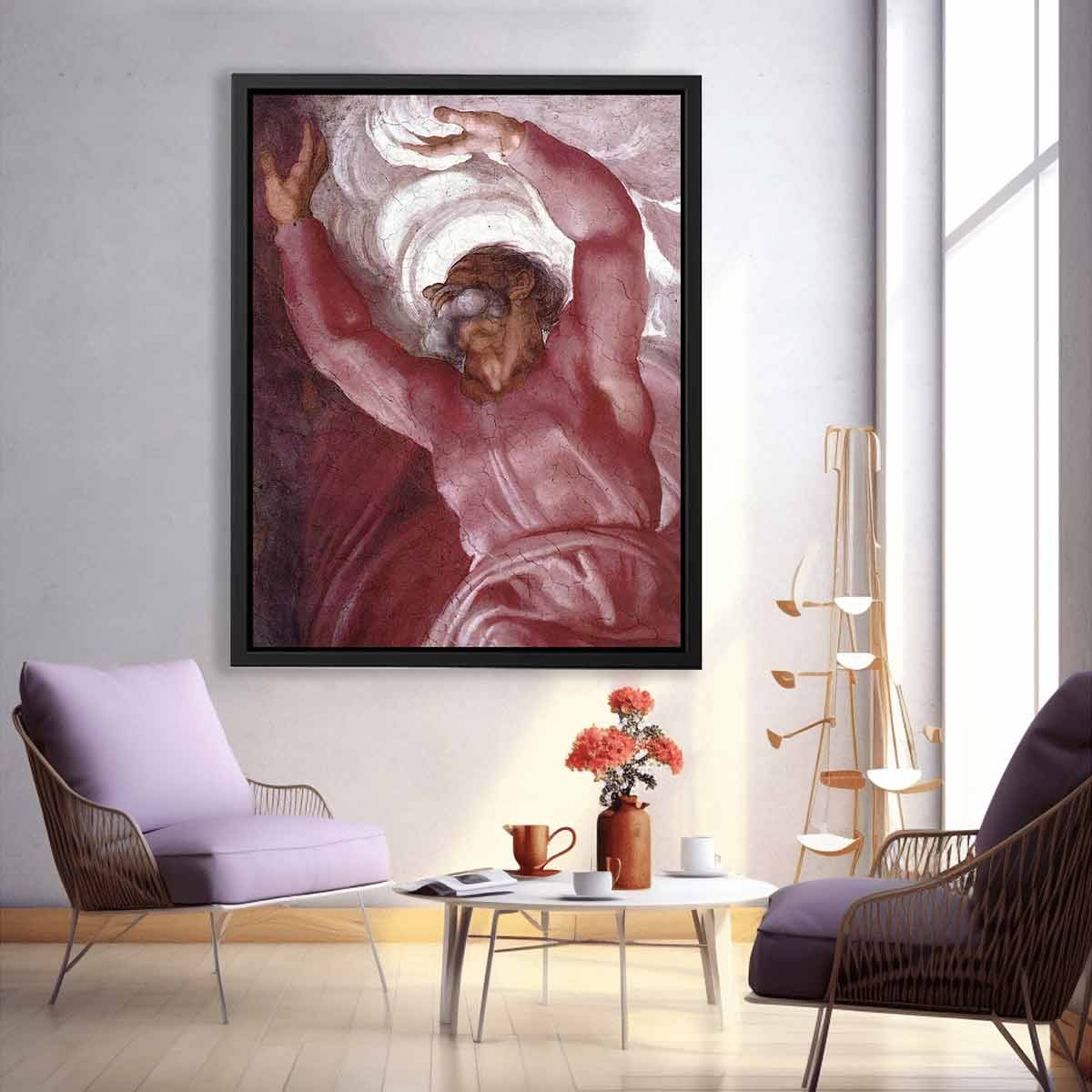
Separation of Light from Darkness is one of the nine central Genesis scenes Michelangelo Buonarroti painted on the ceiling of the Sistine Chapel between 1508 and 1512. This detail focuses on the monumental figure of God as Creator during the biblical moment when light is separated from darkness. The original fresco remains on the Sistine Chapel ceiling in Vatican City and forms part of the Vatican Museums. Alpha Art Gallery offers contemporary reproductions as canvas prints, fine art prints, framed prints, and 100% hand-painted oil painting reproductions.
The scene illustrates the opening account of Creation in Genesis 1:1–5. Rather than using a crowded narrative composition, Michelangelo concentrates attention on a single monumental divine figure. The powerful twisting body and commanding gesture communicate the force of Creation while the surrounding darkness and light reinforce the theological subject.
The Creator as the Focus
Michelangelo's treatment of God is one of the most striking features of the fresco. The body twists dynamically through the composition, giving the figure extraordinary energy. His sculptural understanding of anatomy is evident in the muscular torso, limbs, and carefully controlled movement. The human body becomes the principal visual language through which divine power is communicated.
The scene is about separation and order: according to Genesis, God distinguishes light from darkness and establishes day and night. Michelangelo turns this abstract theological event into a physical and dramatic experience. The viewer encounters Creation as an act of immense force rather than as a static illustration.
The Sistine Chapel Ceiling
Michelangelo began the ceiling project for Pope Julius II in 1508. What developed into the final programme was an ambitious visual narrative featuring nine Genesis scenes, monumental Prophets and Sibyls, ancestors of Christ, nude figures known as ignudi, and painted architectural elements. The complete ceiling was finished in 1512.
The Genesis scenes form a coherent sequence beginning with the creation of the universe, continuing through the creation of humanity, and eventually moving to the Fall, the Flood, and the story of Noah. Separation of Light from Darkness establishes the beginning of this larger narrative.
High Renaissance Fresco Painting
The work is a major achievement of High Renaissance art. Michelangelo combines monumental figure design, idealized anatomy, classical influence, expressive movement, and religious narrative. His figures possess exceptional physical presence even when representing supernatural subjects.
Because the fresco was painted on a high architectural vault, Michelangelo designed the figures to remain powerful when viewed from the floor below. The strong silhouette and concentrated composition allow the Creator to dominate the scene visually.
Where Is the Original?
The original Separation of Light from Darkness remains an integral part of the Sistine Chapel ceiling in Vatican City. It is not a movable framed painting. Alpha Art Gallery's product is a contemporary reproduction based on the historic fresco and is not the original Vatican artwork.
Choosing a Reproduction
Museum-Quality Canvas Print
A canvas reproduction gives the dramatic Creator figure strong wall presence and can work as statement art in living rooms, studies, libraries, offices, bedrooms, and reception spaces.
Museum-Quality Fine Art Print
A fine art print provides a refined traditional presentation and is suitable for curated Renaissance collections, studies, libraries, hallways, and gallery-style displays.
Museum-Quality Framed Print
A framed print provides a finished formal appearance and can complement both classical interiors and contemporary spaces that use historic art as a focal point.
100% Hand-Painted Oil Painting Reproduction
Alpha Art Gallery also offers a 100% hand-painted oil painting reproduction on canvas. Professional artists individually paint the artwork, creating genuine brushwork, painted texture, and visual depth.
Why This Artwork Matters
The importance of this scene lies in Michelangelo's ability to turn a short biblical passage into a monumental visual statement. The twisting Creator, powerful anatomy, dramatic gesture, and contrast between light and darkness make the image one of the defining moments of the Sistine Chapel ceiling.
Frequently Asked Questions
What does Separation of Light from Darkness depict?
It depicts the first act of Creation described in Genesis, when God separates light from darkness.
Who painted it?
Michelangelo Buonarroti painted the fresco as part of the Sistine Chapel ceiling programme.
When was the Sistine Chapel ceiling painted?
Michelangelo worked on the ceiling from 1508 to 1512.
Where is the original fresco?
It remains on the Sistine Chapel ceiling in Vatican City.
Can I buy a canvas print?
Yes. Alpha Art Gallery offers a museum-quality canvas reproduction as well as fine art, framed, and hand-painted formats.
Can I order a hand-painted oil reproduction?
Yes. A 100% hand-painted oil painting reproduction on canvas is available.
Bring Michelangelo's Creation Scene Into Your Space
Separation of Light from Darkness captures Michelangelo's extraordinary ability to transform a biblical event into a powerful visual experience. Choose a canvas print, fine art print, framed presentation, or hand-painted oil reproduction to bring this celebrated Renaissance imagery into your interior.