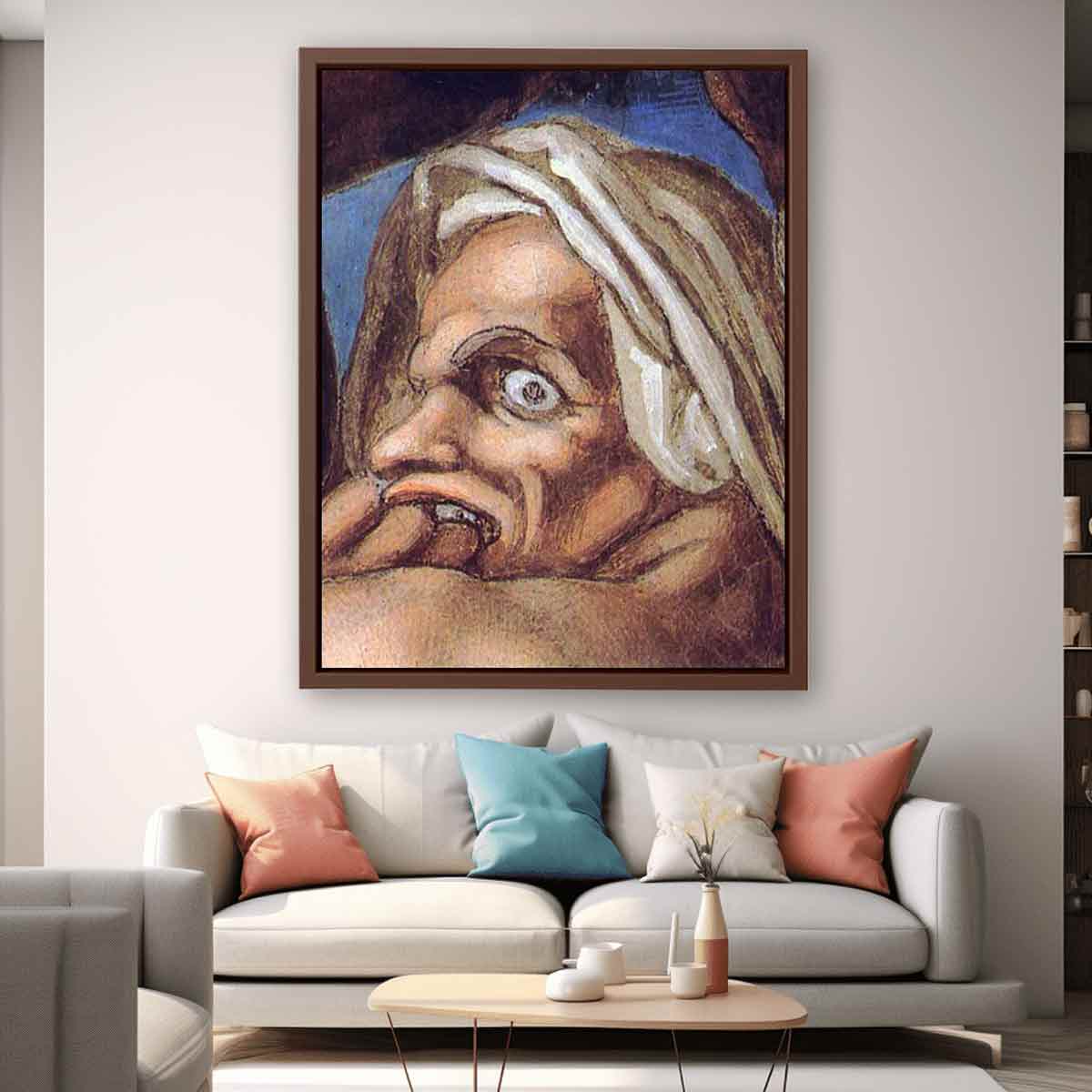
The Last Judgment by Michelangelo Buonarroti is one of the most celebrated masterpieces of Renaissance art. Painted on the altar wall of the Sistine Chapel, the monumental fresco presents a dramatic vision of the final judgment of humanity, centred on Christ the Judge.
The composition brings together hundreds of figures, including saints, angels, the resurrected dead, the saved and the condemned. Michelangelo unites them through powerful anatomy, complex movement and intense emotional expression.
About The Last Judgment
Michelangelo created The Last Judgment between approximately 1536 and 1541. The fresco represents a mature phase of his career and differs from the balanced compositions of the earlier High Renaissance through its crowded arrangement and dynamic movement.
Christ at the Centre
Christ occupies the central focus of the fresco. His commanding gesture establishes the movement of the surrounding figures, while the Virgin Mary and numerous saints form the heavenly group around him.
The Power of the Human Figure
Michelangelo uses the nude body as a major expressive tool. Bodies twist, rise, fall and overlap, communicating salvation, fear, struggle and punishment.
The anatomy reflects the artist’s sculptural understanding of the body and became highly influential on later Mannerist artists.
The Sistine Chapel
The original fresco remains on the altar wall of the Sistine Chapel in Vatican City. It forms a remarkable counterpart to Michelangelo’s earlier ceiling frescoes.
Wall Art Inspired by Michelangelo
A reproduction of The Last Judgment can create a dramatic focal point in a home, study, library, office or art collection. Available canvas, fine art and framed formats allow the monumental composition to be adapted to different interiors.
Frequently Asked Questions
When was The Last Judgment painted?
Michelangelo painted the fresco between approximately 1536 and 1541.
Where is The Last Judgment?
The original is on the altar wall of the Sistine Chapel in Vatican City.
Who is the central figure?
Christ the Judge is the central figure of the composition.
Why is the fresco important?
It is one of the defining achievements of Renaissance art and had enormous influence on later European painting.
Bring the monumental drama of Michelangelo’s Renaissance masterpiece into your interior with The Last Judgment.