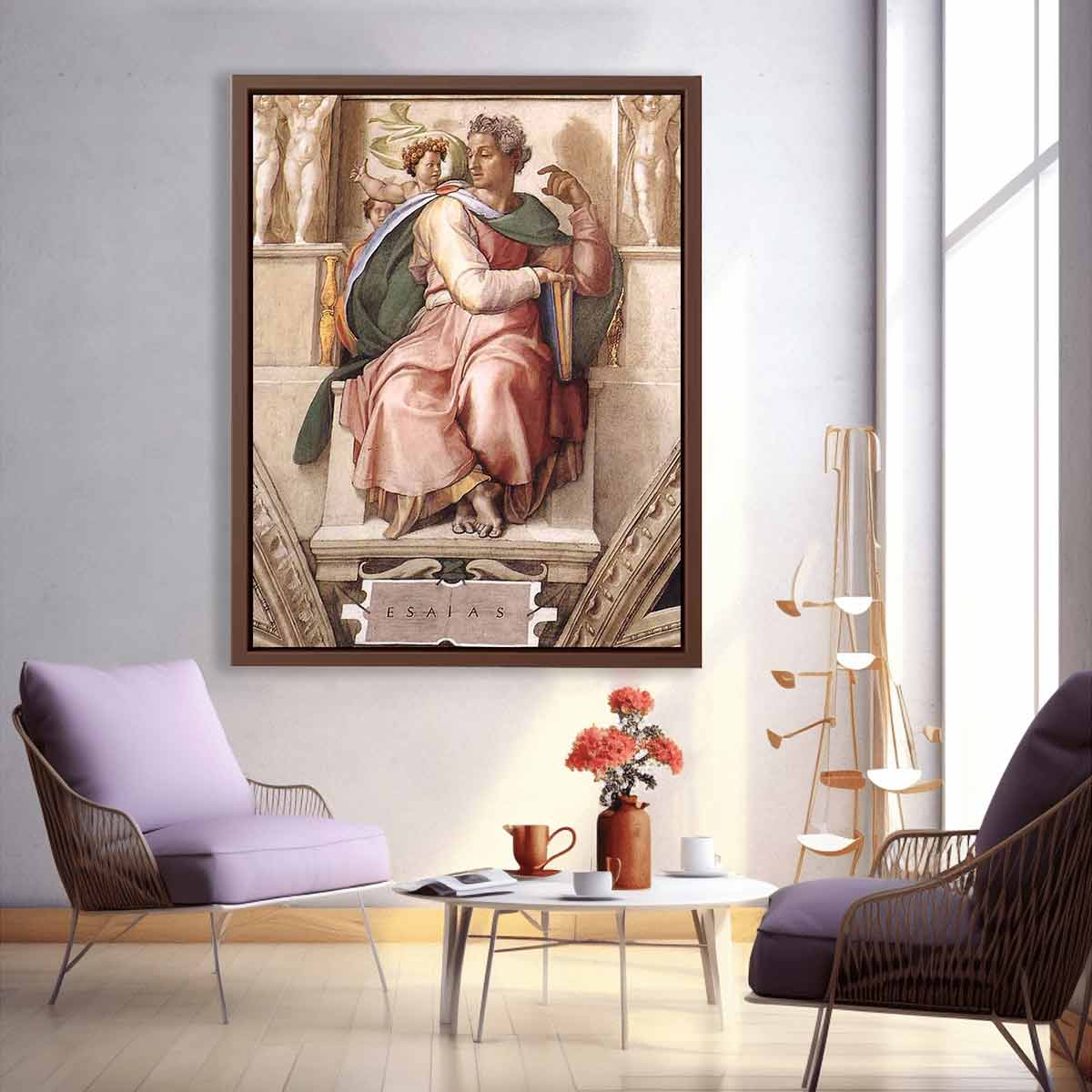
Isaiah by Michelangelo Buonarroti is one of the monumental prophet frescoes painted by Michelangelo on the ceiling of the Sistine Chapel in Vatican City. The powerful seated figure represents the biblical prophet Isaiah and demonstrates Michelangelo’s extraordinary command of anatomy, gesture, drapery and expressive movement.
Painted as part of Michelangelo’s celebrated Sistine Chapel ceiling between 1508 and 1512, Isaiah occupies an important position within the larger religious and visual programme. The prophet is shown with a book, while an angelic figure appears behind him, creating an interaction between the human and divine worlds.
About Michelangelo’s Isaiah
Isaiah is presented as a monumental seated figure. His body is turned dynamically, while his head and gaze create strong directional movement across the composition.
The book identifies the prophet with his writings and reinforces the theme of divine revelation. The angel behind him adds to the religious significance and visual movement.
Isaiah as a Biblical Prophet
Isaiah is one of the major prophets of the Hebrew Bible and Old Testament. His writings are associated with prophecy, judgment, salvation and the coming of the Messiah.
Michelangelo places Isaiah among the prophets and sibyls surrounding the central Genesis scenes. These figures contribute to the theological framework of the Sistine Chapel ceiling.
Michelangelo’s Mastery of the Human Figure
The prophet’s powerful anatomy, complex pose and flowing drapery demonstrate Michelangelo’s fascination with the expressive potential of the human body. This approach became highly influential on later Renaissance and Mannerist artists.
Reproduction Options
Alpha Art Gallery offers reproductions inspired by Michelangelo’s Isaiah in museum-quality canvas, fine art and framed formats, as well as 100% hand-painted oil painting reproductions.
Frequently Asked Questions
Who painted Isaiah?
Michelangelo Buonarroti painted Isaiah as part of the Sistine Chapel ceiling programme.
What does Isaiah hold?
Isaiah is shown with a book, identifying him with his prophetic writings.
Where is the original?
The fresco remains on the Sistine Chapel ceiling in Vatican City.
Choose your preferred format and size to bring this celebrated Michelangelo Renaissance fresco into your collection.