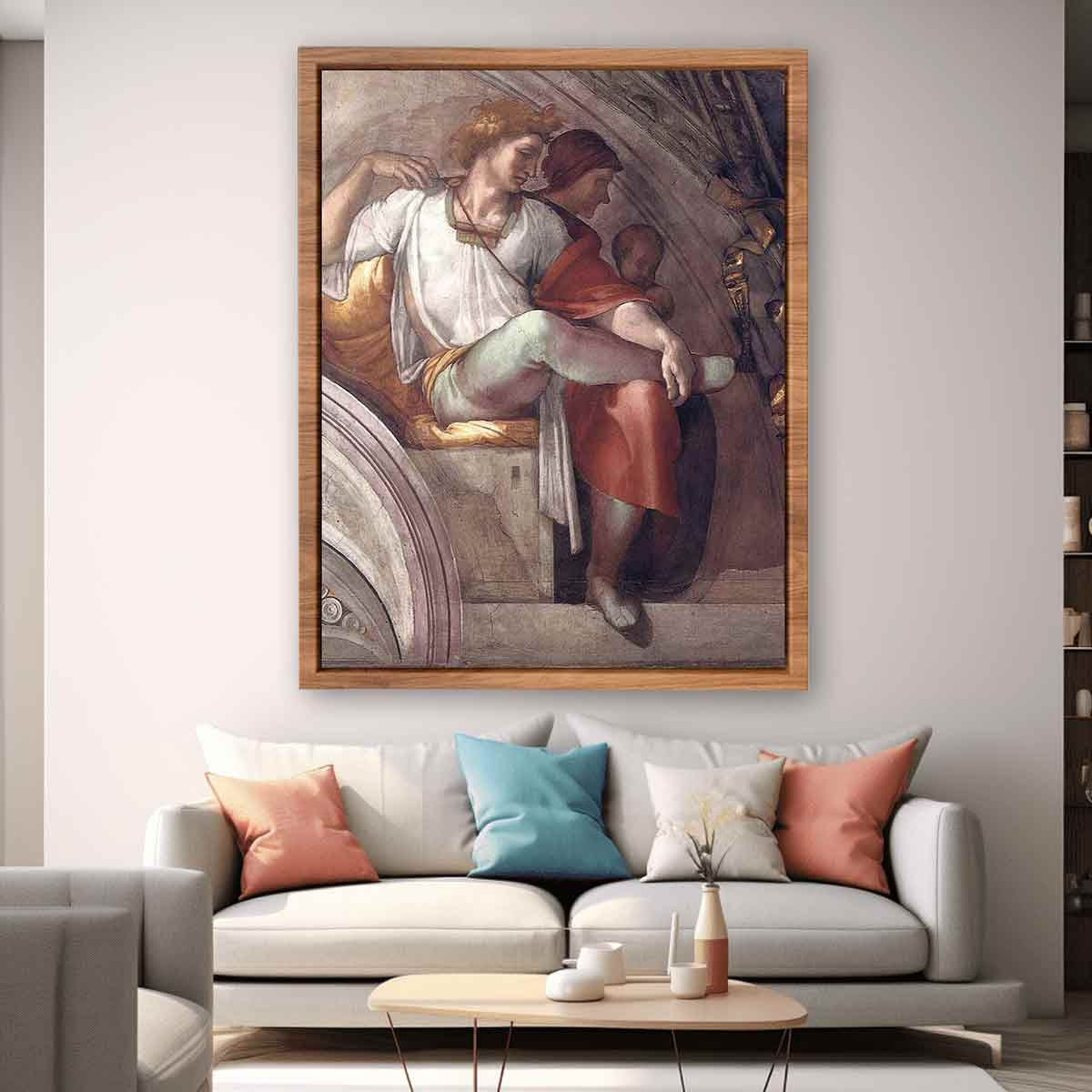
The Eleazar and Mathan lunette is part of Michelangelo Buonarroti's monumental decoration of the Sistine Chapel ceiling. This restored detail presents Eleazar, identified within the genealogy of Christ, together with a female figure believed to be his wife. The composition combines biblical genealogy with Michelangelo's extraordinary treatment of human form, gesture, costume, and architectural space.
The lunette belongs to the series of ancestors of Christ surrounding the central Genesis scenes. These figures provide a visual connection between Old Testament history and the Christian story of salvation while allowing Michelangelo to explore a remarkable variety of human characters.
The Genealogy of Christ
The names Eleazar and Mathan appear within the biblical genealogy associated with the ancestry of Christ. Michelangelo incorporated these ancestral names and figures into the painted architectural structure of the Sistine Chapel.
The genealogy transforms a sequence of names into a series of intimate human scenes. Rather than presenting the ancestors as conventional formal portraits, Michelangelo gives them individual poses, gestures, expressions, and relationships.
Michelangelo's Human Figures
The detail demonstrates Michelangelo's ability to create monumental figures even within comparatively confined architectural spaces. The figures are carefully positioned within the lunette and respond to the curved surface of the chapel.
Clothing and gesture help establish the identities and relationships of the figures, while the restrained architectural setting focuses attention on the people themselves.
The Sistine Chapel Ceiling
Michelangelo painted the Sistine Chapel ceiling between 1508 and 1512. The enormous programme includes nine Genesis scenes, prophets, sibyls, ancestors of Christ, ignudi, and elaborate painted architecture.
The ancestral lunette scenes are an important part of this programme because they connect the central biblical narrative with the genealogy leading toward Christ.
Wall Art and Reproduction Formats
A reproduction of the Eleazar and Mathan lunette can bring the refined character of Renaissance religious art into a study, library, living room, office, or private collection.
Canvas Print
A canvas print suits the fresco origins of the artwork and provides strong wall presence.
Fine Art Print
A fine art print offers a refined presentation for collectors of Michelangelo and Renaissance art.
Framed Print
A framed print creates a formal presentation appropriate for classical interiors.
Hand-Painted Oil Reproduction
A 100% hand-painted oil reproduction translates the historic fresco into a tactile painted artwork on canvas.
Frequently Asked Questions
Who painted the Eleazar and Mathan lunette?
The lunette was painted by Michelangelo Buonarroti as part of the Sistine Chapel ceiling.
Who are the figures?
The scene identifies Eleazar and Mathan within the genealogy of Christ and includes Eleazar's wife or a probable female family member.
Where is the original?
The original fresco remains in the Sistine Chapel in Vatican City.
Bring the Eleazar and Mathan Lunette Into Your Space
This intimate biblical genealogy scene offers a distinctive way to experience Michelangelo's Renaissance fresco programme and the remarkable human detail within the Sistine Chapel.