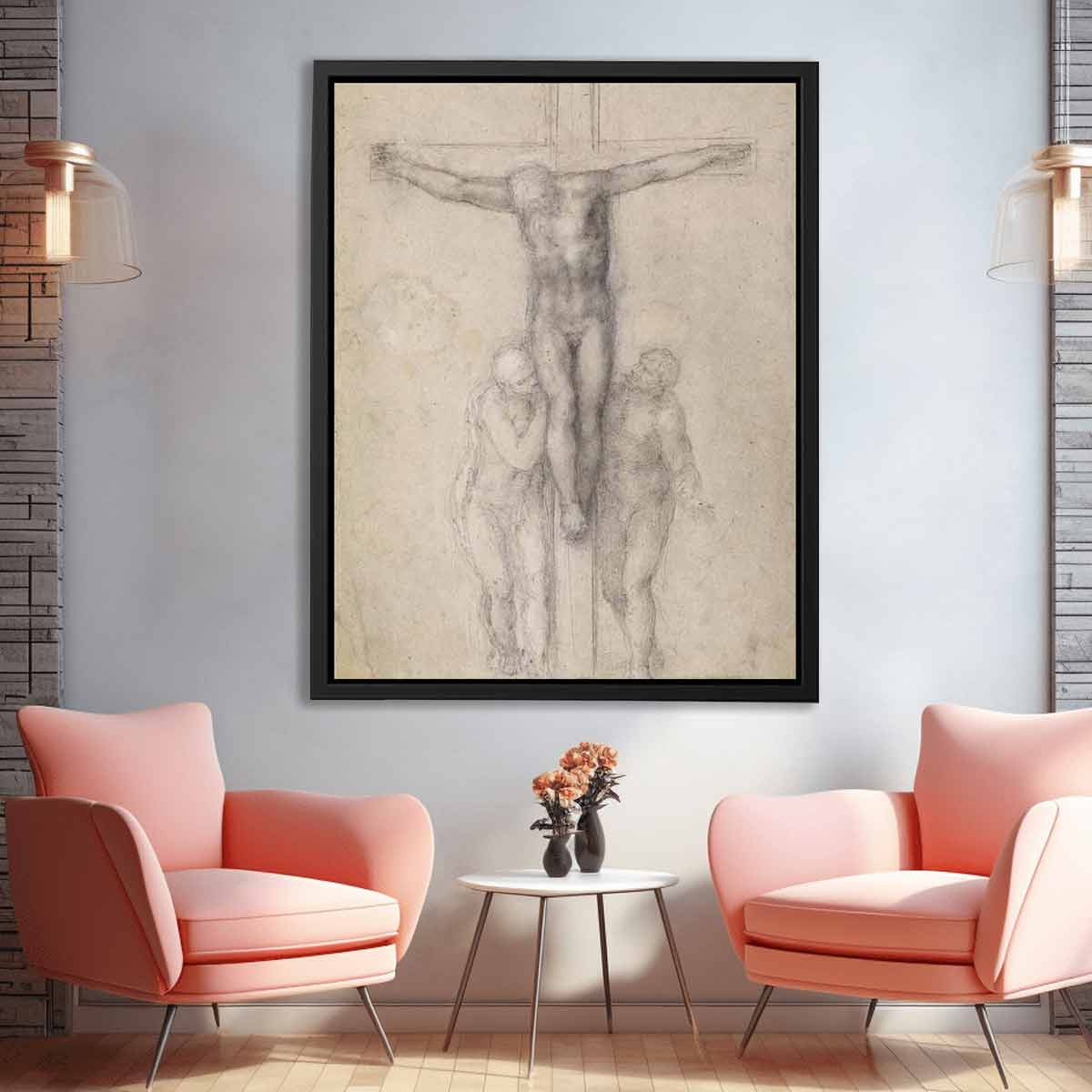
Christ on the Cross between the Virgin and St John is a deeply moving religious composition by Michelangelo Buonarroti. The drawing centers on Christ Crucified, with the Virgin Mary and St John positioned as witnesses to the Passion, creating an intimate meditation on suffering, sacrifice, grief, and redemption.
About Christ on the Cross between the Virgin and St John
The Crucifixion was one of the most important subjects in Christian art, and Michelangelo returned to it repeatedly. His treatment combines devotional meaning with an extraordinary understanding of the human body.
Christ dominates the composition, while the Virgin and St John provide a human and emotional framework around the Cross. Their presence encourages the viewer to contemplate not only Christ’s physical suffering but also the sorrow of those who witnessed it.
Christ Crucified
Michelangelo’s Christ is presented with dignity and powerful physical presence. The body becomes the principal vehicle for communicating both suffering and transcendence.
The Cross establishes a strong vertical axis, while the surrounding figures create a more intimate group. This contrast gives the composition both monumental authority and emotional closeness.
The Virgin and St John
The Virgin represents maternal grief and devotion. St John, traditionally associated with the beloved disciple and witness to the Crucifixion, introduces another human presence beside Christ.
Together they create a visual community around the Cross. Their gestures and positions make the Crucifixion feel like an event experienced by living witnesses rather than an isolated symbol.
Michelangelo’s Religious Art
Michelangelo’s religious works frequently unite powerful anatomy with profound spiritual themes. He used the human body to express vulnerability, suffering, dignity, faith, and redemption.
This approach is especially effective in the Crucifixion, where Christ’s physical body is inseparable from the theological meaning of sacrifice.
Renaissance and Mannerist Expression
The supplied metadata identifies the drawing with the High Renaissance and Mannerism. Michelangelo’s complex figure arrangements and expressive anatomy helped influence the development of later Mannerist art.
The work’s concentrated composition and expressive bodies demonstrate how Renaissance naturalism could evolve into a more sophisticated and emotionally heightened visual language.
Wall Art and Reproduction
The solemn composition makes this work particularly appropriate for studies, libraries, private devotional spaces, offices, galleries, and interiors featuring Christian or Renaissance art.
Alpha Art Gallery offers canvas prints, fine art prints, framed prints, and hand-painted oil reproductions. These reproductions are new artworks based on Michelangelo’s historic composition.
Frequently Asked Questions
Who created this artwork?
The work is attributed to Michelangelo Buonarroti.
Who appears with Christ?
The Virgin Mary and St John appear beside the Crucified Christ.
What does the Crucifixion symbolize?
In Christian theology, the Crucifixion represents Christ’s sacrificial death and is central to the story of salvation and Resurrection.
Where is the original?
The supplied metadata identifies the British Museum as the museum associated with this artwork.