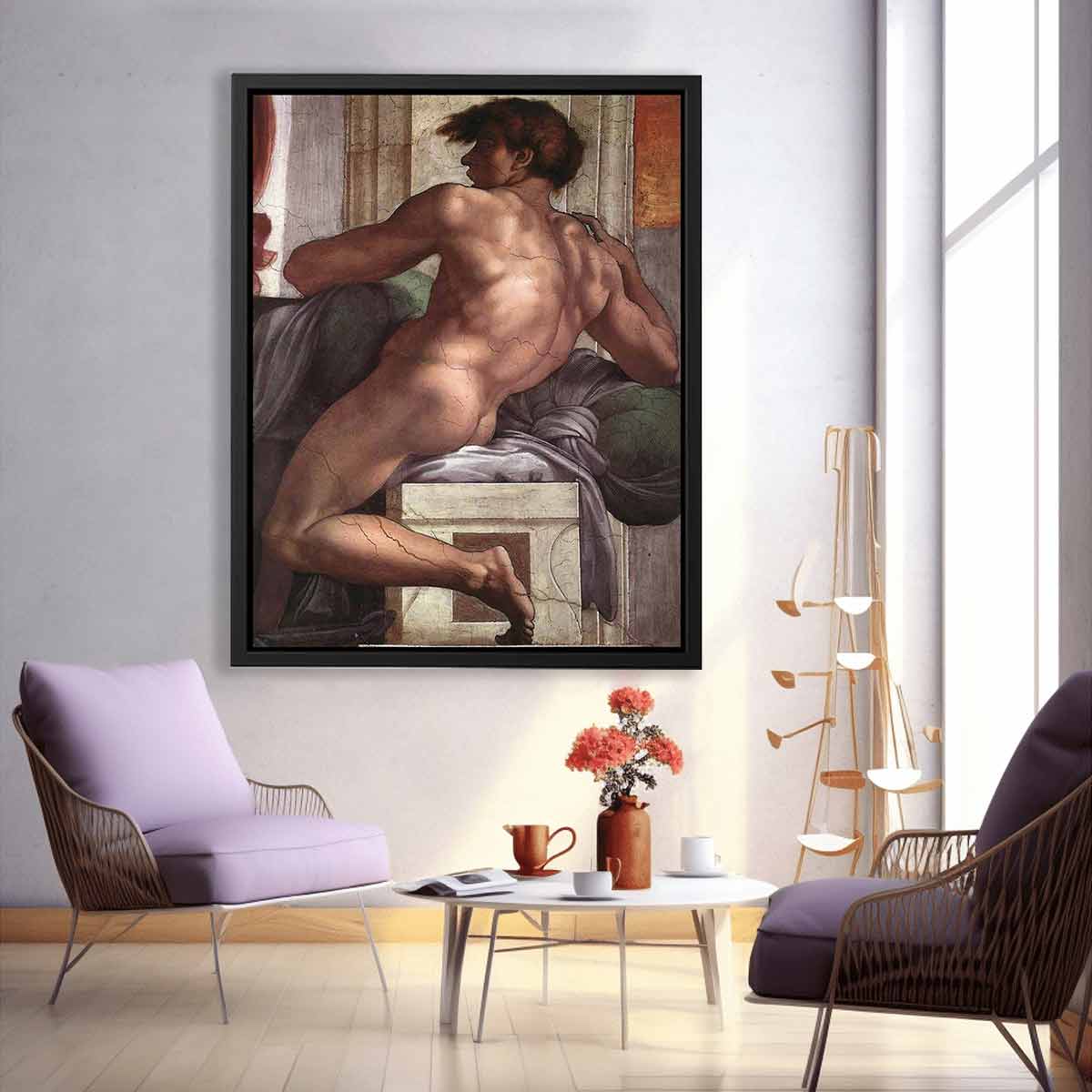
Ignudo by Michelangelo Buonarroti is one of the monumental nude male figures painted on the ceiling of the Sistine Chapel. Created during Michelangelo’s celebrated ceiling project between 1508 and 1512, the Ignudi are among the most distinctive elements of the High Renaissance fresco programme.
The Ignudi surround the central scenes from Genesis and demonstrate Michelangelo’s extraordinary mastery of the human figure. Their powerful anatomy, complex poses and sculptural presence reveal the artist’s fascination with movement, proportion and idealized form.
What Is an Ignudo?
The Italian word ignudo means “nude.” The plural Ignudi describes the series of monumental nude male figures Michelangelo painted around the central Genesis scenes on the Sistine Chapel ceiling.
They function within the architectural and decorative structure of the ceiling rather than as conventional biblical characters. Their bodies create visual transitions between the major narrative panels and surrounding elements.
Michelangelo and the Human Body
The Ignudi reveal Michelangelo’s extraordinary understanding of anatomy. Twisting torsos, extended limbs, muscular forms and dramatic poses demonstrate his ability to create bodies that appear both idealized and physically convincing.
His sculptural background is especially apparent. The figures possess a sense of mass and volume that makes them appear almost three-dimensional despite being painted on the curved ceiling.
High Renaissance and Mannerist Influence
The Ignudi are major examples of High Renaissance figure painting. Their classical ideals, monumental scale and sophisticated anatomy also influenced the dynamic figure language of later Mannerism.
Artists studied Michelangelo’s complex poses and powerful anatomy for generations, making the Ignudi important references in the history of European figure painting.
Why Choose an Ignudo Reproduction?
A reproduction allows the viewer to examine the anatomy and movement of the figure at eye level, something difficult when viewing the original high above the Sistine Chapel floor.
Choose a canvas print, fine art print, framed print, or 100% hand-painted oil painting reproduction depending on your preferred presentation.
Explore our canvas prints, oil paintings, and famous paintings collections.
Frequently Asked Questions
What does Ignudo mean?
Ignudo is an Italian word meaning “nude.”
Where are Michelangelo’s Ignudi?
They are located on the ceiling of the Sistine Chapel in Vatican City.
When were they painted?
They were created during Michelangelo’s Sistine Chapel ceiling project between 1508 and 1512.
Are the Ignudi biblical characters?
No. They are monumental nude figures integrated into the architectural and decorative structure of the ceiling.