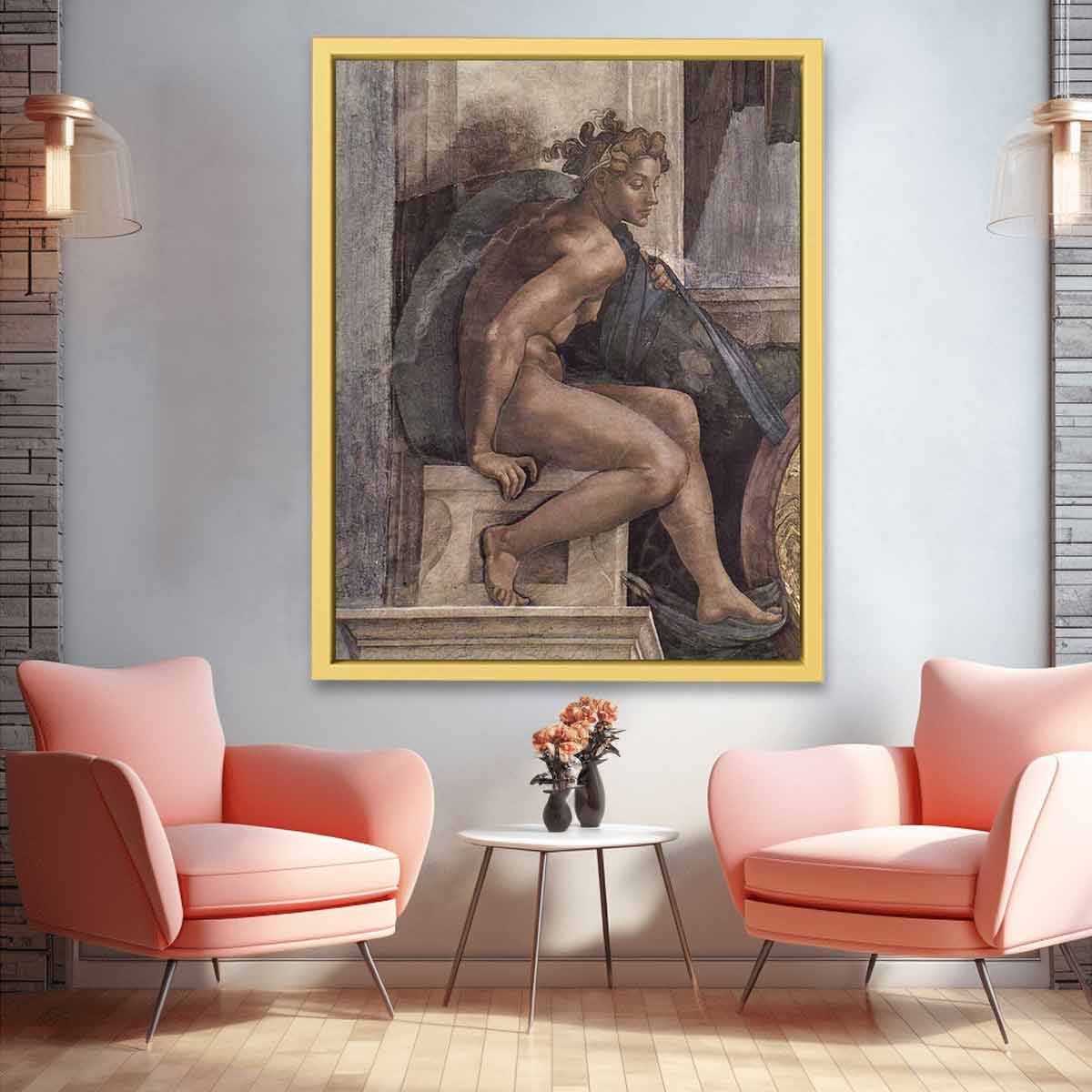
Deckenfresko zur Schöpfungsgeschichte in der Sixtinischen Kapelle, Detail: Jüngling by Michelangelo Buonarroti presents a detailed view of a young male figure from Michelangelo's monumental Sistine Chapel ceiling. The German title identifies the work as a detail of the ceiling fresco concerning the Creation story, focusing on a Jüngling, or young man.
Michelangelo's Sistine Chapel Ceiling
Michelangelo painted the Sistine Chapel ceiling between 1508 and 1512 under Pope Julius II. The completed program includes Genesis scenes, Prophets and Sibyls, Ancestors of Christ and numerous architectural and decorative figures.
A Young Male Figure in Monumental Form
The Jüngling detail draws attention toward the physical presence of an individual figure. Michelangelo's treatment demonstrates his ability to make a single body command attention through proportion, pose and anatomical structure.
The Renaissance Ideal of the Human Body
The figure reflects the Renaissance interest in idealized anatomy and the expressive potential of the human body. Michelangelo constructs the figure with a strong sense of volume and sculptural presence.
High Renaissance Monumentality
Even when isolated from its architectural setting, the figure retains a sense of scale and physical authority. Controlled gestures and strong contours create a monumental presence.
The Relationship Between Painting and Sculpture
Michelangelo's sculptural background influenced his approach to fresco painting. He conceived bodies in terms of volume, weight and physical structure, giving many of his painted figures a carved appearance.
Why This Detail Works as Wall Art
A single monumental figure provides a clear focal point without requiring the viewer to understand the entire chapel narrative. It can complement classical interiors, studies, libraries, offices and creative spaces.
Available Reproduction Formats
Museum-Quality Canvas Print: Emphasizes the monumental character of the figure.
Museum-Quality Fine Art Print: Refined presentation for viewers interested in Michelangelo's technique and anatomy.
Museum-Quality Framed Print: Formal presentation for classical and contemporary interiors.
100% Hand-Painted Oil Painting Reproduction: Individually painted on canvas with genuine brushwork and painted texture.
Frequently Asked Questions
What does Jüngling mean?
Jüngling is a German term meaning a young man or youth.
When was the Sistine Chapel ceiling painted?
Michelangelo painted it between 1508 and 1512.
What makes Michelangelo's figures distinctive?
His figures are known for monumental anatomy, idealized proportions, complex poses and sculptural volume.
Where is the original figure?
The original remains within the Sistine Chapel in Vatican City.
Can I buy this artwork as a canvas print?
Yes. Alpha Art Gallery offers museum-quality canvas reproductions.
Does Alpha Art Gallery offer free worldwide shipping?
Yes. Alpha Art Gallery provides free worldwide shipping on all orders.
A Monumental Renaissance Youth
Deckenfresko zur Schöpfungsgeschichte in der Sixtinischen Kapelle, Detail: Jüngling offers an intimate look at Michelangelo's monumental approach to the human figure and the visual language of the High Renaissance.