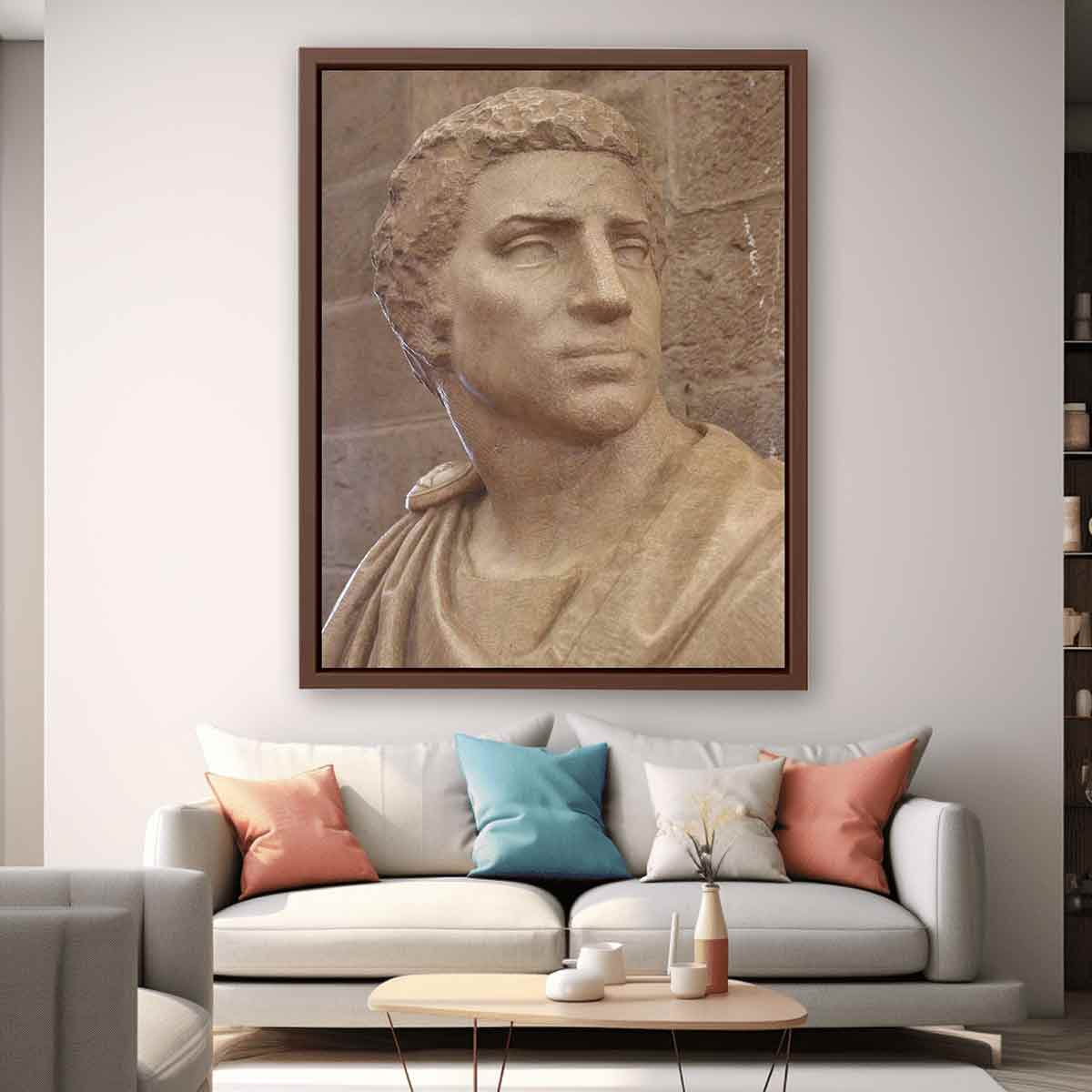
Brutus by Michelangelo Buonarroti is one of the artist's most striking portrait sculptures, renowned for its powerful expression, classical inspiration, and psychological intensity. Created in the early sixteenth century, the marble bust depicts Marcus Junius Brutus, the Roman statesman associated with the assassination of Julius Caesar. Today, the sculpture is preserved at the Bargello National Museum in Florence, one of Italy's most important museums of Renaissance sculpture.
Michelangelo's Brutus combines the visual language of ancient Roman portraiture with the artist's distinctive Renaissance understanding of anatomy, character, and idealized form. The strongly modelled head, broad shoulders, sweeping drapery, and concentrated expression give the sculpture an imposing presence.
About Michelangelo's Brutus
The Brutus is a marble bust attributed to Michelangelo and represents an important example of his engagement with classical antiquity. Unlike many of Michelangelo's monumental religious sculptures, this work presents a historical and political figure through the format of a Roman-inspired portrait bust.
Brutus was celebrated in Renaissance culture as a figure associated with republican liberty and resistance to tyranny. Michelangelo's sculpture combines these historical associations with a powerful psychological presence.
Michelangelo and Classical Antiquity
Renaissance artists frequently studied surviving classical sculpture, using ancient examples as a foundation for developing new approaches to anatomy, proportion, expression, and ideal beauty. Michelangelo absorbed classical forms and transformed them through his own expressive style.
In Brutus, the influence of Roman portrait busts can be seen in the monumental presentation and emphasis on the head as the centre of identity, while the forceful expression remains distinctly Michelangelesque.
Brutus and Renaissance Florence
The subject of Brutus held particular cultural significance in Renaissance Italy because ancient Roman history was closely connected with ideas of civic responsibility, political freedom, and republican government.
The sculpture is preserved in Florence's Bargello, a historic museum renowned for its collection of Renaissance sculpture and its important context for understanding Italian artistic development.
Wall Art and Reproduction Formats
Michelangelo's Brutus is particularly effective as wall art for interiors inspired by classical sculpture, Renaissance history, architecture, literature, or European cultural heritage.
Canvas Print
A canvas print provides strong wall presence and allows the dramatic form of the portrait bust to become a focal point.
Fine Art Print
A fine art print offers a refined presentation for collectors interested in Renaissance sculpture and classical art.
Framed Print
A framed print provides a formal finished presentation suited to libraries, studies, offices, and traditional interiors.
Hand-Painted Oil Reproduction
A 100% hand-painted oil painting reproduction translates the sculpture into a tactile painted artwork created individually by professional artists on canvas.
Frequently Asked Questions
Who created Brutus?
Brutus is attributed to Michelangelo Buonarroti and is an important example of his Renaissance portrait sculpture.
Who is depicted?
The bust represents Marcus Junius Brutus, the Roman statesman associated with the assassination of Julius Caesar.
Where is the original?
The original sculpture is preserved at the Bargello National Museum in Florence, Italy.
Can I buy a Brutus reproduction?
Yes. Available formats include canvas, fine art, framed, and hand-painted oil reproductions.
Bring Michelangelo's Brutus Into Your Space
This powerful portrait combines classical tradition with Renaissance psychological intensity, making it a sophisticated choice for a home, study, library, office, or private collection.