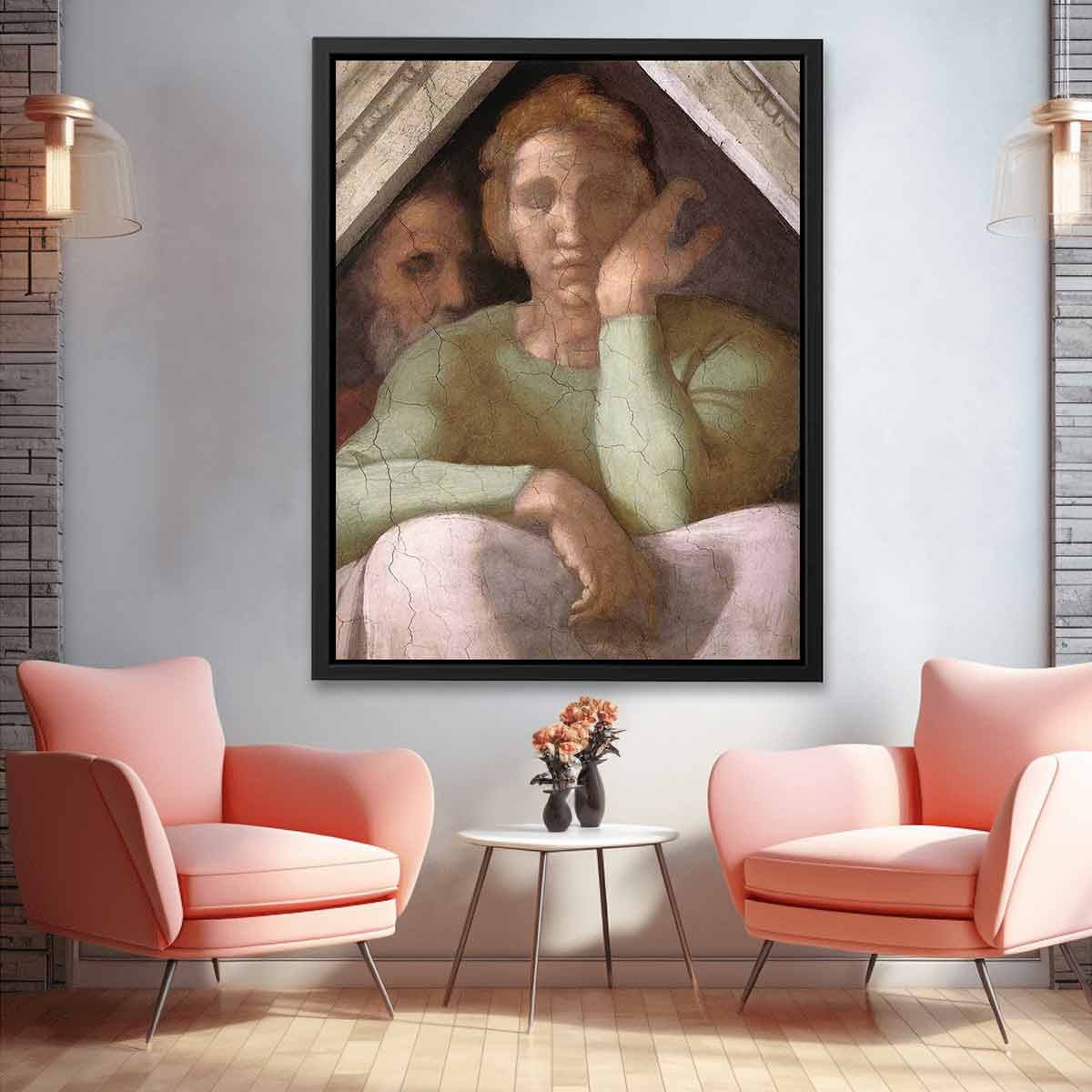
Ancestors of Christ: figures (detail) by Michelangelo Buonarroti presents a closer view of the human figures within Michelangelo's monumental Ancestors of Christ fresco cycle in the Sistine Chapel. Painted between 1508 and 1512, these figures occupy the lunettes and spandrels and form part of the larger theological program surrounding the central Genesis scenes.
A Detail That Reveals Michelangelo's Figure Work
A detailed view allows the viewer to appreciate facial expressions, gestures, clothing, hands and relationships between individual figures. Michelangelo varies poses and family interactions rather than presenting a repetitive procession of solemn biblical ancestors.
The Human Side of a Biblical Genealogy
The genealogy is theological, but its visual language is grounded in human relationships. Parents, children and groups of figures become part of a meditation on generations and continuity.
The Ancestors Within the Sistine Chapel Program
The Ancestors of Christ form part of the larger Sistine Chapel program alongside the Genesis scenes, Prophets and Sibyls and painted architecture. They connect biblical history with the Christian story of Christ's lineage.
High Renaissance Figure Painting
Michelangelo's figures retain a strong sense of structure and weight. Drapery follows the underlying anatomy, while gestures and poses create movement within the architectural spaces.
Displaying the Detail as Wall Art
The focused composition is suitable for studies, libraries, offices, living rooms and curated Renaissance art collections. A larger reproduction can reveal individual gestures and expressions more clearly.
Available Reproduction Formats
Museum-Quality Canvas Print: Strong and immersive wall display.
Museum-Quality Fine Art Print: Refined presentation for art collectors.
Museum-Quality Framed Print: Formal gallery-style presentation.
100% Hand-Painted Oil Painting Reproduction: Individually painted on canvas with genuine brushwork.
Frequently Asked Questions
What are the Ancestors of Christ?
They are figures painted by Michelangelo in the lunettes and spandrels of the Sistine Chapel as part of Christ's genealogy.
Are the figures portraits?
They are better understood as symbolic representations of humanity and family groups rather than securely identifiable historical portraits.
When were they painted?
They were created during Michelangelo's Sistine Chapel campaign between 1508 and 1512.
Where are the originals?
The original frescoes remain in the Sistine Chapel in Vatican City.
Can I buy a canvas print?
Yes. Alpha Art Gallery offers museum-quality canvas reproductions.
Does Alpha Art Gallery offer free worldwide shipping?
Yes. Alpha Art Gallery provides free worldwide shipping on all orders.
A Closer Look at Michelangelo's Renaissance Humanity
Ancestors of Christ: figures (detail) offers an intimate view of Michelangelo's ability to transform a biblical genealogy into expressive groups of people.