Judgement of Solomon by Raphael: Justice, Drama and Renaissance Storytelling
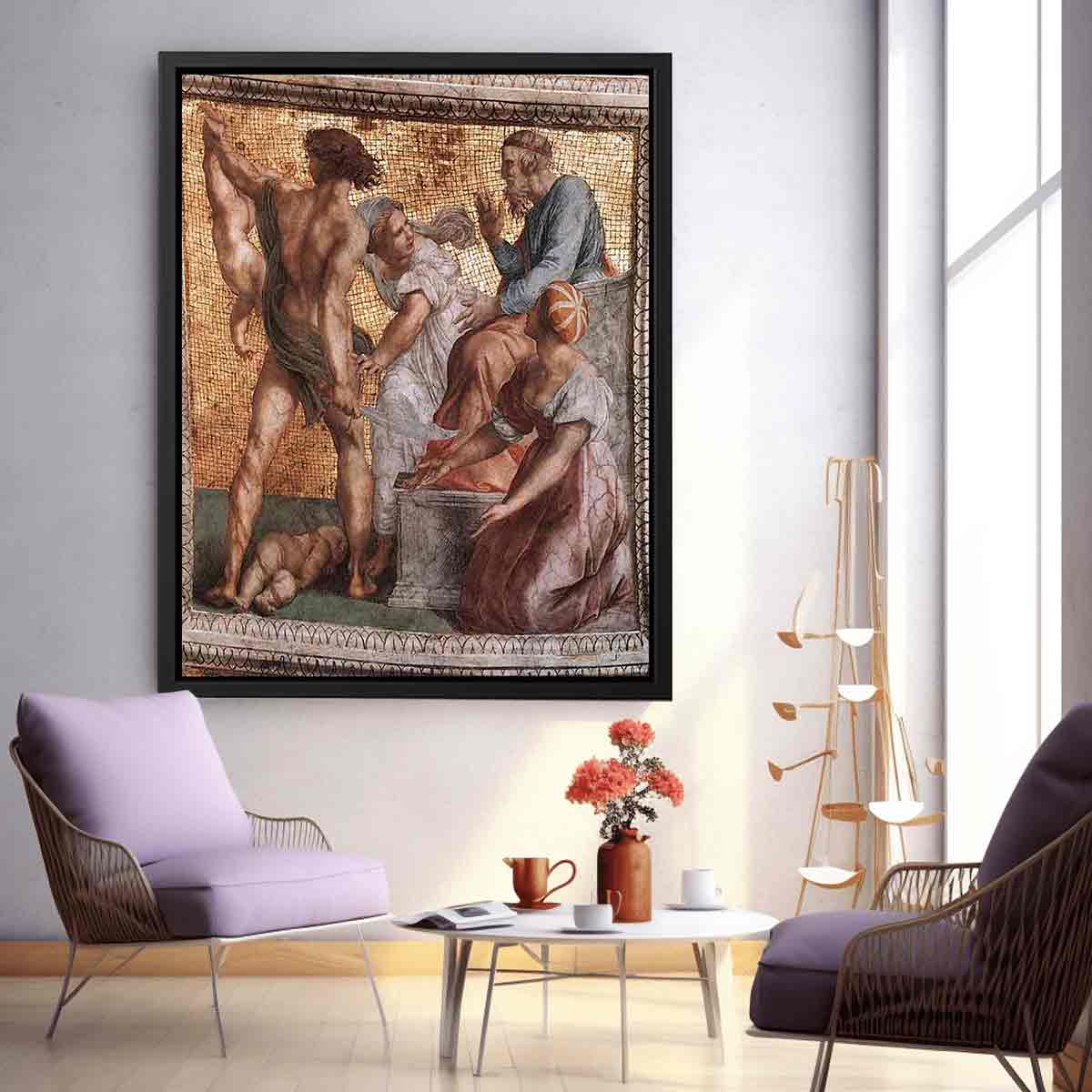
Raphael’s Judgement of Solomon is an example of the artist’s extraordinary ability to turn a Biblical narrative into a carefully staged human drama. The story of Solomon’s wisdom, in which the king identifies the true mother of a child through an apparently impossible judgment, offered Renaissance artists a subject filled with emotion, conflict and moral intelligence. Raphael’s treatment belongs to the visual world of the High Renaissance, where history painting was expected to communicate a story clearly while also displaying mastery of figure arrangement, gesture and architecture. For a collector, a reproduction provides a way to bring that combination of narrative and classical design into a home, study or gallery wall.
Solomon as the Image of Wise Judgment
Solomon’s role is central to the meaning of the scene. Rather than depicting a simple royal portrait, Raphael presents the king as the source of an intellectual solution to a crisis. The judgment becomes a visual metaphor for wisdom: appearances can deceive, emotions can become chaotic, but careful reasoning can reveal truth. Renaissance audiences were particularly receptive to such subjects because Biblical history could also be read through contemporary ideas about law, governance and moral authority.
A Scene Built Around Human Reactions
The strength of the painting lies in its people. The supplied classification emphasizes children, men and women, and these groups create a complex emotional network around Solomon’s decision. A child becomes the center of the dispute, while adults reveal fear, desperation, authority and compassion through their gestures. Raphael understood that historical painting becomes persuasive when viewers can recognize human behavior inside the larger story. This makes the work especially rewarding in reproduction because individual expressions and interactions can be studied more closely than they often can in a crowded museum setting.
Raphael’s Interest in Gesture
Gesture is one of the key tools Raphael used to communicate narrative. A raised arm, an extended hand, a turning body or a concentrated gaze can tell the viewer what is happening before any written explanation is necessary. In a story about judgment, gestures are especially meaningful because they can reveal competing claims and emotional reactions. The result is a composition in which movement carries information. A large canvas reproduction can emphasize this theatrical quality, while a framed print can preserve the clarity of the drawing and the relationships among the figures.
Renaissance History Painting and Moral Meaning
The subject belongs to a tradition in which Biblical stories were treated as vehicles for broader moral ideas. Solomon’s judgment could represent discernment, justice and the ability to distinguish truth from deception. Raphael’s High Renaissance approach gives these concepts a polished visual form. Rather than relying on disorder for drama, he organizes the scene so that complexity remains understandable. This balance between excitement and control is one of the qualities that made Raphael an influential model for later European painters.
Why This Work Suits a Collector’s Interior
Judgement of Solomon has an advantage as wall art because its subject carries intellectual weight as well as visual drama. It can work in a library, study, office, formal living room or collection devoted to Biblical history painting. A fine art print offers an accessible museum-style presentation; canvas can increase its presence; framing can give it the authority of an Old Master work; and a hand-painted reproduction can add depth and painterly texture. For buyers interested in Renaissance art that tells a story, this is a particularly strong choice.
Details to Notice
- The child at the emotional center of the dispute.
- The contrasting reactions of the adults.
- Solomon’s position as the source of judgment.
- The use of gestures to direct attention and communicate emotion.
- The High Renaissance balance between dramatic action and compositional order.
These features make the painting suitable for viewers who want artwork that encourages conversation. The story is immediately recognizable once explained, but the expressions and relationships invite longer examination.
Buy a Raphael Reproduction with Historical Character
A reproduction of Judgement of Solomon offers collectors a distinctive form of Renaissance wall art: a Biblical story transformed into an image about justice, human behavior and wise authority. Raphael’s command of figure arrangement allows the scene to remain dramatic without losing clarity. Whether you choose a fine art print, canvas, framed reproduction or hand-painted interpretation, the work can add the atmosphere of a Renaissance history painting to your interior while giving you a subject with genuine narrative and intellectual depth.
Drama Without Losing Renaissance Order
The subject of Solomon’s judgment could easily become chaotic because several people have strong emotional stakes in the decision. Raphael’s approach is different. He turns the conflict into an organized sequence of expressions, gestures and positions. This is characteristic of the High Renaissance ideal: even a dramatic event should remain intelligible. The viewer is invited to follow the story rather than become lost in it. That quality makes the painting especially appropriate for a collector who wants narrative wall art that remains visually balanced and elegant.
A Painting About Truth, Authority and Human Emotion
The story of Solomon has remained popular because it dramatizes a problem that is larger than the Biblical episode itself: how can truth be recognized when competing claims appear equally convincing? Raphael’s figures make that problem visible through their reactions. The child, the women and the surrounding observers create a network of emotional pressure around the central judgment. This makes the artwork suitable for collectors who prefer paintings with a clear narrative and an intellectual theme. In a library or office, the subject can naturally complement books about history, philosophy or law. In a living room, its Renaissance composition provides a more traditional form of historical wall art. A reproduction can therefore be chosen for both its beauty and the enduring idea of wisdom expressed through Solomon’s decision.