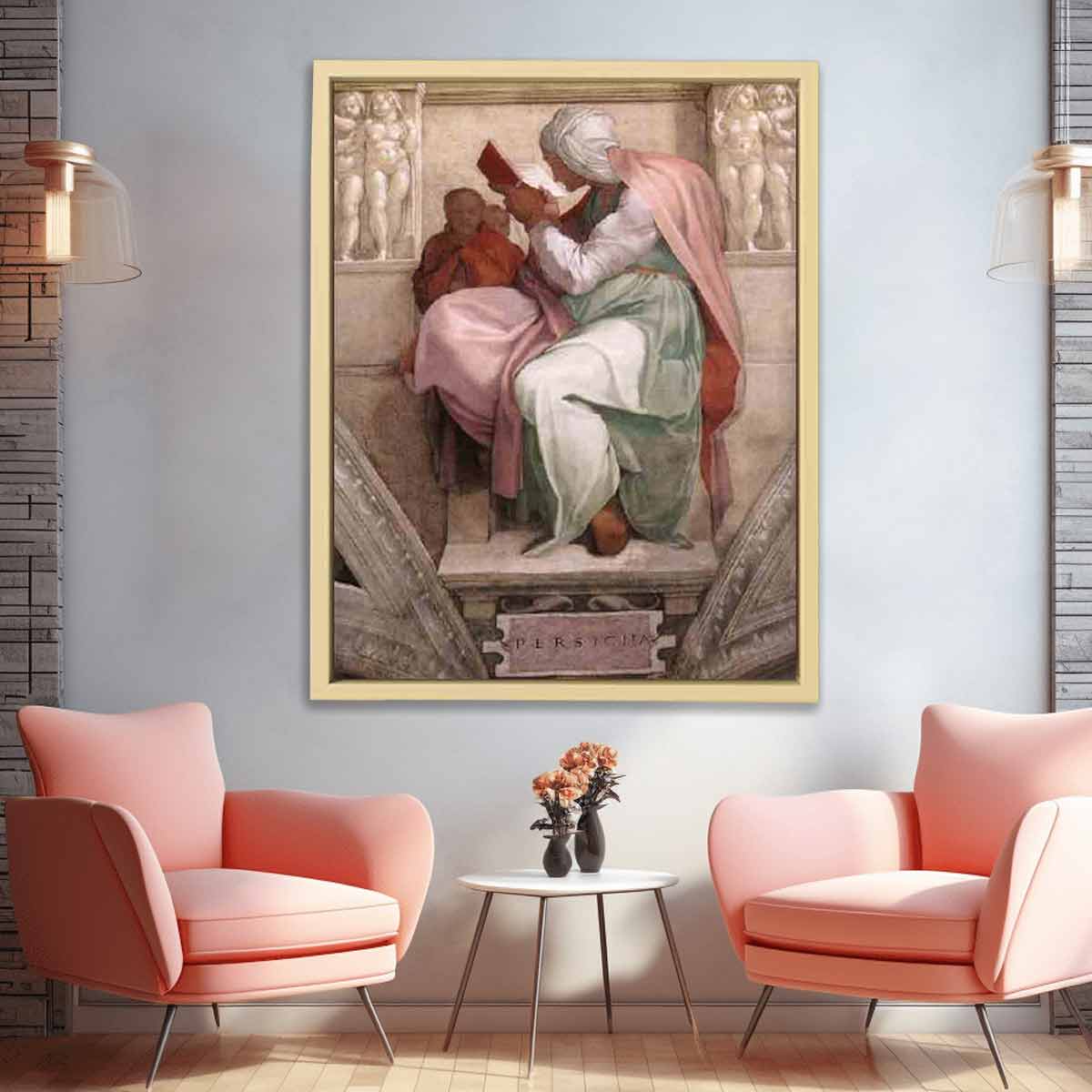
The Persian Sibyl 1511 by Michelangelo Buonarroti is one of the monumental female prophets painted on the ceiling of the Sistine Chapel. Michelangelo created the Persian Sibyl as part of a sequence of Prophets and Sibyls who surround the central biblical scenes. Her powerful body, complex pose and solemn expression demonstrate the extraordinary visual language of the High Renaissance.
About the Persian Sibyl
The Persian Sibyl is traditionally identified as one of the five Sibyls painted by Michelangelo on the Sistine Chapel ceiling. Sibyls were believed in classical and Christian traditions to be female prophetic figures who could foresee divine events.
Michelangelo's Monumental Figure
Michelangelo gives the Persian Sibyl an imposing physical presence. Her body is carefully constructed through monumental anatomy, heavy drapery and a complex seated pose.
Religious Meaning
The Sibyls appear alongside biblical Prophets, creating a visual connection between different traditions of prophecy and the Christian message of salvation.
The Sistine Chapel Ceiling
Michelangelo painted the ceiling between 1508 and 1512. The Persian Sibyl forms part of the larger program that includes Genesis scenes, Prophets, Sibyls, Ancestors of Christ and the Ignudi.
Wall Art
A reproduction of the Persian Sibyl can become a dramatic focal point in a study, library, living room or classical interior.
Reproduction Formats
Canvas Print
Explore canvas prints for additional Renaissance works.
Fine Art Print
A fine art print emphasizes the colors, anatomy and Renaissance composition.
Framed Print
A framed reproduction creates a formal gallery-style presentation.
Hand-Painted Oil Painting
Alpha Art Gallery offers individually hand-painted oil painting reproductions. Explore the oil painting collection.
Frequently Asked Questions
Who painted the Persian Sibyl?
Michelangelo Buonarroti painted the Persian Sibyl.
When was it painted?
The Sistine Chapel ceiling was painted between 1508 and 1512, with the Persian Sibyl dated to this period.
Where is the original?
The original fresco remains on the Sistine Chapel ceiling in Vatican City.
Bring the monumental presence of Michelangelo's Persian Sibyl into your interior.