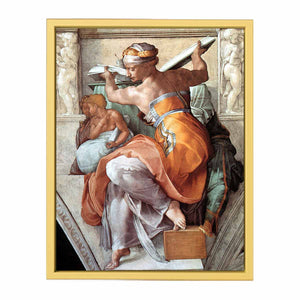
The Libyan Sibyl by Michelangelo Buonarroti is one of the monumental prophetic figures painted on the ceiling of the Sistine Chapel in Vatican City. Created between 1508 and 1512, the figure represents the ancient Libyan Sibyl and demonstrates Michelangelo's extraordinary mastery of anatomy, movement, colour and monumental composition.
About The Libyan Sibyl
The Libyan Sibyl is shown in a complex twisting pose as she turns away while handling a large book. Her powerful body, flowing garments and carefully arranged limbs create a sense of movement that is characteristic of Michelangelo's approach to the human figure.
Like the other sibyls on the Sistine Chapel ceiling, the Libyan Sibyl connects the classical prophetic tradition with the biblical and Christian programme of the chapel.
Michelangelo's Treatment of the Human Figure
The figure demonstrates Michelangelo's sculptural approach to painting. Strong anatomy, carefully modelled forms and dynamic movement give the Sibyl a three-dimensional presence despite being painted onto the architectural ceiling.
The complex pose is particularly important because it allows Michelangelo to show the body from several visual angles while maintaining a balanced composition.
High Renaissance Masterpiece
The Libyan Sibyl is a major example of High Renaissance art and became highly influential on later Mannerist artists. Its idealized anatomy and sophisticated pose reveal Michelangelo's continuing exploration of the expressive possibilities of the human body.
Renaissance Wall Art
Alpha Art Gallery offers contemporary reproductions inspired by Michelangelo's celebrated masterpieces as museum-quality canvas prints, fine art prints, framed prints and 100% hand-painted oil painting interpretations.
Frequently Asked Questions
Who was the Libyan Sibyl?
The Libyan Sibyl was an ancient prophetic figure represented by Michelangelo as part of the group of sibyls and prophets on the Sistine Chapel ceiling.
When was the Libyan Sibyl painted?
Michelangelo painted the figure between 1508 and 1512 as part of the Sistine Chapel ceiling programme.
Where is the original Libyan Sibyl?
The original fresco remains on the ceiling of the Sistine Chapel in Vatican City.
Can I buy a reproduction?
Yes. Alpha Art Gallery offers canvas, fine art, framed and hand-painted oil reproductions inspired by famous Renaissance works.