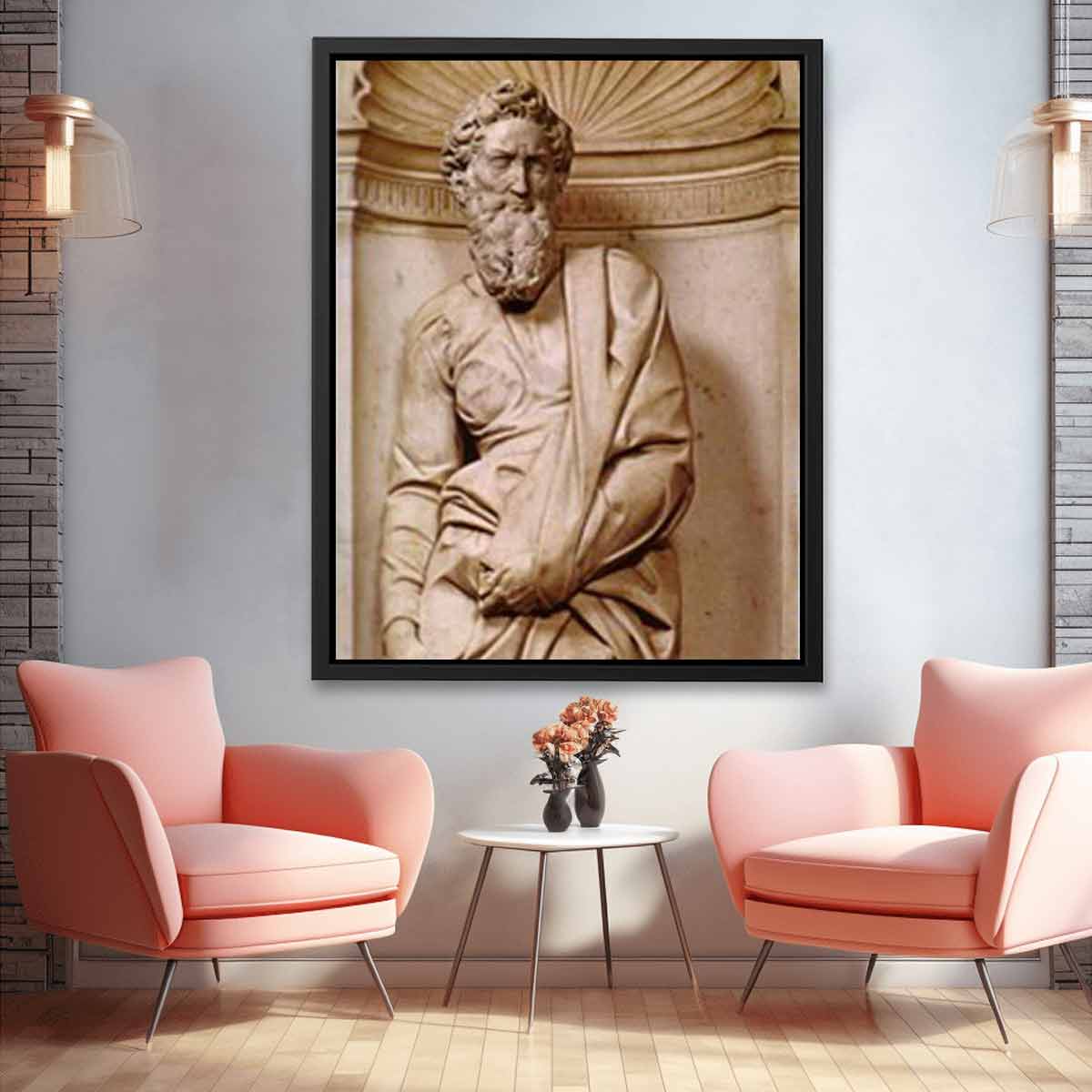
St. Paul by Michelangelo Buonarroti is a Renaissance sculpture associated with the Piccolomini Altarpiece in the Duomo di Siena. The figure demonstrates Michelangelo’s mastery of carved marble, monumental human form, drapery, and religious sculpture. Alpha Art Gallery offers this celebrated artwork as a museum-quality canvas print, fine art print, framed print, or 100% hand-painted oil painting reproduction.
The original sculpture is not for sale. It remains part of the historic cathedral complex in Siena. Alpha Art Gallery reproductions are contemporary artworks inspired by Michelangelo’s Renaissance sculpture.
About Michelangelo’s St. Paul
Michelangelo’s St. Paul represents the Apostle Paul, one of the central figures of early Christianity. The sculpture was created for the Piccolomini Altarpiece in Siena, a major Renaissance commission involving a series of sculptures for the cathedral.
The figure is presented as a monumental standing saint, combining religious identity with Michelangelo’s distinctive approach to the human body. The sculpture demonstrates the artist’s ability to make a single figure convey both physical presence and spiritual authority.
The supplied catalog classifies the artwork as Michelangelo, Michelangelo Buonarroti, Renaissance - High, Mannerism, Renaissance Sculpture, and Siena Cathedral. These classifications emphasize its importance as a Renaissance religious sculpture associated with the Duomo di Siena.
Who Was Saint Paul?
Saint Paul was one of the most influential figures in early Christianity. The New Testament presents him as an important missionary and author associated with several epistles. His preaching and theological writings played a major role in the development of early Christian communities.
In Christian art, Paul is frequently represented as a mature male figure and is traditionally associated with attributes such as a sword or book. Michelangelo’s sculpture gives the saint monumental dignity within the architectural environment of the cathedral.
The figure therefore functions both as an image of a specific apostle and as part of the larger devotional program of the Piccolomini Altarpiece.
Michelangelo and Renaissance Sculpture
Michelangelo regarded sculpture as one of his primary artistic disciplines, and his marble figures demonstrate an extraordinary understanding of anatomy, proportion, movement, and surface.
In St. Paul, the body is constructed with a strong sense of three-dimensional volume. The drapery follows the underlying anatomy while creating contrasting areas of light and shadow.
The standing posture gives the figure a stable monumental presence, while subtle shifts in the body prevent the sculpture from appearing rigid. This balance between stability and movement is characteristic of Michelangelo’s Renaissance figure style.
The Piccolomini Altarpiece
The sculpture belongs to the Piccolomini Altarpiece in the Duomo di Siena. The project was commissioned for the cathedral and was intended to honor Pope Pius III and the Piccolomini family.
Michelangelo worked on the sculptures during the early part of his career, creating several figures intended for the architectural niches of the altar. The project provides an important example of the way Renaissance sculpture was integrated into architectural settings.
The figures were not conceived as isolated gallery sculptures. Their scale, orientation, and architectural framing were designed to work together with the structure of the altarpiece and the cathedral environment.
Religious Meaning of St. Paul
As an apostle and major figure in Christian history, Saint Paul represents evangelization, theological teaching, and the spread of Christianity. His presence within a cathedral altarpiece gives the sculpture a strong devotional purpose.
Michelangelo’s monumental treatment elevates the saint beyond a simple narrative illustration. The physical scale and dignified posture create an image of spiritual authority appropriate to a major ecclesiastical setting.
For contemporary collectors, the sculpture can be appreciated both as Christian art and as an important example of Renaissance figure sculpture.
High Renaissance and Mannerist Influence
The sculpture is associated with Michelangelo’s High Renaissance achievement and with the artistic developments that later contributed to Mannerism. Its monumental anatomy, idealized proportions, and classical vocabulary reflect Renaissance sculpture.
Michelangelo’s later influence on Mannerist artists came partly from his complex treatment of the human body. His figures encouraged later artists to explore more dynamic poses, expressive anatomy, and heightened physical presence.
Why Michelangelo’s St. Paul Is Important
St. Paul is important because it demonstrates how Michelangelo combined religious symbolism with his extraordinary understanding of the human figure. The sculpture is both a representation of an important Christian saint and an exploration of monumental form.
Its architectural context is equally important. The figure was designed for a specific cathedral environment, demonstrating how Renaissance sculpture could function as part of a larger architectural and devotional program.
Where Is the Original St. Paul?
The original sculpture is associated with the Piccolomini Altarpiece in the Duomo di Siena, Siena, Italy. It remains part of the historic cathedral environment.
Alpha Art Gallery reproductions are contemporary artworks intended for wall display and are not the original Michelangelo sculpture or museum-authorized copies.
Choosing a Reproduction Format
| Format |
Visual Character |
Ideal For |
| Canvas Print |
Strong presentation emphasizing Michelangelo’s monumental figure |
Living rooms, studies, offices and statement walls |
| Fine Art Print |
Refined presentation focused on Renaissance sculpture |
Collectors and traditional art displays |
| Framed Print |
Formal finished presentation with framing options where available |
Libraries, formal interiors and gallery walls |
| Hand-Painted Oil Reproduction |
Individually painted interpretation with genuine brushwork and texture |
Collectors seeking handmade artwork |
Canvas Prints of St. Paul
A canvas print can provide a strong contemporary presentation of Michelangelo’s sculpture. The vertical composition and monumental figure make the artwork well suited to a statement wall.
It can work effectively in a living room, study, library, office, hallway, reception area, or religious interior.
Fine Art and Framed Prints
A fine art print offers a refined presentation of the sculpture and can complement Renaissance, classical, and religious art collections. A framed print can create a more formal appearance suitable for traditional interiors and architectural spaces.
Hand-Painted Oil Painting Reproduction
Alpha Art Gallery offers 100% hand-painted oil painting reproductions created individually by professional artists using oil on canvas. The sculptural figure, drapery, and architectural setting provide a rich subject for a painterly interpretation.
Collectors interested in this format can explore the broader selection of oil painting reproductions.
Why Choose Alpha Art Gallery?
Alpha Art Gallery offers museum-quality canvas prints, fine art prints, framed prints, and 100% hand-painted oil painting reproductions. Multiple sizes and frame options are available where offered.
Hand-painted reproductions are individually created by professional artists using oil on canvas. Alpha Art Gallery provides secure packaging, worldwide delivery, and free worldwide shipping on all orders, with production facilities in the USA, Australia, United Kingdom, and Canada.
Explore this artwork alongside other historic works through the gallery’s Famous Paintings collection.
Frequently Asked Questions
Who sculpted St. Paul in the Duomo di Siena?
The sculpture is attributed to Michelangelo Buonarroti and forms part of the Piccolomini Altarpiece.
Who was Saint Paul?
Saint Paul was a major early Christian missionary and theological writer whose teachings and epistles became central to Christianity.
Where is Michelangelo’s St. Paul?
The sculpture is associated with the Piccolomini Altarpiece in the Duomo di Siena in Siena, Italy.
Is St. Paul a Renaissance sculpture?
Yes. The work is classified as Renaissance Sculpture and reflects Michelangelo’s High Renaissance approach to the human figure.
Can I buy St. Paul as a canvas print?
Yes. Alpha Art Gallery offers the artwork as a museum-quality canvas print.
Is a hand-painted oil reproduction available?
Yes. Alpha Art Gallery offers 100% hand-painted oil painting reproductions created individually by professional artists using oil on canvas.
Is the reproduction the original sculpture?
No. The original remains in Siena. Alpha Art Gallery offers contemporary reproductions intended for wall display.
Bring Michelangelo’s St. Paul Into Your Space
St. Paul combines Christian history, Renaissance sculpture, architectural context, and Michelangelo’s mastery of the human figure. Choose canvas for strong wall presence, fine art or framed print for a refined presentation, or a hand-painted oil reproduction when the physical qualities of individually painted artwork are especially important to you.