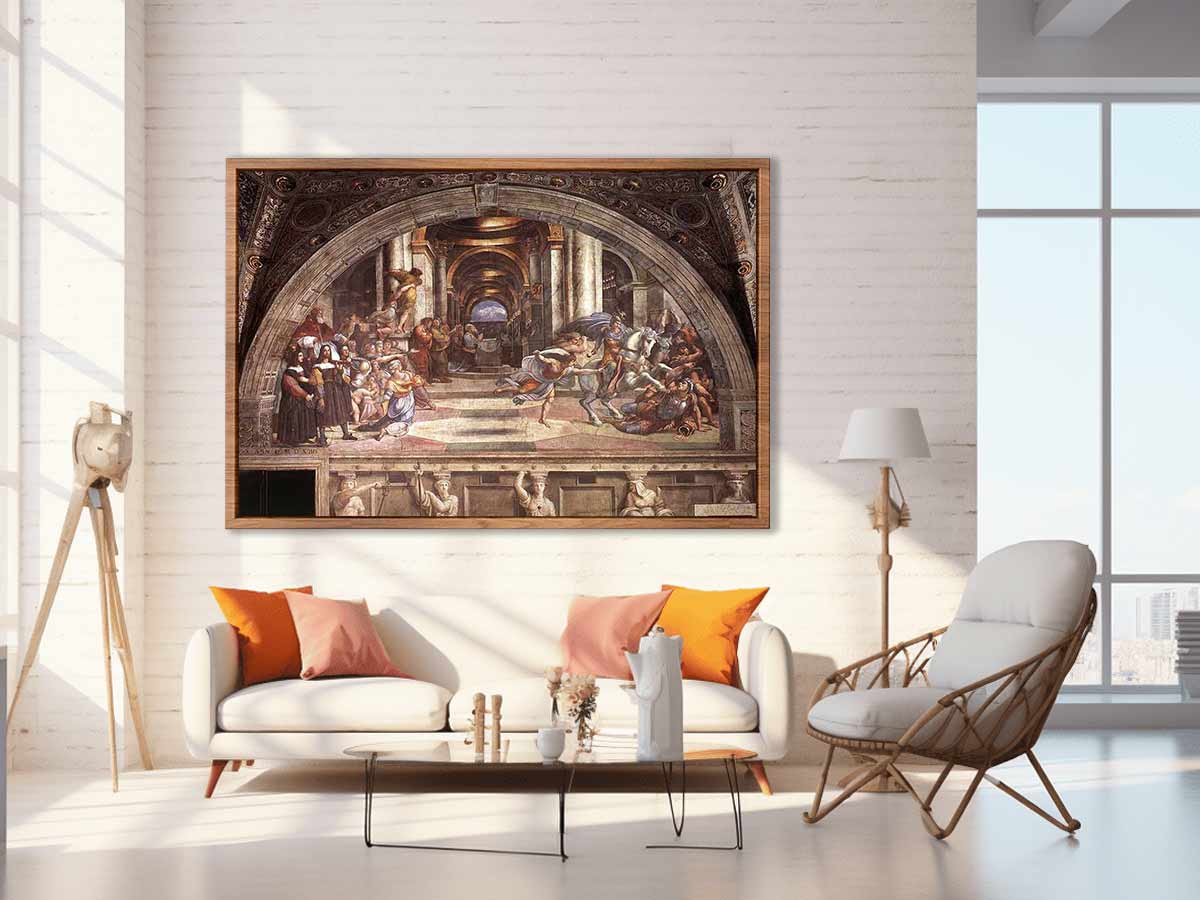
The Expulsion of Heliodorus from the Temple by Raphael is one of the most dramatic frescoes of the High Renaissance, combining monumental architecture, powerful figures, horses and divine intervention into a dynamic biblical narrative. Painted for the Raphael Rooms in the Vatican Palace, the fresco illustrates the biblical story of Heliodorus being driven from the Temple of Jerusalem after attempting to seize its treasures.
About The Expulsion of Heliodorus
Raphael painted the fresco around 1511–1512 for the Stanza di Eliodoro in the Vatican Palace. The room takes its name from the fresco, which occupies one of its principal walls.
The Story of Heliodorus
Heliodorus was sent to Jerusalem to confiscate the treasures of the Temple. According to the biblical account, a heavenly horseman accompanied by supernatural forces attacks Heliodorus and drives him away.
The Heavenly Horseman
The mounted heavenly figure is the visual focus of the action. His horse charges forward with tremendous force, creating a diagonal movement through the composition.
Heliodorus and the Struggle
Heliodorus is physically overpowered by the celestial forces. Raphael organizes the surrounding figures so that the viewer can follow the central narrative despite the complexity of the scene.
Architecture of the Temple
Columns, arches and classical architectural forms create an expansive stage for the narrative. The architecture establishes depth and reflects the Renaissance fascination with classical design.
Movement and Dramatic Composition
Diagonal gestures, charging horses, flowing garments and contrasting body positions create exceptional visual energy. Raphael balances this movement against the stability of the monumental architecture.
Religious Meaning
The central message is divine protection. Heliodorus attempts to violate the sanctity of the Temple, but supernatural intervention prevents him from succeeding.
Raphael in Rome
Raphael moved to Rome in 1508, where his Vatican commissions established him as one of the leading artists of the High Renaissance. The Stanza di Eliodoro focuses on episodes of divine intervention and protection.
Wall Art
This monumental Raphael fresco works particularly well as a large-format display in studies, libraries, offices, living rooms, galleries and classical interiors.
Choose Your Raphael Art Print Format
Museum-Quality Canvas Print
A canvas print gives the fresco a strong painterly presence and is especially effective for large displays. Explore our canvas prints.
Museum-Quality Fine Art Print
A fine art print provides a refined way to appreciate the complex composition, architecture and dynamic figures.
Museum-Quality Framed Print
A framed print gives the historic fresco a formal finished appearance. Explore our framed prints.
100% Hand-Painted Oil Painting Reproduction
Professional artists individually paint each reproduction using oil on canvas, creating genuine brushwork and painted texture. Explore our oil painting reproductions.
Why Choose Alpha Art Gallery?
Alpha Art Gallery offers Raphael canvas prints, fine art prints, framed prints and hand-painted oil reproductions, with secure packaging and free worldwide shipping on all orders.
Frequently Asked Questions
What is The Expulsion of Heliodorus?
It is a monumental fresco by Raphael depicting the biblical story of Heliodorus being expelled from the Temple by a divinely sent horseman.
Who painted it?
The fresco was painted by Raphael, one of the defining masters of the Italian High Renaissance.
Where is it?
The original fresco is located in the Stanza di Eliodoro in the Raphael Rooms of the Vatican Palace.
Why are horses important?
The horses contribute movement, energy and visual drama, especially the horse ridden by the heavenly figure.
Can I buy a canvas print?
Yes. Alpha Art Gallery offers Raphael artworks as museum-quality canvas prints.
Is this the original fresco?
No. Alpha Art Gallery sells reproductions rather than original museum frescoes.