




The Young Martyr
Go kalles this summer with this vintage navy and white striped v-neck t-shirt from the Nike. Perfect for pairing with denim and white kicks for a stylish kalles vibe.

The Young Martyr
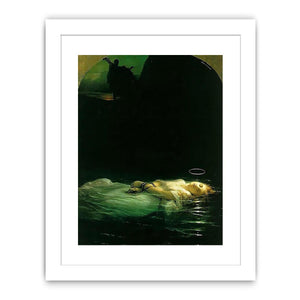
The Young Martyr Painting by Paul Delaroche
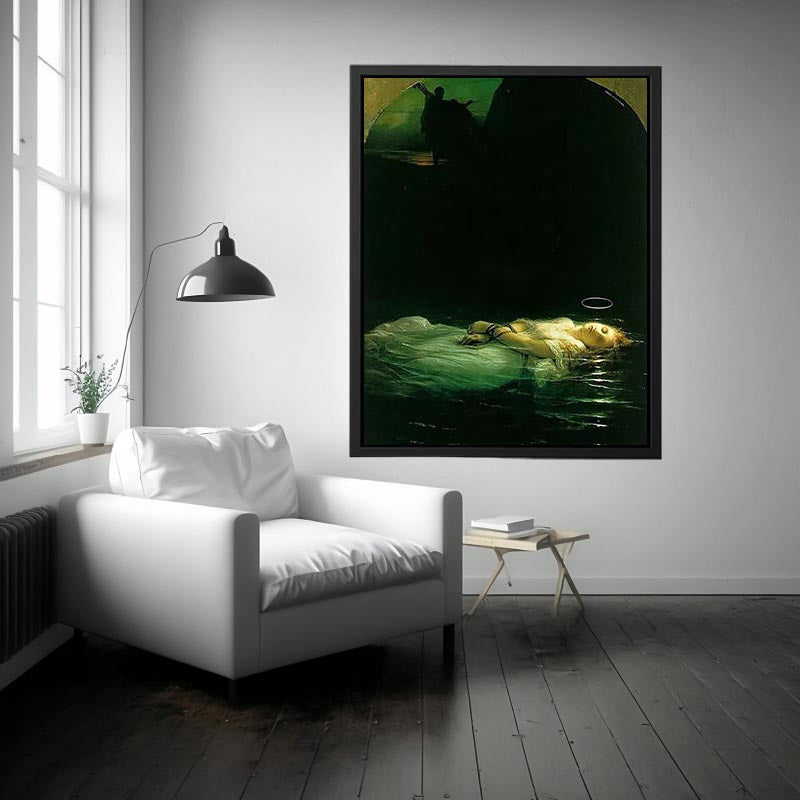
The Young Martyr stands among Paul Delaroche’s most emotionally resonant and morally restrained works, a painting in which faith, innocence, and sacrifice are conveyed through stillness rather than spectacle. Executed in 1855, the painting reflects Delaroche’s distinctive ability to translate historical and religious subject matter into images of profound human immediacy. Rather than staging martyrdom as dramatic violence or triumphal exaltation, Delaroche chooses a moment of aftermath—quiet, irreversible, and devastating in its calm. The result is a work that confronts the viewer not with action, but with consequence.
Paul Delaroche occupied a pivotal position in nineteenth-century French painting, bridging academic classicism and modern emotional realism. He was neither a Romantic indulging in excess nor a strict classicist bound by idealisation. Instead, Delaroche pursued a sober realism that sought emotional truth through historical clarity. In The Young Martyr, this approach reaches one of its most distilled expressions. The painting does not argue for belief or doctrine; it presents a human body, stilled by conviction, and allows the moral weight of that fact to unfold silently.
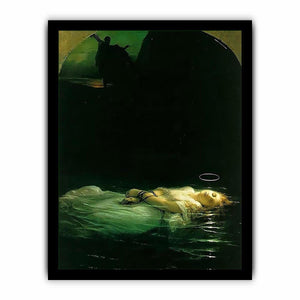
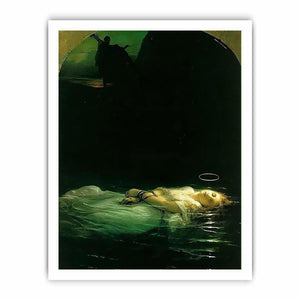
The subject is drawn from early Christian history, depicting a young female martyr cast into the Tiber after execution for her faith. Delaroche does not show the moment of violence. He shows what remains. The girl floats gently upon the dark water, her body illuminated against the surrounding night. This compositional decision is crucial. By eliminating the perpetrators and the act itself, Delaroche shifts the focus entirely to the victim and the meaning of her sacrifice. Martyrdom becomes contemplative rather than theatrical.
Compositionally, the painting is carefully orchestrated to heighten stillness and vulnerability. The young martyr’s body lies horizontally across the canvas, echoing the surface of the river and reinforcing the sense of surrender to fate. Her white garments form a luminous focal point, drawing the eye immediately and holding it there. The surrounding darkness—water, night sky, and distant architecture—acts not as menace, but as solemn witness. Nothing intrudes upon the figure. She is alone, and that solitude intensifies the painting’s emotional gravity.
Perspective places the viewer close to the waterline, creating an intimate and unsettling proximity. We are not elevated above the scene, nor distanced from it. The viewer encounters the body almost as one might encounter it in reality—unexpected, silent, and undeniable. This immediacy is central to Delaroche’s intent. The painting does not invite admiration from afar; it demands recognition.
Light is the painting’s most powerful expressive tool. Delaroche employs a soft, concentrated illumination that caresses the martyr’s face, hands, and garments, isolating her gently from the surrounding darkness. The light is neither divine spectacle nor dramatic chiaroscuro. It is restrained, almost tender, suggesting spiritual presence without visual proclamation. This quiet illumination transforms the body into a site of reverence rather than display.
Colour is deliberately limited and symbolic without becoming illustrative. The dominance of white against deep blacks and muted blues creates a stark visual contrast that reinforces themes of purity and sacrifice. Flesh tones are subdued, life already receding, yet rendered with tenderness rather than morbidity. The palette is austere, allowing emotional meaning to emerge through restraint rather than excess.
Delaroche’s handling of texture and form demonstrates his academic discipline and psychological sensitivity. Fabric clings softly to the body, suggesting the weight of water and the vulnerability of flesh beneath. The surface of the river is calm, barely disturbed, reflecting light in gentle ripples. Brushwork remains controlled and precise, subordinating painterly display to emotional clarity. Technique here is an instrument of empathy.
Emotionally, The Young Martyr is devastating in its quietness. There is no agony, no struggle, no plea. The face is serene, the body composed, as though acceptance has replaced fear. This serenity is not sentimentalised. It is unsettling precisely because it denies the viewer the catharsis of visible suffering. The painting confronts us with conviction carried to its ultimate cost, presented without commentary.
Symbolically, the painting operates with remarkable economy. The river becomes a threshold between life and death, earth and eternity. The white garment signifies innocence and spiritual purity without overt religious iconography. Delaroche avoids angels, halos, or divine intervention. Faith is implied through endurance, not illustrated through symbols. This restraint allows the painting to speak across belief systems, addressing sacrifice as a universal human reality.
Within Delaroche’s broader oeuvre, The Young Martyr exemplifies his departure from grand historical drama toward intimate moral confrontation. While he painted many scenes of political and historical tragedy, this work is among his most inward and contemplative. It reveals an artist deeply concerned with how history is felt rather than merely remembered.
The painting’s relevance today remains profound across the United States, the United Kingdom, Canada, Australia, and Europe. Modern viewers, regardless of religious affiliation, respond to its themes of innocence destroyed by intolerance and conviction maintained in the face of violence. In an age still marked by ideological persecution, The Young Martyr speaks with undiminished urgency.
In interior settings, The Young Martyr introduces solemn beauty and contemplative depth. In living rooms, it becomes a powerful focal point that invites reflection. In studies and offices, it reinforces values of conscience, sacrifice, and moral courage. In galleries and luxury residences, it signals engagement with nineteenth-century history painting at its most psychologically refined.
The painting integrates seamlessly into traditional, modern, minimalist, and eclectic décor. Traditional interiors resonate with its classical restraint and historical gravity. Modern spaces benefit from its stark clarity and emotional focus. Minimalist environments amplify its silence and intensity, while eclectic interiors draw cohesion from its strong tonal contrast and human centrality.
The enduring importance of The Young Martyr lies in its refusal to dramatise faith or suffering. Delaroche does not instruct the viewer how to feel. He presents a fact—youth, conviction, death—and allows the viewer to reckon with it. The painting endures because it recognises that the most powerful statements are often made in silence.
To live with The Young Martyr is to engage daily with a work that demands attention and humility. Through its disciplined composition, restrained light, and profound emotional intelligence, the painting affirms Paul Delaroche’s position as one of the most thoughtful interpreters of moral history in nineteenth-century art. It stands as a testament to his belief that art, at its highest level, can honour suffering without exploiting it, and faith without spectacle.
Buy museum qulaity 400- 450 canvas prints, framed prints, and 100% oil paintings of The Young Martyr by Paul Delaroche at Alpha Art Gallery, where world-famous masterpieces are recreated with museum-quality detail, refined craftsmanship, and premium materials.
FAQS
What is the subject of The Young Martyr?
It depicts a young Christian martyr after execution, floating peacefully on the river, focusing on sacrifice rather than violence.
Why did Paul Delaroche choose such a restrained depiction of martyrdom?
He sought emotional truth through stillness, allowing moral weight to emerge without theatrical drama.
Is The Young Martyr a religious or historical painting?
It is both, grounded in early Christian history while addressing universal themes of faith and conviction.
What emotional tone does the painting convey?
It conveys solemnity, serenity, and profound moral gravity rather than overt sorrow or triumph.
How does light function in the painting?
Light isolates and dignifies the figure, suggesting spiritual presence without symbolic excess.
Is The Young Martyr suitable for contemporary interiors?
Yes. Its compositional clarity and emotional depth integrate powerfully into both modern and traditional spaces.
Does this artwork have lasting cultural significance?
As one of the most moving nineteenth-century depictions of martyrdom, it holds enduring artistic and ethical importance.
Where is the best place to display The Young Martyr?
It is especially suited to studies, galleries, living rooms, and spaces intended for reflection and contemplation.
| 1. Select Type |
Canvas Print, Unframed Paper Print, Hand-Painted Oil Painting, Framed Paper Print |
|---|---|
| 2. Select Finish Option |
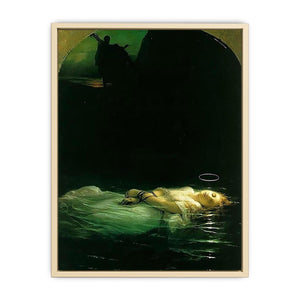
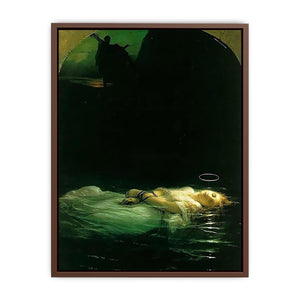
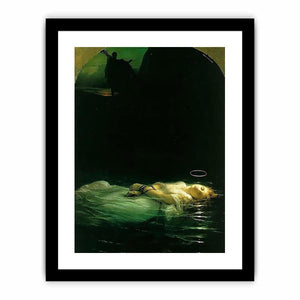
Rolled Canvas, Rolled- No Frame, Streched Canvas, Black Floating Frame, White Floating Frame, Brown Floating Frame, Black Frame with Matt, White Frame with Matt, Black Frame No Matt, White Frame No Matt, Streched, Natural Floating Frame, Champagne Floating Frame, Gold Floating Frame |
| 3. Select Size |
60cm X 90cm [24" x 36"], 76cm X 114cm [30" x 45"], 90cm X 120cm [36" x 48"], 100cm X 150cm [40" x 60"], 16.54 x 11.69"(A3), 23.39 x 16.54"(A2), 33.11 x 23.39"(A1), 46.81 x 31.11"(A0), 54" X 36", 50cm X 60cm [16" x 24"], 121cm X 182cm [48" x 72"], 135cm X 200cm [54" x 79"], 165cm x 205cm [65" x 81"], 183cm x 228cm [72" x 90"], 22cm X 30cm [9" x 12"], 30cm x 45Cm [12" x 18"], 45cm x60cm [16" x 24'], 75cm X 100cm [30" x 40"], 121cm x 193cm [48" x 76"], 45cm x 60cm [16" x 24'], 20cm x 25Cm [8" x 10"], 35cm x 50Cm [14" x 20"], 45cm x 60 cm [18" x 24"], 35cm x 53Cm [14" x 21"], 66cm X 101cm[26" x 40"], 76cm x 116cm [30"x 46"], 50cm X 60cm 16" x 24"] |