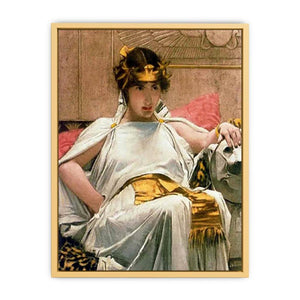
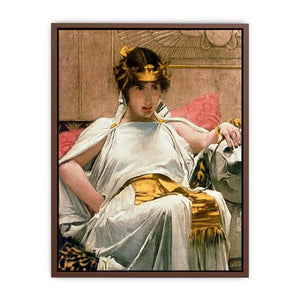
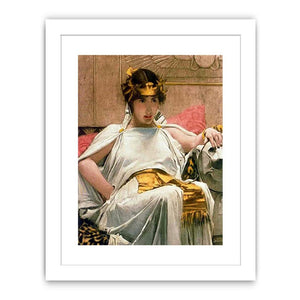
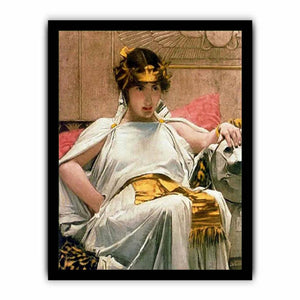
Cleopatra 1888 Painting by John William Waterhouse
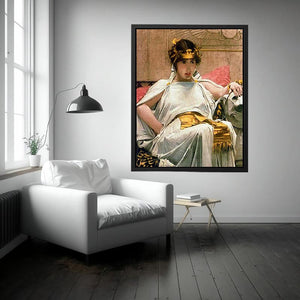
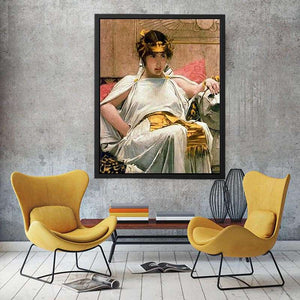
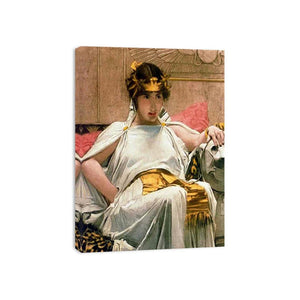
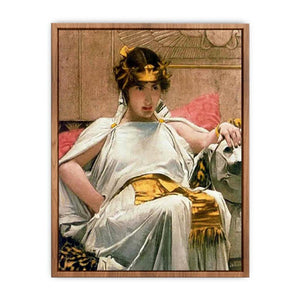
Cleopatra 1888 Painting by John William Waterhouse is a commanding psychological portrait that redefines one of history’s most mythologized figures through restraint, dignity, and intellectual authority. Painted in 1888, the work rejects sensationalism and overt drama in favor of a quietly formidable presence. Waterhouse presents Cleopatra not as a seductress consumed by excess, nor as a tragic emblem of downfall, but as a sovereign intellect—self-possessed, observant, and acutely aware of her power. The painting stands as a deliberate correction to centuries of reductive imagery, offering instead a meditation on leadership, perception, and controlled presence.
At the time of this painting, John William Waterhouse was navigating a critical phase in his artistic development. While still associated with the Pre-Raphaelite lineage, he was increasingly distancing himself from narrative excess and decorative intensity. His focus shifted toward psychological realism and symbolic economy. Cleopatra belongs to this transitional moment. Though historical in subject, the painting is modern in spirit, prioritizing mental authority over theatrical display.
The historical figure of Cleopatra VII had long been filtered through Roman propaganda and later Western fantasy, often reduced to spectacle, seduction, or moral caution. Waterhouse resists these inherited narratives. He does not depict Cleopatra in the act of persuasion, romance, or self-destruction. Instead, he isolates her in a moment of still command. She is neither performing nor reacting. She is waiting—and that waiting becomes the painting’s central tension.
Compositionally, the painting is formal and authoritative. Cleopatra is seated frontally, her posture upright and controlled. The throne-like chair, architectural framing, and symmetrical balance establish a sense of permanence and rule. Waterhouse avoids crowding the composition with attendants, symbols, or narrative detail. Cleopatra occupies the space alone, reinforcing the idea that power, in this interpretation, is solitary and self-contained.
Perspective places the viewer at a respectful remove. Cleopatra is neither elevated beyond reach nor placed within intimate proximity. This equilibrium denies both dominance and familiarity. The viewer does not look up in awe or down in judgment. Instead, one confronts a presence that is self-aware and unyielding. Cleopatra’s gaze does not solicit attention; it assesses it. The painting thus reverses the traditional power dynamic between subject and viewer.
Light is used with exceptional discipline. Illumination is even and controlled, revealing form without theatrical contrast. Cleopatra’s face and figure are clearly visible, yet never dramatized. There is no divine glow, no chiaroscuro spectacle. Light here functions as clarity rather than emphasis. It supports rational authority, reinforcing the sense that Cleopatra’s power is intellectual as much as physical.
The color palette is restrained and dignified. Earth tones, muted golds, deep reds, and neutral stone hues dominate the composition. These colors suggest wealth and civilization without indulgence. Cleopatra’s attire, though rich, is not ostentatious. Ornamentation is present but subordinated to structure and form. Color supports authority rather than seduction.
Waterhouse’s technique is refined and controlled. Brushwork is smooth, measured, and precise. Surfaces are carefully resolved, particularly in flesh, fabric, and architectural elements. There is no bravura display of painterly excess. Instead, technique serves composure. The painting’s finish conveys deliberation and restraint, reinforcing its psychological gravity.
Symbolically, Cleopatra’s stillness is central. She is not defined by action, but by potential. History tells us the consequences that will follow—alliances, betrayals, defeat—but Waterhouse suspends her before those outcomes. In doing so, he restores agency. Cleopatra is not reduced to the sum of her fate. She exists fully in the present moment, commanding her own narrative rather than being consumed by it.
Psychologically, the painting is formidable. Cleopatra’s expression is calm, observant, and inscrutable. There is no vulnerability offered, no invitation to interpret emotion. This opacity is deliberate. Waterhouse refuses to translate her inner life for the viewer. Instead, he acknowledges the limits of access. Cleopatra remains sovereign not only politically, but psychologically.
Within Waterhouse’s broader oeuvre, Cleopatra is distinctive for its emphasis on authority rather than vulnerability. Many of his female figures—Ariadne, Psyche, Pandora—are defined by interior conflict or emotional thresholds. Cleopatra, by contrast, is defined by control. She is not at the mercy of fate or desire in this moment. She is composed, strategic, and complete. This distinction gives the painting exceptional weight within his body of work.
Culturally, the painting anticipates modern reassessments of historical women who have been misrepresented through moralized or eroticized lenses. Waterhouse’s Cleopatra is neither cautionary tale nor romantic fantasy. She is a ruler, presented with the seriousness that role demands. In this sense, the painting feels strikingly contemporary, aligning with modern efforts to restore complexity and agency to historical narratives.
In contemporary interiors across the United States, the United Kingdom, Canada, Australia, and Europe, Cleopatra commands authority and refinement. In studies and offices, it conveys leadership, intelligence, and composure. In living rooms and libraries, it introduces historical depth without theatrical excess. In galleries and luxury residences, it anchors space with monumental calm, integrating seamlessly into traditional, modern, minimalist, and eclectic décor through its balanced composition and restrained palette.
The painting remains meaningful today because it challenges how power is visualized. Cleopatra suggests that authority need not be loud, seductive, or violent to be absolute. It can reside in stillness, awareness, and self-command. In an age still negotiating the representation of female power, Waterhouse’s vision feels both corrective and enduring.
Cleopatra 1888 Painting by John William Waterhouse endures as one of the most intellectually rigorous and dignified portrayals of historical authority in nineteenth-century art. Through compositional restraint, psychological clarity, and symbolic discipline, Waterhouse transformed a legendary figure into a timeless meditation on sovereignty and presence. The painting does not dramatize history. It holds it—firmly, silently, and with enduring power.
Buy museum qulaity 400- 450 canvas prints, framed prints, and 100% oil paintings of Cleopatra by John William Waterhouse at Alpha Art Gallery, where world-famous masterpieces are recreated with museum-quality detail, refined craftsmanship, and premium materials.
FAQs
How does Waterhouse portray Cleopatra differently from traditional depictions?
He presents her as intellectually authoritative and composed rather than sensual or melodramatic.
What moment of Cleopatra’s life does this painting represent?
It depicts a moment of sovereign stillness, not tied to a specific event, emphasizing presence over narrative.
Why is Cleopatra shown seated and alone?
This reinforces autonomy, authority, and psychological self-sufficiency.
Does the painting reference Cleopatra’s relationships with Roman leaders?
No, Waterhouse deliberately avoids romantic or political narrative to focus on leadership itself.
How does this painting fit within Waterhouse’s broader work?
It stands apart for its emphasis on control and authority rather than vulnerability or inner conflict.
Why is the painting emotionally restrained?
Restraint reinforces Cleopatra’s power and resists sensational interpretation.
Why does Cleopatra remain relevant today?
Its portrayal of female authority and intellectual command resonates strongly in contemporary culture.
Where does this artwork work best in interiors?
It is ideal for studies, offices, libraries, galleries, and refined private residences.